11 jul. 2022 – 15 jul. 2022
IVAM Centre Julio González
share


11 jul. 2022 – 15 jul. 2022
IVAM Centre Julio González
share
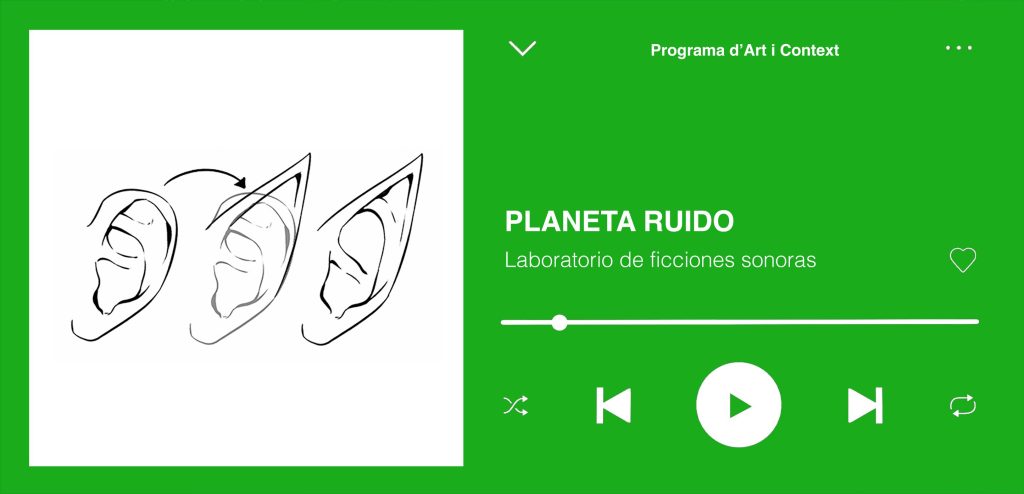
PLANET NOISE: Sound fictions laboratory falls within the realm of the Art and Context Programme. Sound is one of the key and transversal aspects of research by the programme’s artists, hence the proposal of the PLANET NOISE workshop.
Through listening and experimenting with sound, in this workshop we will think about and activate sounds as a tool to understand and comprehend our surroundings. We will start from the idea and research covered by the programme’s artists in their production, in addition to the tools belonging to contemporary artistic creation. Through various activities and workshops, we will cover the active listening of space, of our body and other people, we will create and invent animal and machine sounds, and we will build soundscapes of our context.
For one week, participants will build a collaborative account and sound journey that activates and considers the work of the programme’s artists, trying to imagine and accompany the future exhibition and generating a record of the immediate context of the participants.
The workshop will be led by Elena Sanmartín Hernández, with the support in mediation of Alejandro Ocaña and the collaboration of Patricia Ferragaud in sound production.
Elena Sanmartín Hernández situates her work in the bisector between cultural management, artistic mediation and education. She is interested in exploring ways of translating and transferring the methods of contemporary artistic creation into useful tools for the understanding and resolution of contemporary problems and challenges. She understands the processes of mediation, education and cultural management as creative, collaborative and supportive spaces which help processes and artistic creation to permeate other bodies and spaces, and vice versa. She graduated in Fine Arts from the Polytechnic University of Valencia, and has completed the PERMEA masters: Education and Mediation through Art by the Consorci de Museus de la Comunitat Valenciana and the University of Valencia. She also completed the University Masters in History of Contemporary Art and Visual Culture from the Complutense University of Madrid and the Reina Sofia National Art Museum.
Alejandro Ocaña is an artist and educator living in Valencia. His projects are based on group events and parties, in addition to other leisure-related situations. He creates a production whose main aim is the participation of others and the use of humour, giving way to a succession of group activities that aim to be considered as “silliness” and/or “nonsense”. Alejandro Ocaña graduated in Fine Arts from the Polytechnic University of Valencia and has completed the PERMEA masters: Education and Mediation through Art by the Consorci de Museus de la Comunitat Valenciana and the University of Valencia.
Patricia Ferragud Noguerón is a graduate of Architecture from the ETSA of Valencia, she graduated with honours from the Masters in City and Urbanism from the UOC and in piano studies from the Professional Conservatory of Music of Valencia. In recent years, she has specialised in research, analysis and strategic planning of the cultural and creative sector, forming part of the Culuralink team within the area of Society-Culture-City. She combines her interest in cultural and urban research with artistic creation and musical production as a member of various bands such as La Plata, Luz Verdadera or Ediacara, having taken part since 2016 in a plethora of concerts and festivals in Spain, Germany and Argentina, and whose compositions form part of the sound track to television series such as Fariña (2018) or La Ruta (2022). Additionally, she works in cultural mediation and agitation through various collaborative initiatives and on projects such as the Dominio record label. Since 2018, she has also organised events linked to experimental music and performance.
04 jul. 2022 – 08 jul. 2022
IVAM Centre Julio González
share
From 10 a.m. until 2 p.m. IVAMlab 1
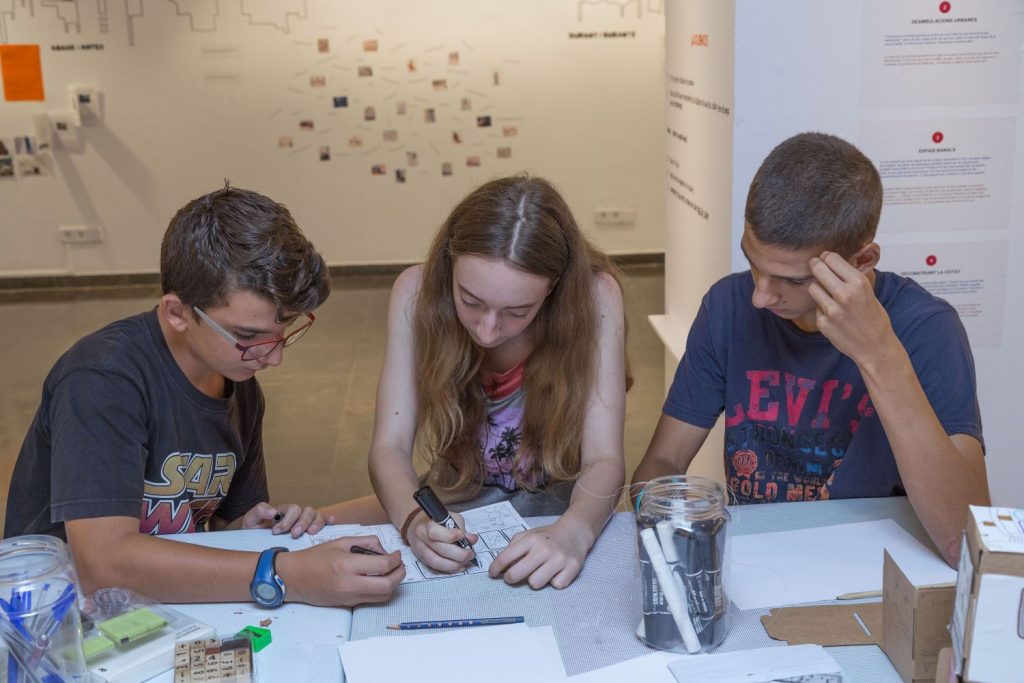
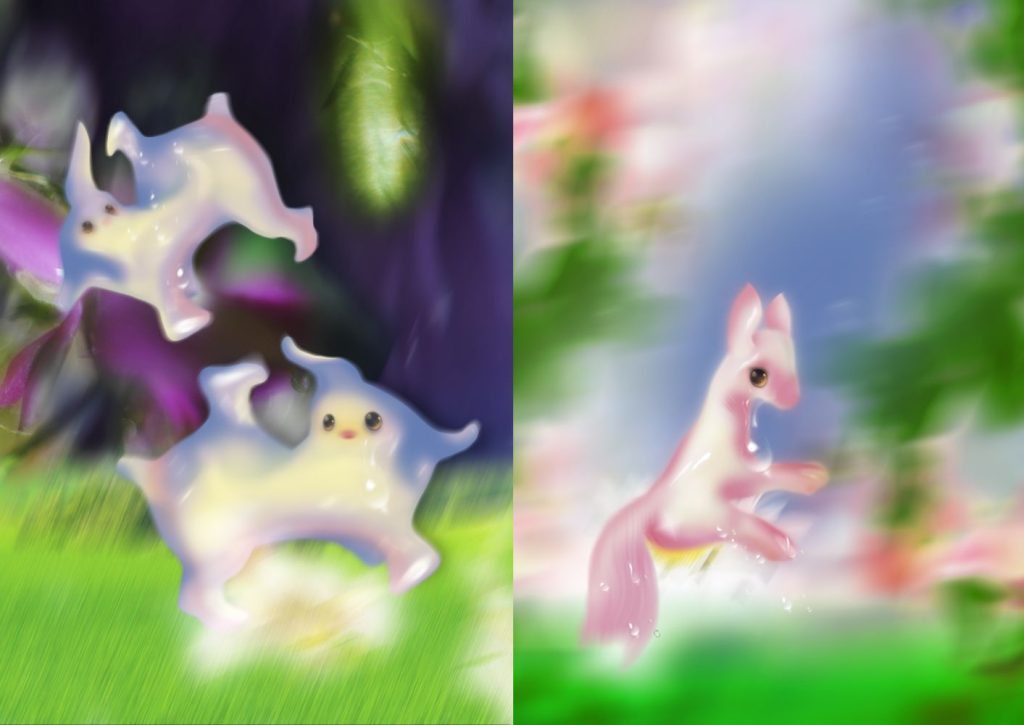
PLANETA RANDOM: The Played fictions laboratory falls within the realm of the Art and Context Programme and emerges from the research of artists that form part of the programme, some of them permeated by fiction or fantasy.
Through play and the digital image, in this workshop we will consider the possibilities of fiction and fantasy to create thought and imagine other possible worlds. Through various activities, we will address some of the themes that permeate the work of the artists from the programme, where we will support each other to build our own fiction.
For one week, the participants will design and build an environment, a community and a series of their own characters from activities that will enable us to think and collaboratively build the fiction we want to inhabit and play. This fiction will also help us to think about our reality, the immediate context and the problems that cut through it.
This workshop takes place with the participation of young people from the Residential Care and Youth Justice Service of the Directorate General of Childhood and Adolescence of the Vice Presidency and Council of Equality and Inclusive Policies of the Valencian Government.
The workshop will be led by Elena Sanmartín Hernández, with the support in mediation of Alejandro Ocaña and the digital collaboration of Pablo Oria Lorente.
Elena Sanmartín Hernández situates her work in the bisector between cultural management, artistic mediation and education. She is interested in exploring ways of translating and transferring the methods of contemporary artistic creation into useful tools for the understanding and resolution of contemporary problems and challenges. She understands the processes of mediation, education and cultural management as creative, collaborative and supportive spaces which help processes and artistic creation to permeate other bodies and spaces, and vice versa. She graduated in Fine Arts from the Polytechnic University of Valencia, and has completed the PERMEA masters: Education and Mediation through Art by the Consorci de Museus de la Comunitat Valenciana and the University of Valencia. She also completed the University Masters in History of Contemporary Art and Visual Culture from the Complutense University of Madrid and the Reina Sofia National Art Museum.
Alejandro Ocaña is an artist and educator living in Valencia. His projects are based on group events and parties, in addition to other leisure-related situations. He creates a production whose main aim is the participation of others and the use of humour, giving way to a succession of group activities that seek to be considered as “silliness” and/or “nonsense”. Alejandro Ocaña graduated in Fine Arts from the Polytechnic University of Valencia and has completed the PERMEA masters: Education and Mediation through Art by the Consorci de Museus de la Comunitat Valenciana and the University of Valencia.
Pablo Oria Lorente is a multidisciplinary artist specialising in digital creation. His main study goal addresses the relationship between artificial intelligence and the human being. Through video essays, digital image creation and 3D environments, he puts into practice concepts related to technological obsolescence and errors, virtuality and the proposal of a human-machine affectionate emotional relationship. Pablo Oria graduated in Fine Arts from the Polytechnic University of Valencia where he later studied for a Masters in Visual Arts and Multimedia.
22 jun. 2022
IVAM Centre Julio González
share
6 p.m.
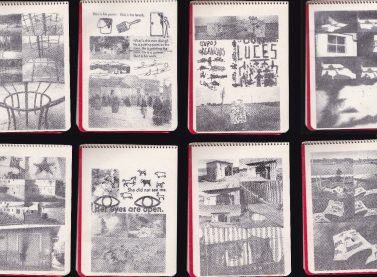
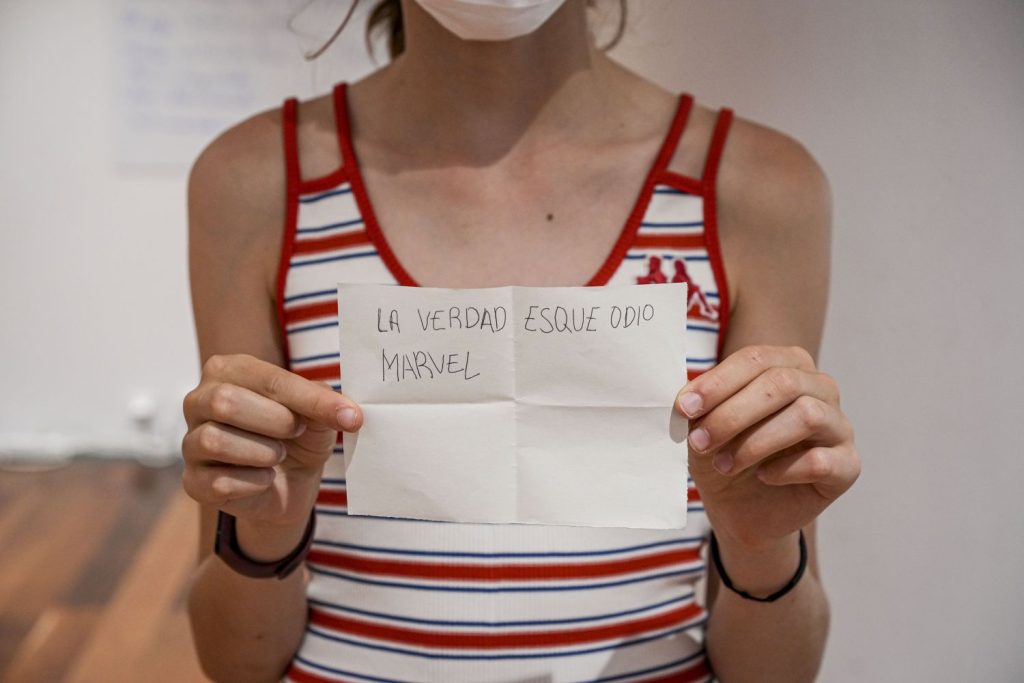
Making books another way vs. another way of making books is an interactive workshop where we will experiment with codes from the edition to collectively create a publication collating the experiences of the Mutant Reading Group.
The workshop will revolve around the creative possibilities of the book, the limits of its format in relation to its contents, the opening up of its textual nature, the hierarchies of its structure, resuming some of the convergences started in the 1960s and 1970s with regard to the emergence of the artist’s book in artistic discourse.
06 jul. 2022
IVAM Centre Julio González
share
Wednesday 6 July 2022. 18 hrs.
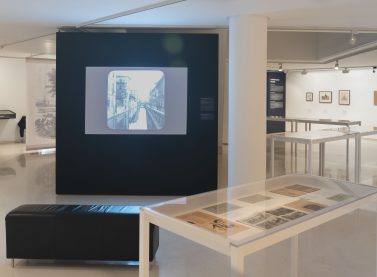
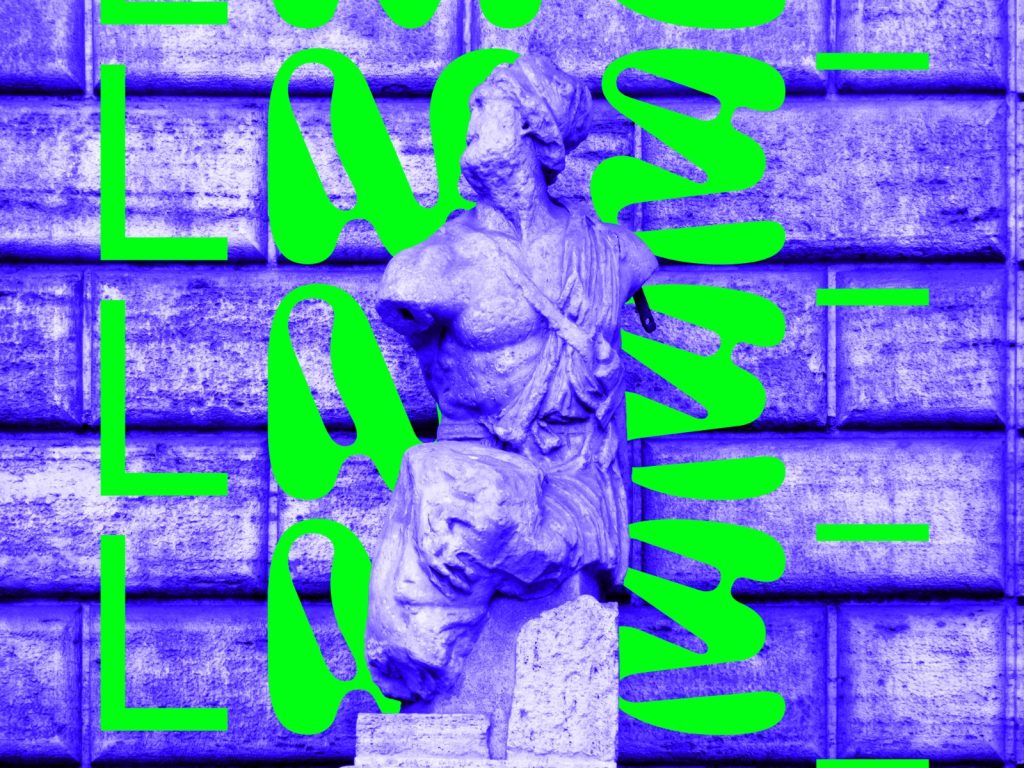
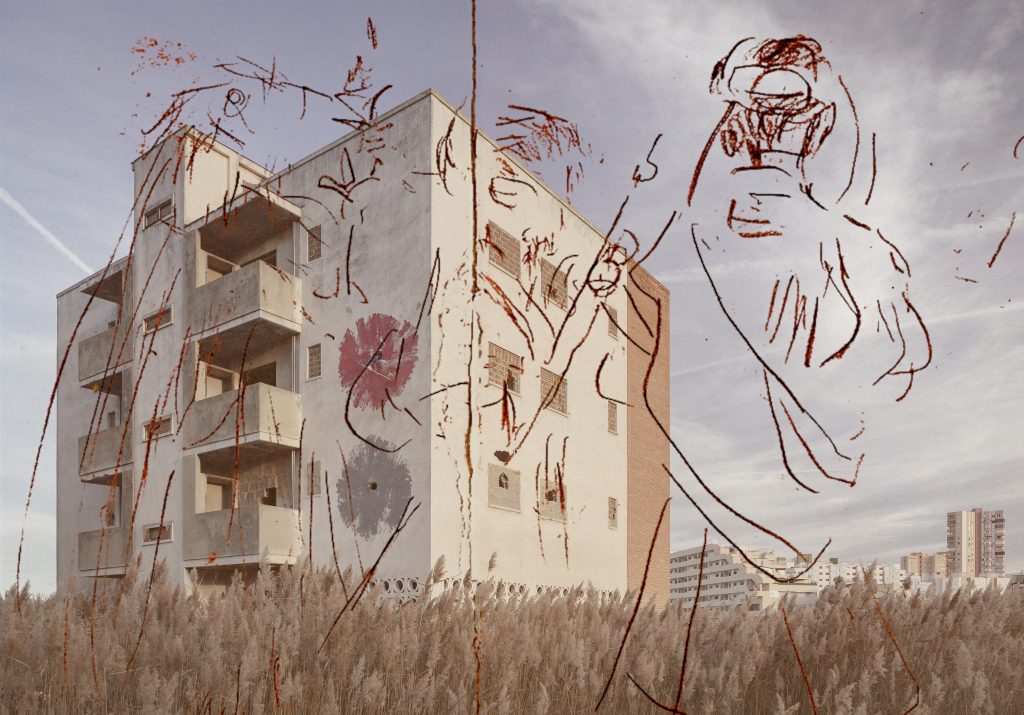
The dialog between the LUCE workshop and the Pinazo exhibition in the public space will be summarized on 6 July with a specific double-purpose activity, which is linear in space and intertwined in time. It will begin in room G6 and finish in Laboratory 2. During the visit the public will be guided through dialog and, simultaneously, with an ephemeral intervention on the work by LUCE.
The activity will combine the creation of reflections arising from the analogies, homologies, contrasts, inspirations and feedback that are picked up on by both authors, through the production of visual manifestations of elements of Pinazo’s exhibition incorporated into LUCE’s material. The faint ghosts of Pinazo’s experiences in their own absolute present time will be invoked in order to recover the vestiges of public space which we have today and which LUCE promotes as engines of nostalgia and generators of new political and poetic collective perceptions.
The activity has been designed by and will be run by the artist, LUCE and Vicente Pla, curator of the inazo exhibition in the public space.
++
08 jul. 2022
IVAM Centre Julio González
share
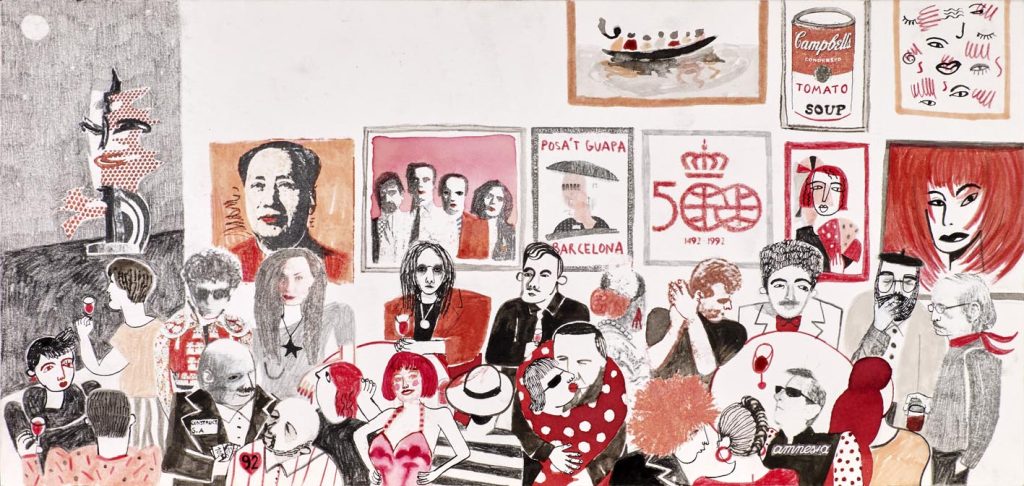
We invite you to accompany us in the presentation of ARTICULACIONS. Programa d’estudis IVAM · UV · UPV, a collaboration between the three institutions which aims to create an environment for learning and exchange in the city. ARTICULACIONS proposes turning the museum into a place from which to tackle the emergencies and uncertainty of today’s wounded world, which requires new methods of work and affection. A space that helps us to envisage between us other imaginations and options of being in the world.
In the presentation, the academic managers from the three institutions, together with some of the teaching team, will tell us the contents, methodologies and proposals of the ARTICULACIONS intervention in the museum. Afterwards, there will be space for a casual conversation with snacks, a celebration and dancing.
19.00 Articulacions. What is it, when does it start, what do I need to do to sign up?
19.45 Digestions. Refugee metabolisms by Migrant Chefs
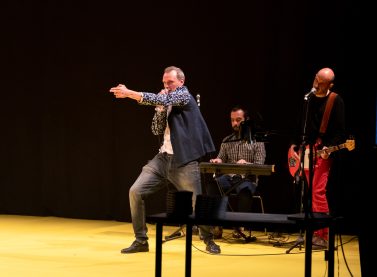
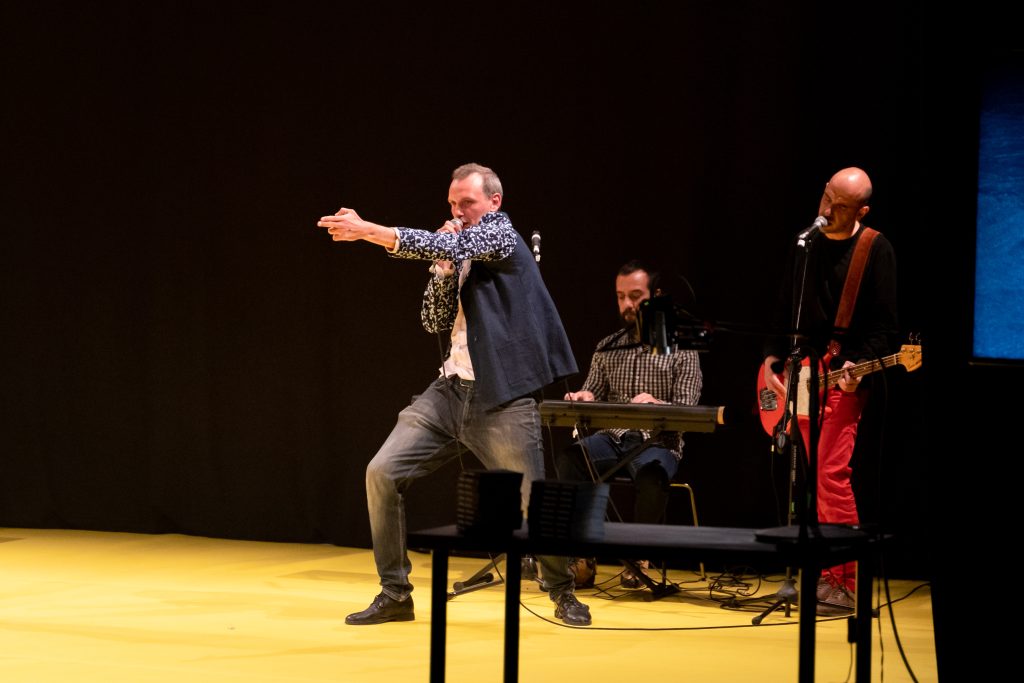
20.15 The full song, with Víctimas Civiles & Taller Placer

08 jul. 2022
IVAM Centre Julio González
share
Friday, 20.15.
A song is always developed in a limited amount of time, it has a beginning and an end. In a song, music takes on a certain tone of urgency, a need to unleash all of its potential in the few minutes it lasts for.
In this performance, we play with repetition and duration. Our understanding of time depends on us understanding periodicity. Things come in cycles. A concert of just one song. A song that lasts an entire concert because it turns on itself to experience a continuous sound time and time again, and again, and again..
This performance is inspired by the piece “H” by Rosanayaris and Taller Placer.

10 jul. 2022
IVAM Centre Julio González
share
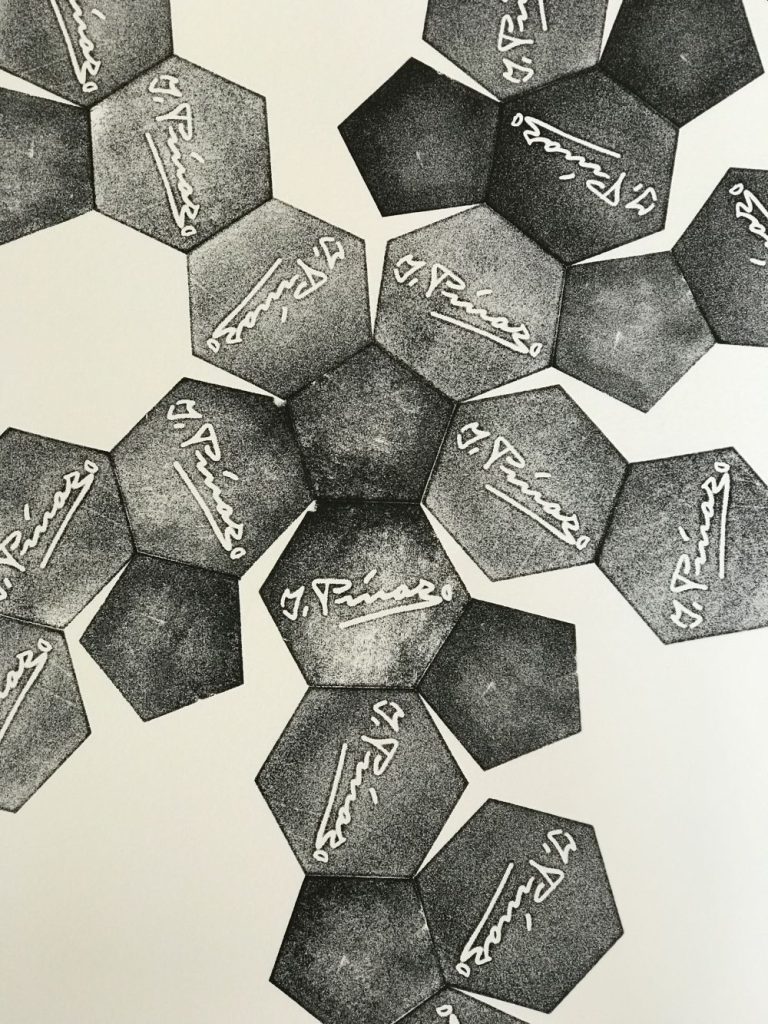
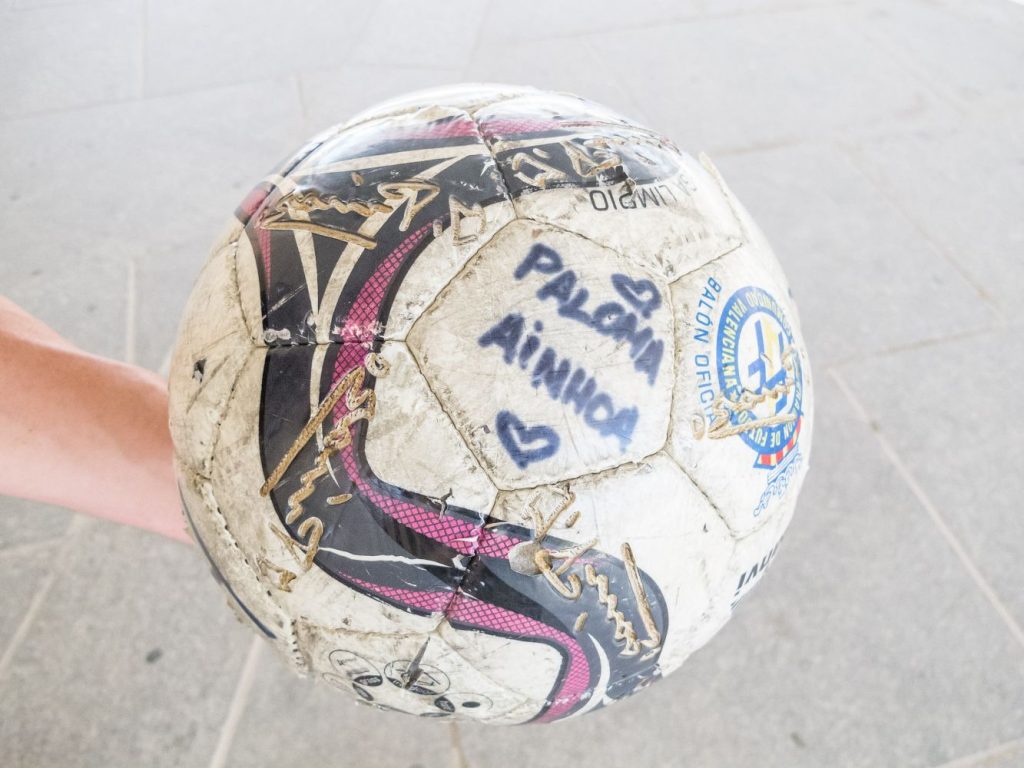
We propose a walk through the city of Valencia during which we will activate a series of locations depicted in the works of Pinazo, which coincide with LUCE’s personal geography.
The tour includes revisiting commonly-frequented corners of Valencia in which LUCE gazes into the echoes of that which Pinazo observed and immortalized. Discovering the city as a vehicle between history and those who inhabit it, which is the primary material of the artistic practices of both artists.
As we walk, putting movement into our bodies, we see the places that surround us in another way. The city shows itself just as we see it, and that is when a moment is constructed from our personal history. On this walk, LUCE will be accompanied by Eva Bravo, and they will both encourage us to do away with the timeline in order to intertwine individual lives with collective experiences, always doing this through the contemplation of the ordinary, of the apparently unnoticed.
Through curiosity and play, we will visit places that were explored – and are explored – by both artists, giving a new meaning to those public places in continuous transformation, discovering “the other spaces” or “the other cities within the city”. An activity that invites us to be part of the public space in order to walk around it, decipher it and experience it.
*This activity is the first in a series of three different walks proposed by the artist and Eva Bravo. The program will also include the Open Studio at IAVM, which will become a space in which to produce, create, display and share the different lines of action and research that connect LUCE with the city of Valencia.
Through its art, LUCE (Valencia, 1989) researches the associations generated between art and its surroundings. It promotes communication with the city to understand how it functions and how we relate to it.
Eva Bravo (Valencia, 1974) combines archaeology with management of heritage, teaching, cultural mediation and participation in research projects.
28 jun. 2022
IVAM Centre Julio González
share
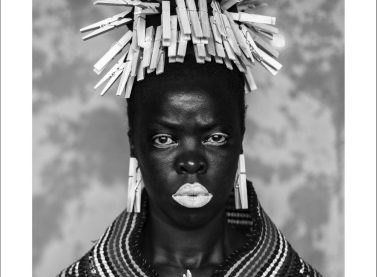
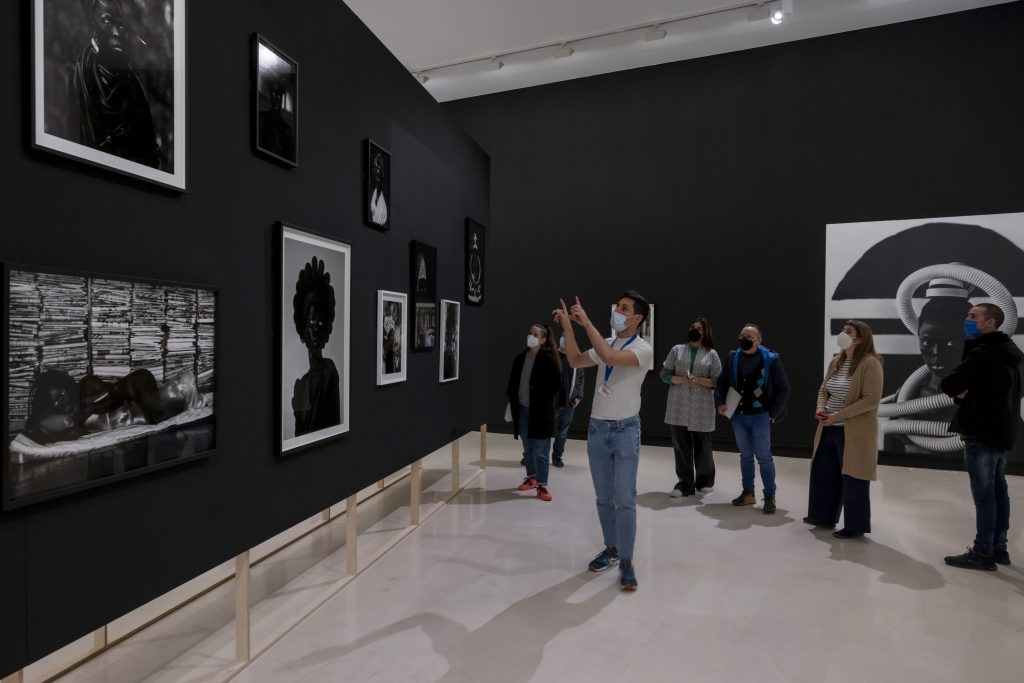
To join the cultural events that celebrate Pride in the city of Valencia, IVAM offers a special guided visit of Zanele Muholi’s exhibition. The visit is planned as a tour of the homonymous exhibition of the South African artist emphasizing their struggle for the rights of the LGBTQIA+ community, as well as a closer look at some of their most iconic works.
Zanele Muholi (Umlazi, South Africa, 1972), artist and visual activist Muholi began their career doing work for LGBTQIA+ publications, portraying people from this undervalued community, always in a positive light. The aim was to introduce them into the collective imaginary of South African society to rewrite their visual history, dominated until then by an ethnocentric and heteropatriarchal ideology. This exhibition, organised by Tate Modern in collaboration with the Institut Valencià d’Art Modern, the Maison Européenne de la Photographie, Paris, and Gropius Bau, Berlin, is the most extensive to date with around 260 photographs. In 2016, Muholi received the Infinity Award from the International Center of Photography, and the Chevalier de Ordre des Arts et des Lettres and has been an Honorary Fellow of the Royal Photographic Society since 2018.
Duration: 45 minutes approx.
For: general public.
Maximum capacity: 25 people.
Date: 18 June, 18h (Spanish).
15 jun. 2022 – 04 sep. 2022
IVAM Centre Julio González
share
1st EDITION October 6th 2022 to June 30th 2023
Contemporary art is in constant friction with other areas of knowledge and cultural practices, questions of social interest and public space. These vertices converge in particular on a “metabolic museum” of the kind the IVAM hopes to propitiate: an institution traversed by crisis – economic, cultural and ethical – and transformation, a museum formed by a series of organs constituting a body that feeds off friction with other bodies in circulation. This is the spirit which inspires ARTICULATIONS, a programme created on the basis of two academic certifications: the first held during the first four-month term in collaboration with the Universitat de València, and the other in the second four-month term in collaboration with the Universitat Politécnica de Valencia.
As an international programme, although anchored in a specific territory, it aims to generate a learning context from which to confront the urgencies and uncertainties of a globally wounded present that requires new working methods and ways of inhabiting the world. The programme attaches importance to collaborative work precisely with the goal of learning from the people around us, developing ideas and giving shape to new forms of knowledge. Post-Identitarian feminisms, popular and decolonial practices, processes of globalisation and virtuality, speculative and collective narratives and the care of the planet are the frameworks defining the organisation of the four modules of the programme: Contemporary metabolic practices, Ruptures and remediations of discourse, Walking with the head, thinking with the feet and lastly a Final project.
Students who join the programme will form part of a heterodox institutional project focused on careful attention to processes of creation and thought besides results. In short, it will consist of a “doing with” a community of students, teachers with different academic backgrounds and professionals from the sector, from a variety of geographical areas, whose practices critically and incisively mould how contemporary art is understood, rehearsed and thought in its different expressions.
+ INFO: /en/articulations-ivam-uv-upv-study-programme/
18 jun. 2022
IVAM Centre Julio González
share
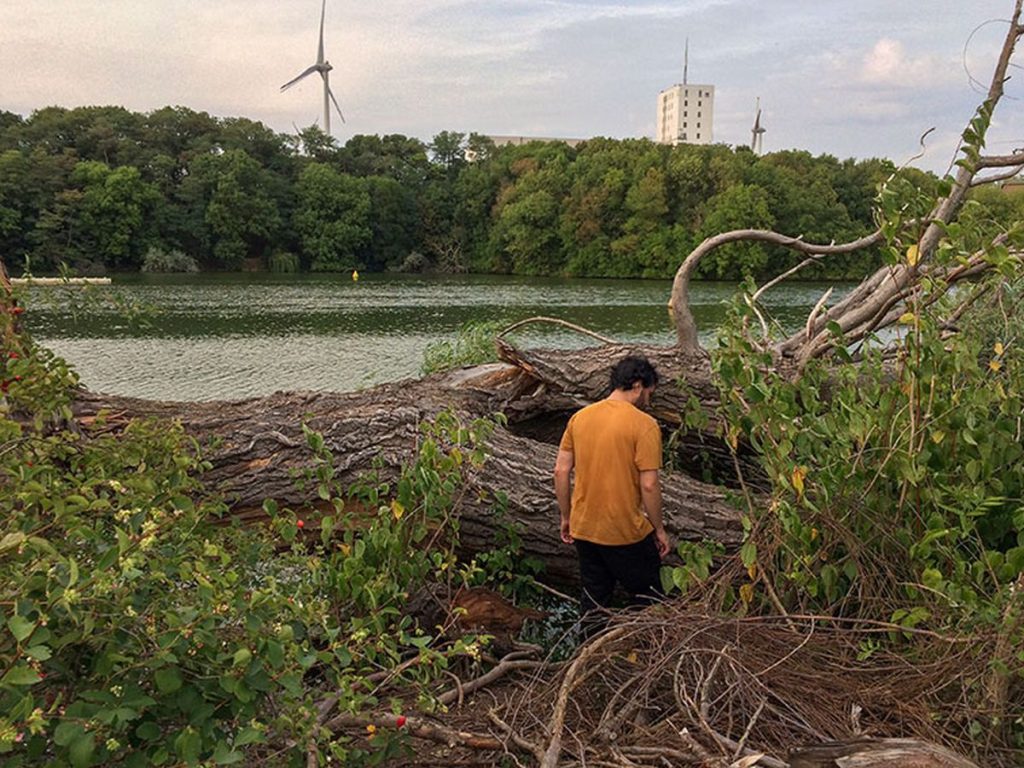
The artists Raúl Hidalgo, Esmeralda Gómez Galera and Álvaro Porras Soriano (artist of the Programa d’Art i Context) propose a collective activity in the form of a long walk (about 12 km approx.) along different railway lines that connect the Estación del Norte with the Grao port area. The walk is intended as a psycho-geographical re-reading of the railway network of the city of Valencia.
Throughout the walk, there will be a series of activities, and you will seek various ‘oases’ in which to stop and reflect on the context that surrounds us. The recognition of these heterotopic spaces will help to understand the emergence of new potential landscapes to experience other relationships, functions, and possibilities of co-evolution. This will be a speculative group activity that invites you to let yourself be guided by your intuition with a critical eye.
Meeting point: Under the clock of the Estación del Norte (Maps)
Start time: 6:45 p.m
End point: Nazaret metro station (Maps) [Metrovalencia Line 10] Arrival time: 11 p.m approx.
Raúl Hidalgo (Alcázar de San Juan, 1980) ) investigates the ‘everyday’ to experiment with the fragility of the body, the instability of materials and the awareness of nature. Through installations, activities and scores, he creates collaborative situations to make us reflect on how relationships, materiality and social spaces have the power to alter our behaviour and attitudes. Ultimately, he seeks to put forward a game that allows us to act in our shared present and imagine the future we want.
He has a PhD in Fine Arts from the University of Castilla-La Mancha and a postgraduate degree in Visual Communication from the Hochschule für Bildende Künste Hamburg (Germany). He has made site-specific artwork in cities such as Berlin, Bogota, London, Stockholm, Madrid and Mexico. He participates in interdisciplinary projects with international research-creation groups. He has carried out creative stays at the Universidad Nacional de Colombia (Bogotá), the Instituto de Bellas Artes in Mexico City, the Instituto de Investigación en Arte, Diseño y Sociedad in Oporto, among others. He has received grants and awards such as the Marcelino Botín Visual Arts Grant, the Injuve Project Award, the Aid for research, creation and production from the Ministry of Culture, as well as the PICE-Acción Cultural España Mobility Grant.
http://www.raulhidalgo.net/
Esmeralda Gómez Galera (Tomelloso, 1993) develops artistic research that focuses on the relationship between bodies and urban spaces, finding in the action of walking an aesthetic tool that allows us to experience the urban phenomenon playfully and blurs material and symbolic boundaries existing in the city.
Along with her professional activities related to contemporary art management, she is also an artist and researcher. She studied Fine Arts at UCLM and Philosophy at UNED. She holds a Masters’s degree in Research in Artistic and Visual Practices from the UCLM, where she is currently working on a PhD thesis on the aesthetics of walking as an artistic practice. She has made site-specific art in different cities such as Lisbon, Glasgow, Amsterdam, Berlin, Valencia, and Madrid, participated in exhibitions and residencies, published research articles, and given lectures and workshops in several universities.
https://esmeraldagomezgalera.com/
10 jun. 2022
IVAM Centre Julio González
share
Friday, from 10:00 to 14:00 h. LAB2
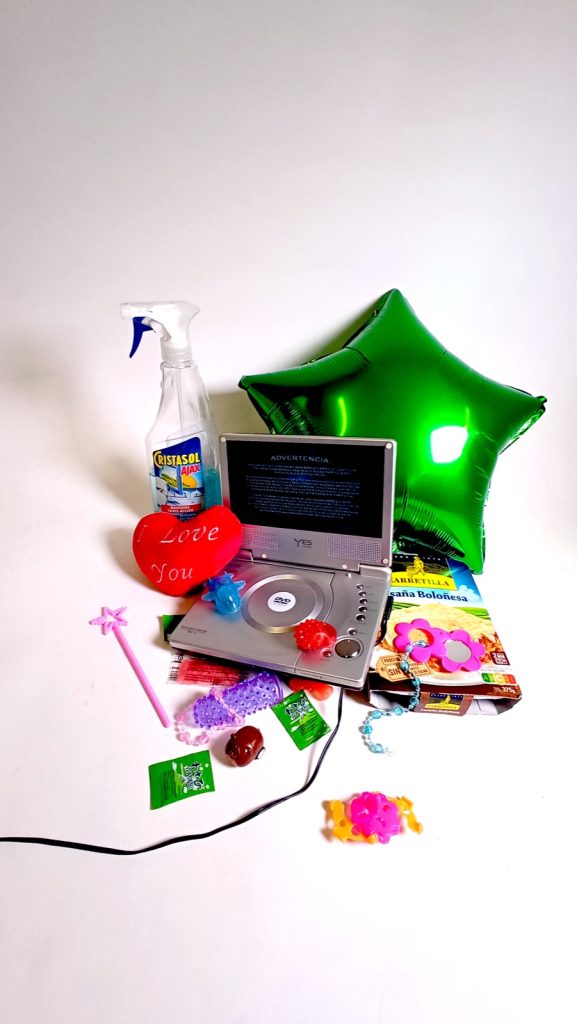
Between May and June, the 3rd year students of the Fine Arts Degree (UPV) studying Aesthetics and politics: new forms of citizen intervention, have been working on and analysing the Art and Context Program from the perspective of relational aesthetics. Throughout the sessions, they have approached the program and the works of each artist who is part of it through different texts, ideas and dynamics, focusing on Berenar’s activity that they proposed as a space for opening up their process. At the end of the program, they were asked to organise an activity that reflects the link between art, context and relational aesthetics. In their own words:
Art market. Bring your stuff, not your €€€ is an activity organized by the Fine Arts students of Aesthetics and Politics: new forms of citizen intervention, which aims to question the art market. Through a relational approach, the students invite the public to participate in the exchange of objects, feelings and experiences both with them and the other participants. Therefore, you must bring an object(s) to exchange, whether material or not.
By:: Sara Alastuey · Paula Balsas · Jason Cornett Galdón · Noemi Costoyas · Alex Escribá · Alicia Ezpeleta · Diego Fabra · Laia Fernández-Pacheco · Nicolás Gay · Alice Giglio · Roser Lanuza Vicent · Claudia M. Camara · Laura Martínez Gómez · Carmen Mateo · Pascual José Medina · Amparo Molins Pascual · Ana Mortera · Maria Moscardó · Lorena Navarro Sanchis · Rut Ramos · Irene Remón · Ana Ribelles · Laura Sabater · Helena Sánchez Douis · Verónica Sánchez-Ferragut · Meritxell Simó · Lorena Tierraseca · Paula Vilar · Carmen Vives · Carlos Zárate
Directed by Elena Sanmartín (in charge of the education and mediation department of the Art and Context Program), Elena Rocamora Sotos (PhD student in Art and Aesthetics at UPV and UG) and Miguel Corella Lacasa (lecturer in Aesthetics, Visual Culture and Art Theory at UPV).
17 jun. 2022
IVAM Centre Julio González
share
FRIDAY JUNE 17. 19.00.
The group that makes up the Inventory (common thought on the museum) proposes opening up its creative and thought process to the public by sharing a new activity to complete the project carried out at IVAM since February.
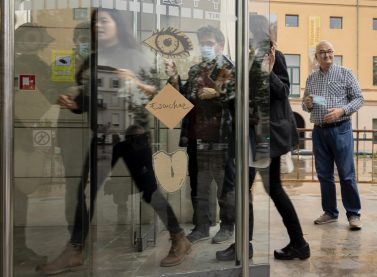
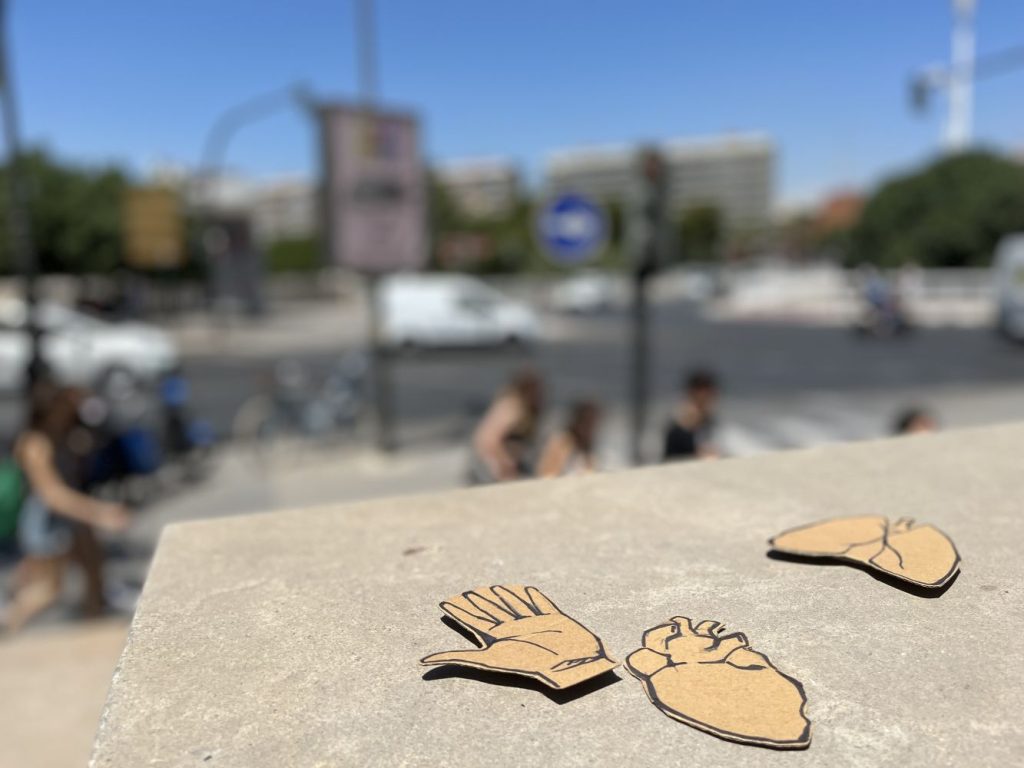
If we were to envisage the city of Valencia as a large human body, where would the heart be? Which neighborhood would contain its lungs, the spleen or the hands? Throughout the working sessions, we have asked how we could inhabit the city and the museum by understanding them as living organisms that connect and work like a biological body. Based on the thinking that has been put forward, the Inventory group suggests we follow three trails from different parts of the city to IVAM, putting a spotlight on the relationship between body, urban fabric and museum.
We invite you to accompany us on one of these walks which, starting from different bodies of the city, will meet at IVAM.
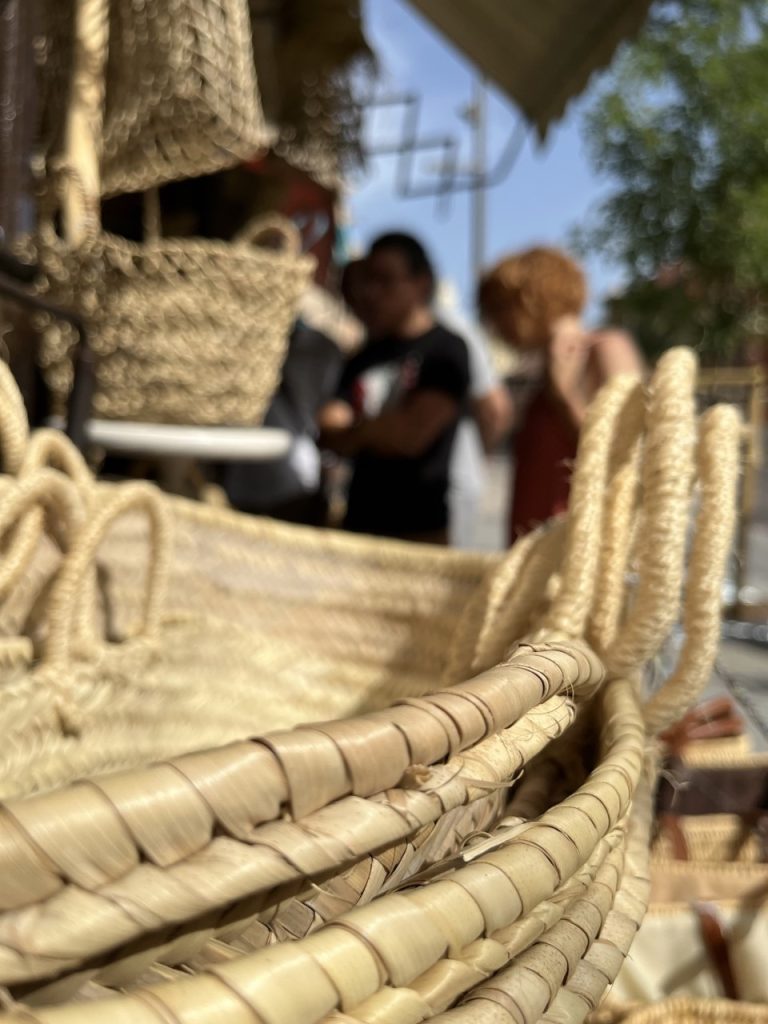
TRAIL 1. A tour in which we will use the sense of touch to travel around the city through its objects, crafts, trades and textures.
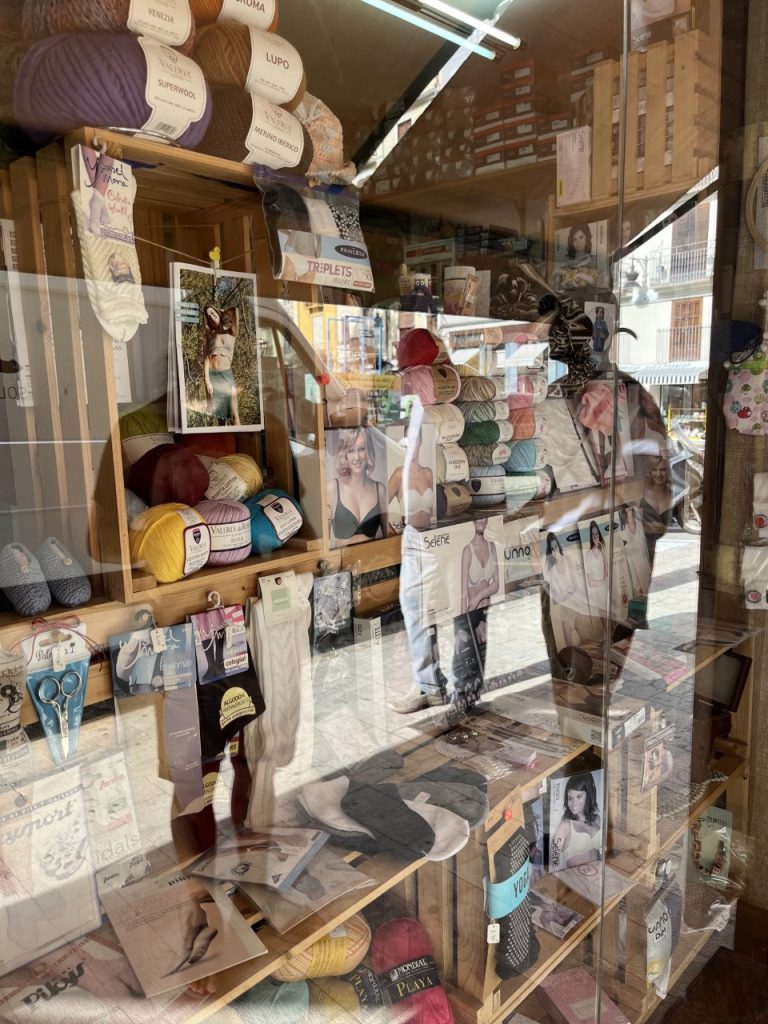
TRAIL 2. A photographic journey through revealing moments that emerge created collectively during the walk.
TRAIL 3. A picnic in the Turia Gardens (Jardines del Turia) to connect the museum with the natural urban space. Chats, food, experiences and what each participant wants to contribute.
TRAIL 1
Time: 19.00.
Meeting point: Plaça del mercat nº28, Valencia (opposite the Muebles Trilles shop).
No prior registration required. Please be on time.
TRAIL 2
Time: 19.00.
Meeting point: La Almoina, Pl. de Décimo Junio Bruto, s/n, Valencia (in front of the door to the La Almoina Archeological Museum ).
No prior registration required. Please be on time.
TRAIL 3
Time: 19.00.
Meeting point: Plaça Portal Nou, Valencia (under the Verge del Carme column).
No prior registration required. Please be on time.
*With the special participation of Muebles Trilles, Panem Unique and La Aldeana, to whom we are extremely grateful for their collaboration in this activity.