22 nov. 2022
IVAM Centre Julio González
share


22 nov. 2022
IVAM Centre Julio González
share
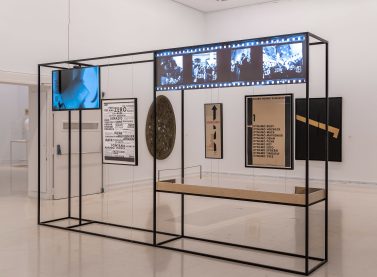
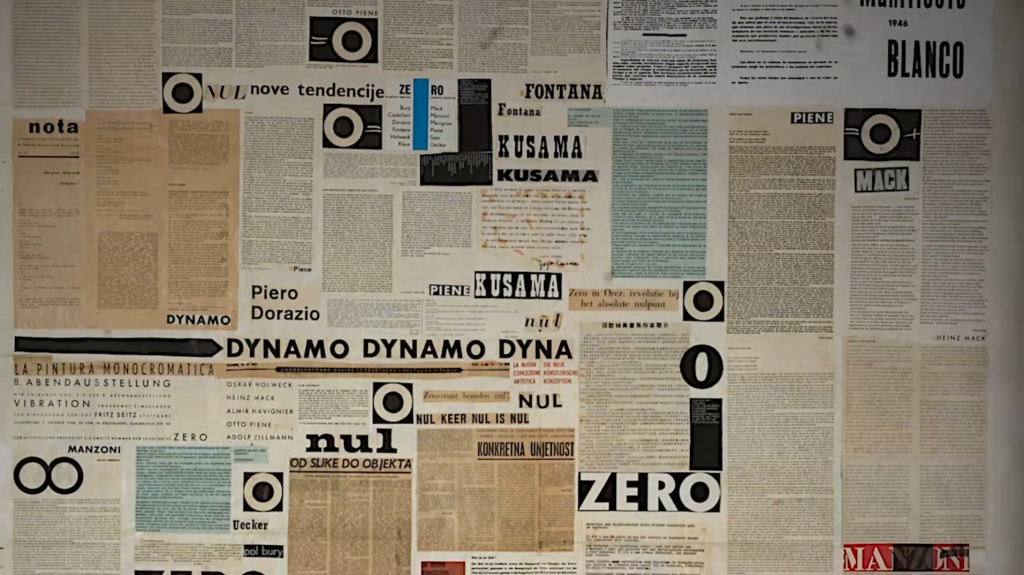
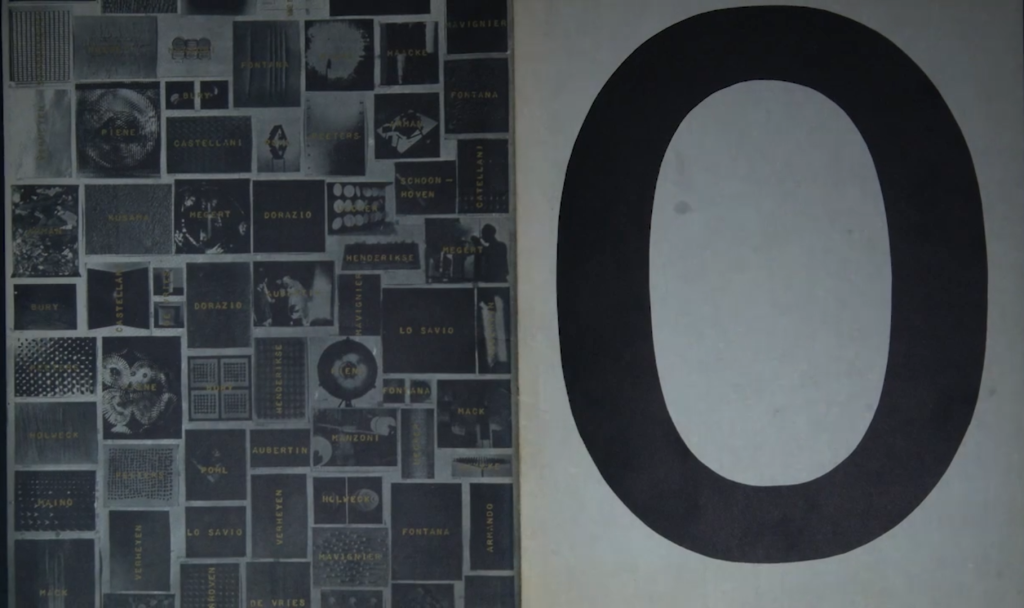
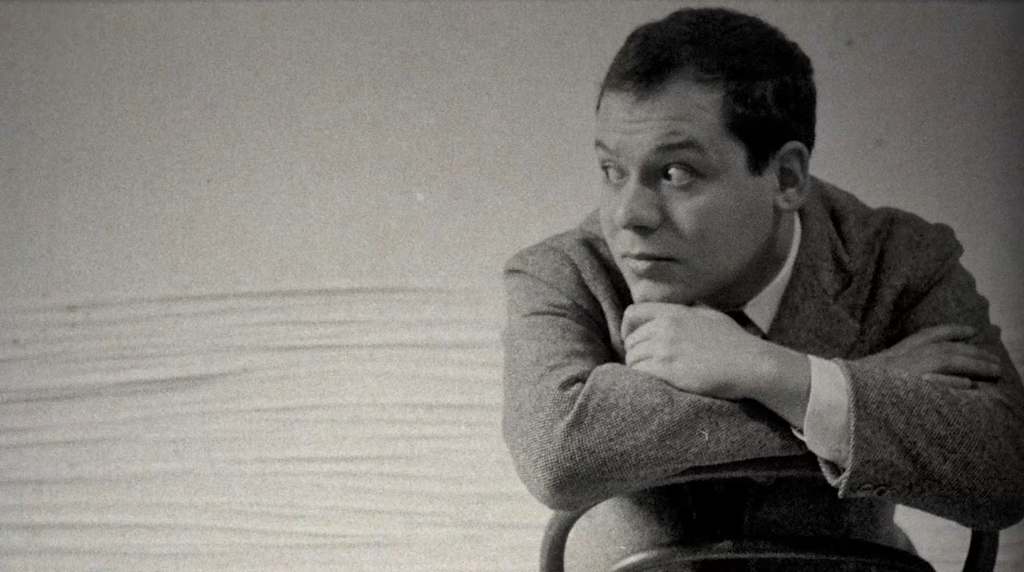
On the occasion of the exhibition Far from the void. ZERO and the post-war art of Europe is showing the film Piero Manzoni and ZERO (2018), by Francesca Pola .She is one of the most prolific authors of the new narratives on the history of art from the second half of the 20th century, and she has placed special attention on the artists who promoted the renewal of arts in Europe since the 1950s, within the ZERO and Azimut/h setting.
After the film, which was written and directed by Pola, the author will chat with the curator of the exhibition, Bartomeu Marí, about the new historical perspectives and methodologies for reviewing stories of contemporary art, the importance of oral history and the new challenges and objectives for the history of art.

28 oct. 2022 – 18 jan. 2026
IVAM Centre Julio González
share
For more information, please check the Spanish version.

11 nov. 2022
IVAM Centre Julio González
share
New Scenario (Paul Barsch and Tilman Hornig) introduce a workshop in which they will produce fast, ad hoc, exhibition spaces with works of art (proxi-) in situ. The activity will centre around the opportunities and problems with certain spaces when it comes to exhibiting beyond the white cube. Hence, they will explore some of IVAM’s spaces and will deal with questions of documentation and dissemination.
Participants should bring along day-to-day objects or art to carry out the activity.
Since 2015, the artistic and curatorial project, New Scenario, by visual artists Paul Barsch and Tilman Hornig, has designed and created various online exhibitions with international artists in narrative settings –(off)site-specific, without white cubes, which go beyond the conventional exhibition space- to explore and redefine new formats of presentation in the post-digital era. Their most famous exhibition project, Body Holes, which took place in the holes of the body, formed part of the 9th Berlin Biennale. In 2021, they premiered the group exhibition, Chernobyl Papers, which was done in the contaminated exclusion zone surrounding the remains of the nuclear reactor.
Projects: Crash (2015), Jurassic Paint (2015), Body Holes (2016), Residency (2017), Hope (2017), Cameron Nichole is Chloe Sevigny is Bruce Nauman (2018), Whiteout (2019), Chernobyl Papers (2021).


27 oct. 2022
IVAM Centre Julio González
share
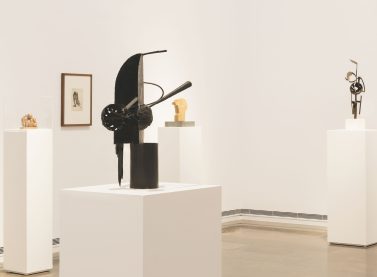
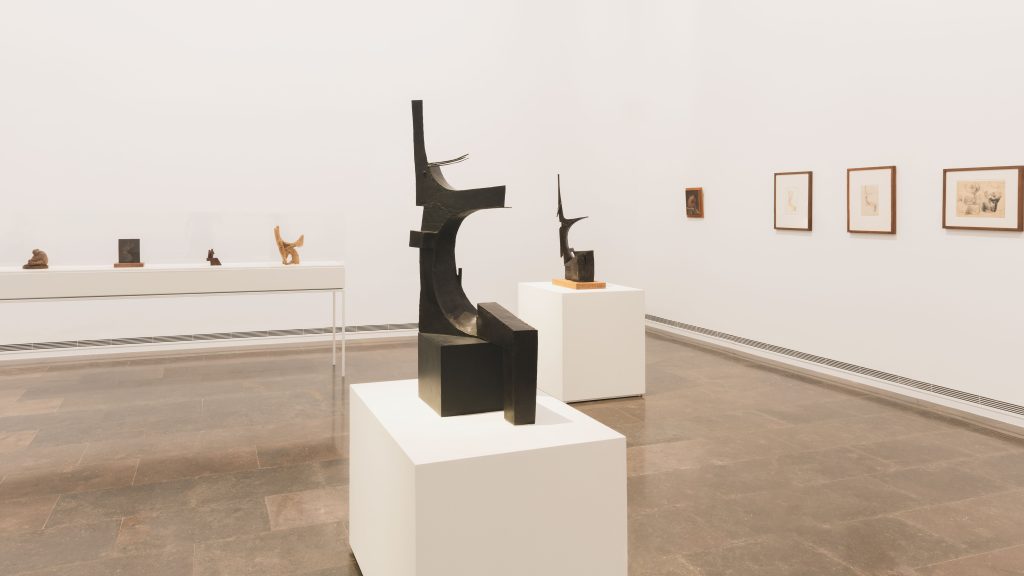
Juan José Lahuerta, curator of the exhibition, and Nuria Enguita, director of IVAM, invite us to the presentation of “SER ARTISTA. Julio González”, a review of the Julio González background from the IVAM Collection which aims to cast new light on this great artist’s work, moving away from certain myths about his life and his works that have persisted since the middle of the last century.
This new presentation of the work of Julio González is based on a study of the collection without prejudice of the operational history: forgetting González to discover its complexity, as a piece of art and as a collection. Considering all of the “stages”, all of the “themes” and all of the “arts” as equal, in the contexts given to us by the extraordinary archive materials (documents, photographs, etc.), and the history of their era(s).
Juan José Lahuerta is a professor of the History of Art at the Barcelona School of Architecture and director of the Gaudí Chair. He has taught at universities including the IUAV in Venice or New York University, among others. He has been Head of Collections at the National Art Museum of Catalonia and Senior Curator at the Picasso Museum in Barcelona. He has published books about art and architecture, including, for example, 1927. La abstracción necesaria (1989); Antoni Gaudí, 1852-1926. Architettura, ideologia e politica (1992); Le Corbusier. Espagne. Carnets (2001); Estudios antiguos (2009); Humaredas. Arquitectura, ornamentación y medios impresos (2010); Religious Painting. Picasso and Max Von Moos (2015); Marginalia. Aby Warburg, Carl Einstein (2015); Photography or Life: Popular Mies (2015); On Loos, Ornament, and Crime (2015); Antoni Gaudí. Ornament, Fire, and Ashes (2016); Arte en la época del infierno (2021); and the catalogue of the exhibition held at the MNAC in Barcelona and the Musée d’Orsay in Paris, Gaudí (2022). He is a member of the Casabella Scientific Council and founder and director of Mudito&Co publishing company.
18 oct. 2022 – 25 oct. 2022
IVAM Centre Julio González
share
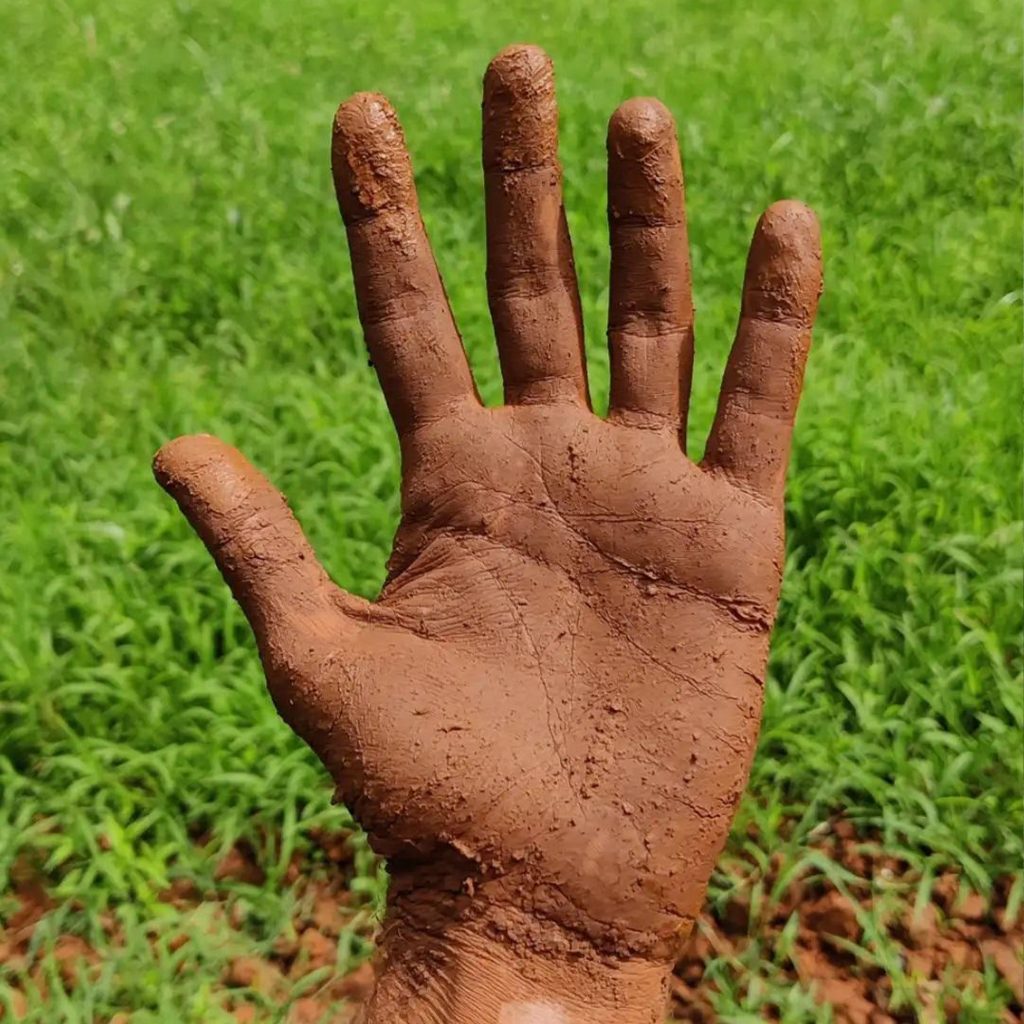
The Programa d’Art i Context (IVAM) invites Manuel Minch to develop the new image website. After this, you have the interview that we have prepared in which he discloses some of his secrets.
14 oct. 2022
IVAM Centre Julio González
share
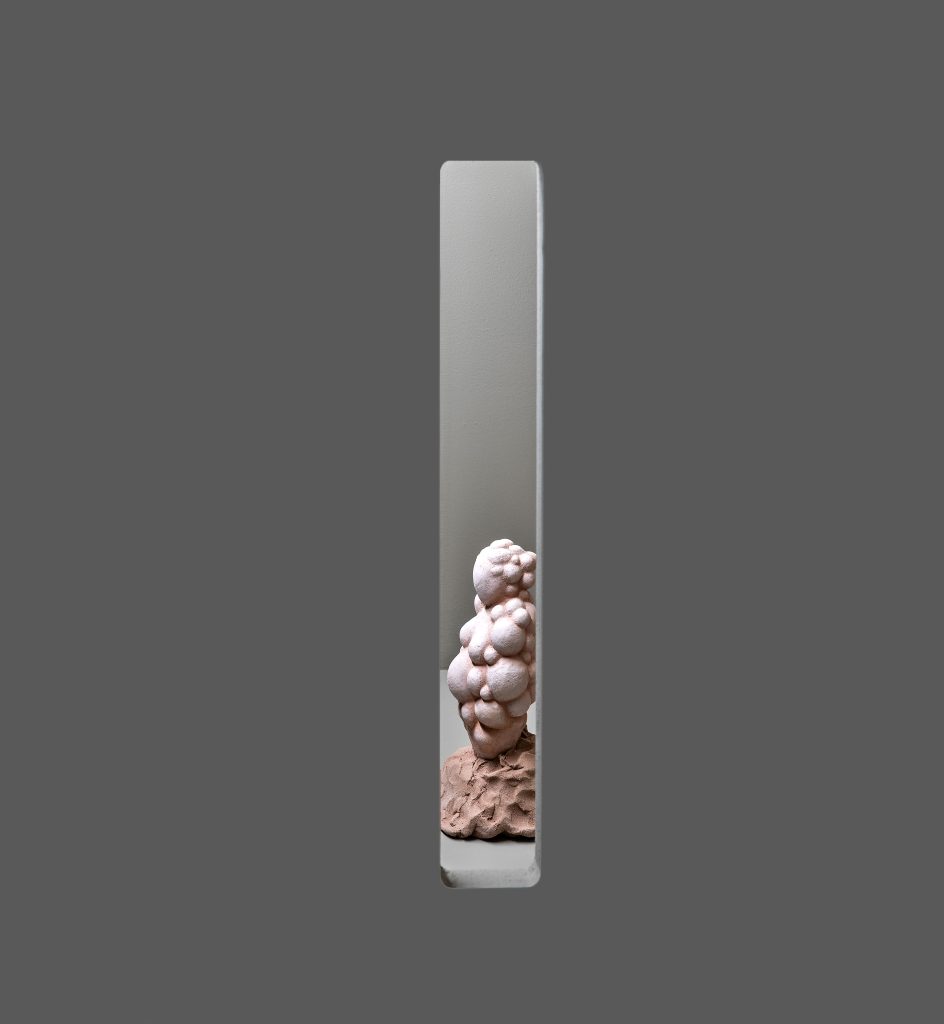
The exhibition Mar Arza. A pesar / A saber / A tientas (In spite / In short / In darkness) is a project specifically for Gallery 3 of the IVAM. Conceived as an installation, it brings together archaeological pieces displayed in a dialogue with works by Julio González and those of the artist.
Within this framework, a book has been published in which Anna Manubens and Andrea Soto Calderón propose further reading, actual dialogues and poetic journeys based on the artist’s proposal. This supporting structure works because it does not match in the case of Manubens and Diosas caídas: matriz, maternidad, materialidad at the Soto Calderón. We now invite you to the presentation of this publication, and to continue broadening dialogues and viewpoints.
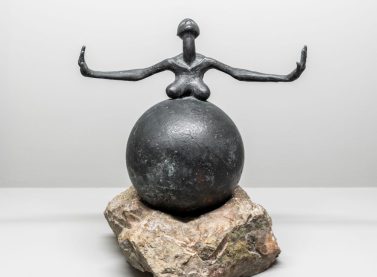
“When Mar summoned me to her studio to talk about the exhibition, she placed images on the table while weaving scraps of stories together. The first was an image of Shield (Coraza), a bronze piece that looks like a cast of the bust of a pregnant woman. On the inside, at the level of the navel, there is a stinger welded on, so that when placed on a body, in the space between the bulging bronze belly and the abdomen of the person putting on the shield, the stinger would prevent the shape of the sculpture from molding to the shape of the body. This would prevent the wearer of the armour from actually being in a protruding state of gestation”.
Anna Manubens
“On other occasions, Mar Arza has swept the page clean. Here she enters the void, her procedures and critical mechanisms don’t take on the form of judgement; on the contrary, what she does is to prepare herself to receive a form, as though she were skirting a beach made of noises, to work with its matter, to imagine, which is a genuine way of creating: what we see with the imagination, becomes. She makes the materials vibrate and sing, “sing all their elements for the power of laughter or love”, we can say that Mar Arza makes the material laugh, and in its laughter we can hear the powerful echo of other voices, those that resound in the dry touch of a sculpture, because she is not afraid to look at or cry for what has been lost”.
Andrea Soto Calderón
Anna Manubens is the director of Hangar, a centre for artistic research and production in Barcelona. Previously she has been an independent curator and producer with a preference for hybrid roles at the intersection of writing, research, programming, production support, institutional analysis and exhibitions. Until 2017 she was Head of Public Programmes at the CAPC museum of contemporary art in Bordeaux. Previously, she combined her freelance activity with teaching at the Universitat Pompeu Fabra and was a regular collaborator at the artist-run Auguste Orts (Brussels) dedicated to the production of, and consideration of artists’ films.
Andrea Soto Calderón holds a PhD in Philosophy and teaches Aesthetics and Art Theory. Her lines of research focus on the transformations of aesthetic experience in contemporary culture, criticism, the study of the image and media. Her recent publications include the book Le travail des images with Jacques Rancière, Les presses du réel, 2019, La performatividad de las imágenes, Metales Pesados, 2020, Imaginación material, Metales Pesados, 2022.
02 nov. 2022 – 10 may. 2023
IVAM Centre Julio González
share
The collection from IVAM is organised using six chronological and themed blocks which explain, with their own voice, the art developed from the beginning of the 20th century to the modern day. Perhaps not everything is as it is (or was), but it is everything that exists. Stories of the present – and those that come from far away but are updated in our present- should be told as a polyphony of voices and from contexts that make us sharpen our critical eye regarding their construction and relevance.
Over six sessions, using six books, we will delve into the narrative actions that literature offers us and we will link them together, sometimes with simple gestures and sometimes with more complex choreography, with the IVAM collection. The worlds of fiction build reality; they are reflective mirrors or transparent windows, but they always tell us what we are, or what we are eager to become, from our previous experience and towards our future possibility of transforming ourselves. In these narrative gestures, traversed by stories and lives, we will slow down.
El gesto narrativo
Six Wednesday sessions, from 18.00 to 19.30
2nd November and 14th November 2022
18th January, 15th February, 22nd March and 10th May 2023
Limited places. Recommended for interested individuals, send a brief letter of interest. Acceptance to the group involves attendance at all six of the sessions.
Working of the reading group: each participant should have read the book before they arrive. IVAM will have 5 copies available for those who are unable to buy it or to borrow. The location of each session will be provided in advance, depending on the book and the dynamic generated between the book and the section of the IVAM collection that it refers to.
1914-1939: Historic vanguards
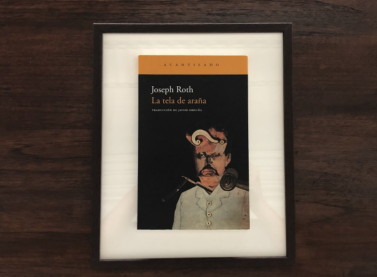
«This period comprises from the First World War until the start of the Second, the same year in which the Spanish Civil War ended. IVAM possesses a significant collection of works belonging to historic European vanguards, especially from constructivism, dadaism, futurism, neoplasticism and non-figurative or concrete abstraction.»
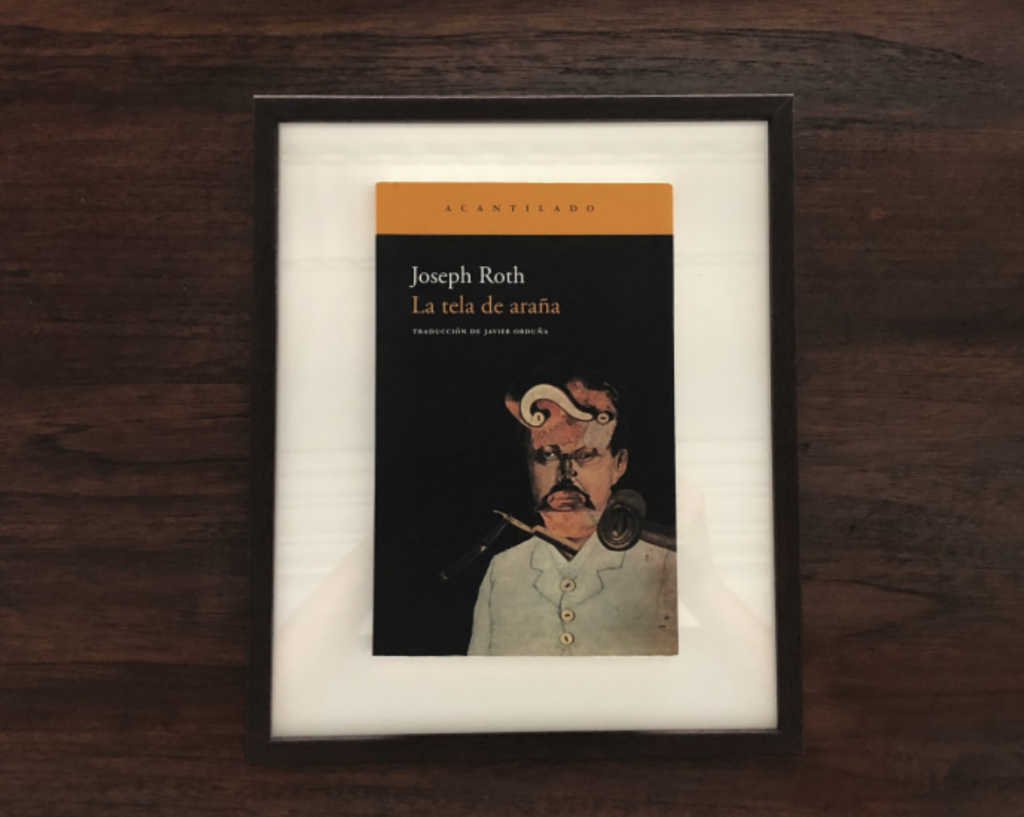
—La tela de araña (1923) by Joseph Roth. Ed. Acantilado.
Wednesday, November 2, 2022, at 6:00 p.m.
1939-1961: Art in post-war Europe
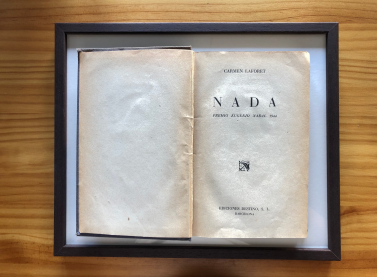
«The twenty two years that make up this period, covering four decades, stand out for the consolidation of artistic movements such as European informalism or American abstract expressionism, together with new proposals of geometric abstract art, in a context framed by the long European post-war period and the hardest years of the Franco dictatorship.»
—Nada (1945) de Carmen Laforet. Eds. Austral, Cátedra.
Wednesday, December 14, 2022, at 6:00 p.m.
1962-1976: Irruptions of the image
«This period brings together artistic practices of a very diverse nature that debated between abstraction and figuration both in Europe and in the United States. They are practices based on a new configuration of time, space and perception, and new approaches around objects, gesture and action, of which the IVAM has a significant number of works.»
—El Benefactor (1945) by Susan Sontag. Eds. Debolsillo, Alfaguara…
Wednesday, January 18, 2023, at 6:00 p.m.
1977-1989: Transition and postmodernity
This period gave rise to some of the most daring phenomena of the late seventies, underlain by concepts which we can, almost academically, call “postmodern”. The IVAM itself functioned as a historically determined institutional threshold born of the thematically overexploited Spanish Transition, and a peculiar phenomenon specifically rooted in the fact of the Spanish Autonomic Regions. Certain artists appeared who intensified the use of photography as a concept rather than as a mere imprint or index, and we can trace the construction of new theories of the image, visual studies, and the new range of disciplines which, together with the artists themselves, were to reinterpret the role of different practices.
—Wittgenstein’s Mistress (1988) by David Markson, Dalgey Archive Press
(La amante de Wittgenstein, Trans. Mariano Peyrou, Ed. Sexto Piso).
Wednesday 15 February 2023, 18:00
1990-2001: Arts in a global world</strong>
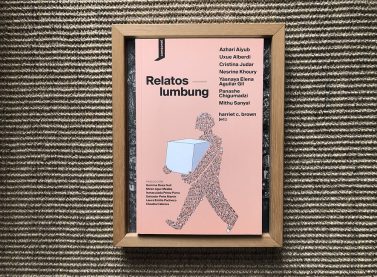
This period saw the globalisation of contemporary art discourse and the phenomenon of the exhibition. In considering it, we must address the proliferation of exhibitions giving a voice to global “others”, and also take into account the conceptual shifts this necessarily led to in museum exhibitions. The complex demands of minority and subaltern majority identities must be taken into account, as well as the explosion of popular phenomena and the renewed discourses of feminism. New formats and materials also appeared, giving rise to hybrid categories of artistic genres in large installation formats. Abstraction also incorporated socially critical imagery and postcolonial discourses. The nineties also saw the birth of gender politics and many other non-hegemonic manifestations which began to permeate institutional collections and exhibitions.
— Lumbung Stories (2022), Azhari Aiyub et. al. ,Ed. harriet c. brown Incudes stories by Azhari Aiyub, Uxue Alberdi, Cristina Judar, Nesrine Khoury, Yásnaya Elena Aguilar Gil, Panashe Chigumadzi, Mithu Sanyal. Trans. Gemma Deza Guil, Miren Agur Meabe, Inmaculada Pérez Parra, Salvador Peña Martín, Laura Emilia Pacheco, Claudia Cabrera.Cassava Republic Press
(Relatos lumbung, VV AA. Edited by harriet c. brown. Ed. Consonni)
Wednesday 22 March 2023, 18:00
2002-2021: Forms of the contemporary
The most recent of the historical periods, with the closest relation to the present day, offers us several lines of thinking on prospective projects focusing on the early decades of the twenty-first century. With this in mind, we can tackle the many ways of imagining the revolt, the performative phenomenon of the protest as a sociological staging which also relates to the iconography of nineteenth- and twentieth-century art. Actions and interventions in different contexts may mesh with some of the aims of feminist and queer activism, or the conflicts of globalism in its inequality, current forms of communication and the new awareness of crisis as a global phenomenon. Contemporary art is now postconceptual, its meanings are open, it has recuperated the document, narrative, and embodied practices through performance and the use of the word.
—The Most Secret Memory of Men (2023) by Mohamed Mbougar Sarr, Other Press
(La más recóndita memoria de los hombres, de Mohamed Mbougar Sarrgar Sarr, Trans. Rubén Martín Giráldez. Ed. Anagrama).
Wednesday 10 May 2023, 18:00
23, 24, 25 and 26 nov. 2022
IVAM Centre Julio González
share
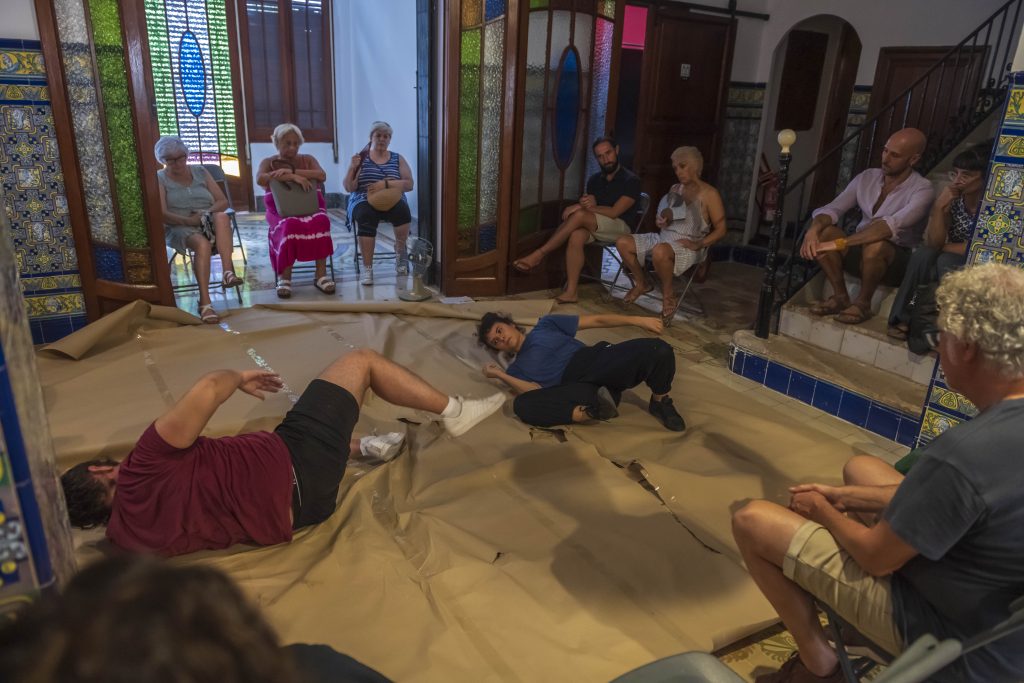
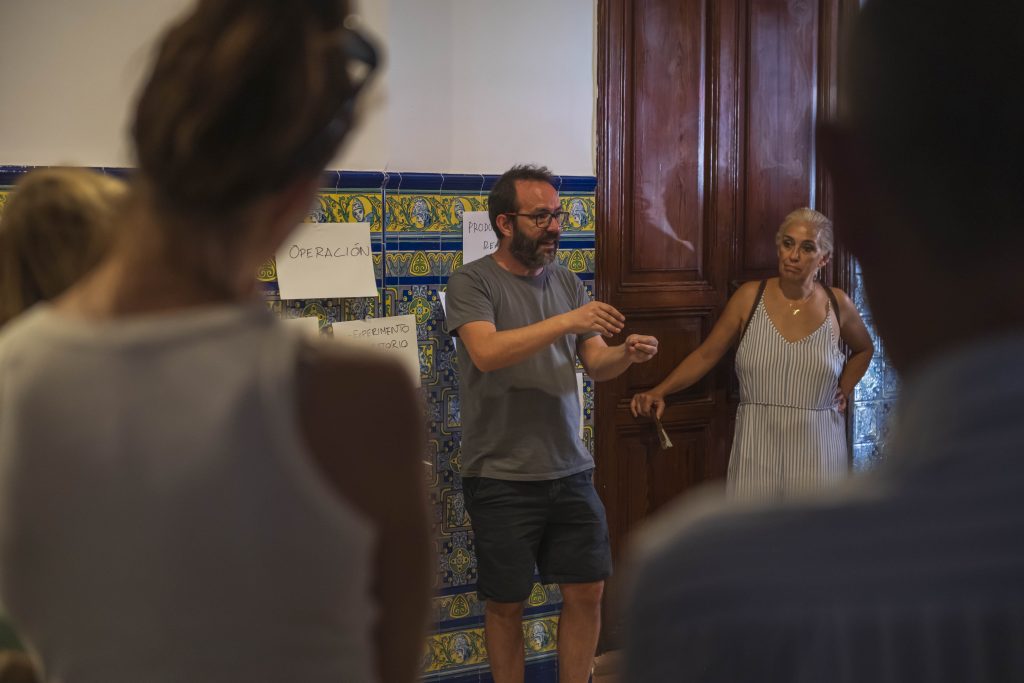
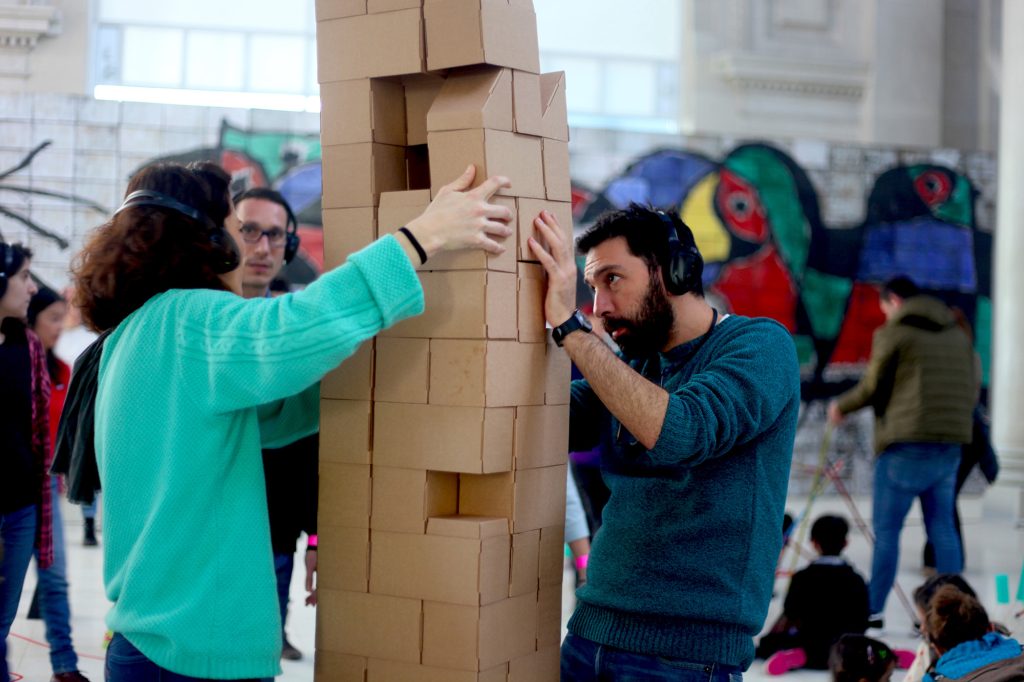
The project Motors de Creació was set up in 2019 in Catalonia by the Associació de Professionals de la Dansa de Catalunya-APdC. In its three editions it has focused in different ways on sharing and a dialogue on the creative processes of dance artists, and/or other artists from the performing arts because of their specific interest, as well as broadening the focus on creation.
The Associació de Professionals de Dansa de la Comunitat Valenciana which will establish its own modus operandi while linking to the project already underway in Catalonia.
The Motors de Creació activities at IVAM are articulated as the materialisation that starts from a dialogue with the artists chosen for the edition on their creative processes, which include different formats.
This dialogue has been established between the curator of the project in Valencia, Santiago Ribelles, and the two chosen Valencian artists or artist collectives: Julia Irango and Jorge Nieto, on the one hand, and Norberto Llopis, on the other. At the same time, another less intense dialogue has been established with one of the four artists chosen by the curators of the AdC, who will also participate in Valencia: Azkona & Toloza.
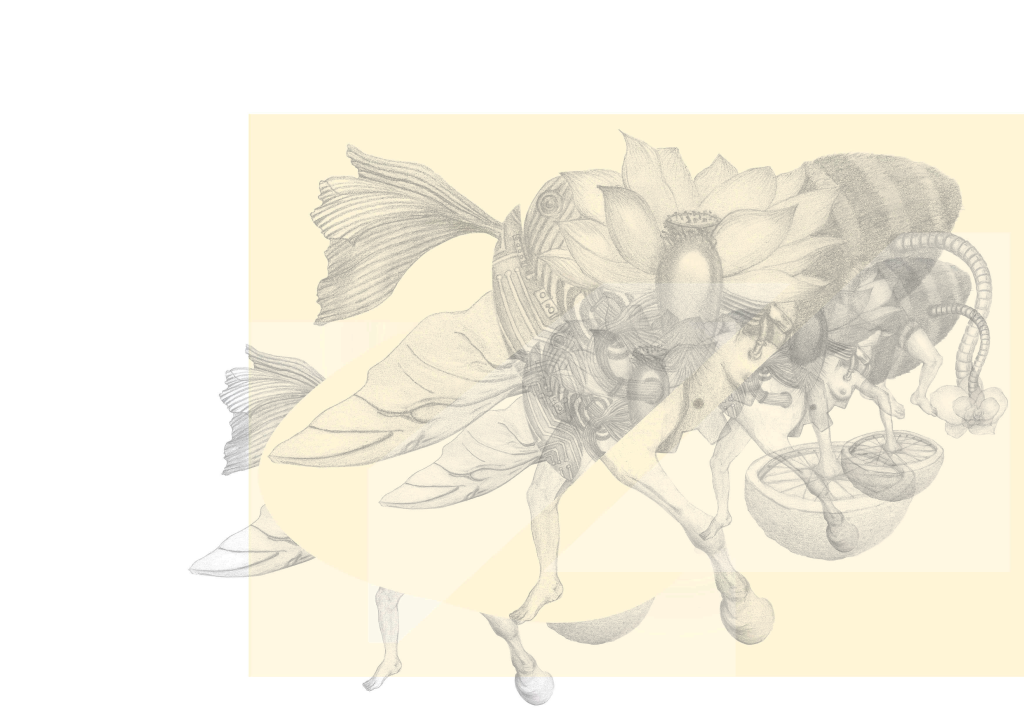
The aim is to open up a sensitive space within the artistic community and for the public, in the form of a monster, a heterogeneous amalgam of the artists’ areas of affection that brings us closer to the world of creation, but without closing it inside a ruminative, analytical synthesis, that is disconnected from the complex motors of the processes of artistic creation.
Wednesday, November 23, at 17:30 h
Inauguration – Map of affections
With the opening of the conference, Jorge Nieto, Julia Irango and Norberto Llopis will share a series of actions, not strictly related to one another, which reveal some of their affections at the moment of creation and which may be articulated in relation with the concepts of operation, assemblage and ritual..
Thursday, 24 of November, at 17:30 h
There is no creative act
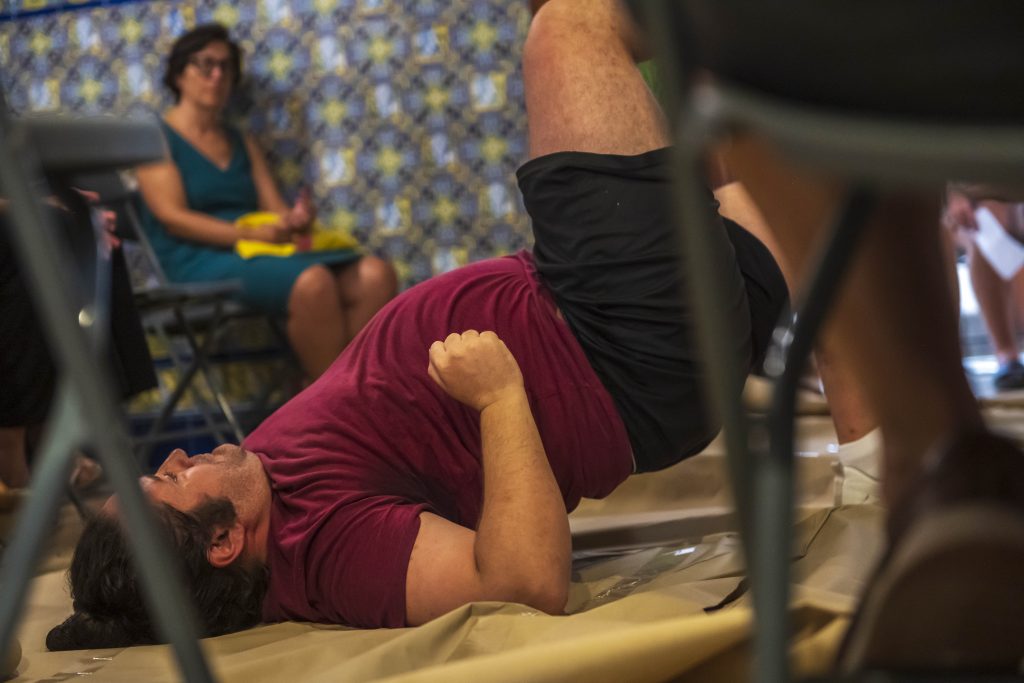
In this performance-conference, Norberto Llopis, using archival material from his previous works, through actions and the use of objects and speech will aim to identify his artistic practise from the concept of Operation.
Friday, 25 of November, at 18:30 h
There is no authority
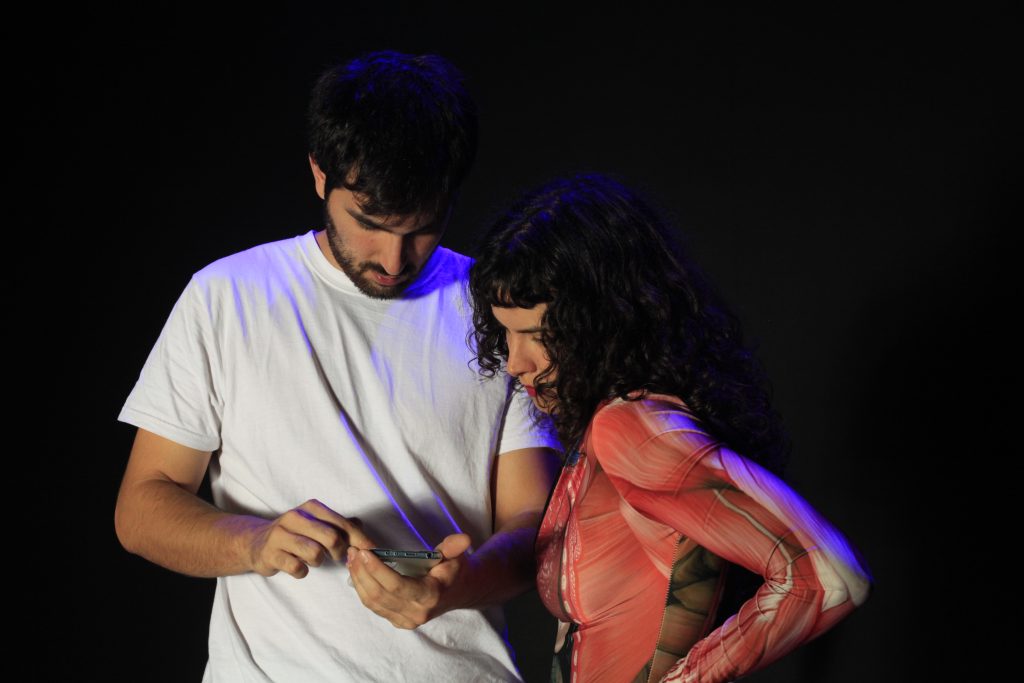
Jorge Nieto and Julia Irango will outline a picture of their transdisciplinary coexistence and their communal artistic creation, through conversations in between practices, contrasting referents and objects. They understand their joint work to be something that lies in between them both, highlighting the fact that it does not entirely belong to either of them. What they will share is precisely this one-way road with no return.
Saturday 26 November at 12:00 h
Lecture-Performance
The names of the protagonists have not been changed
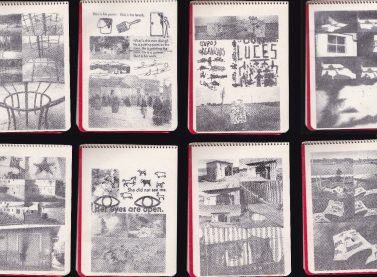
After years immersed in archives in search of the stories and data that narrate the spread of old colonies throughout Latin America and Africa, now AzkonaToloza have decided to dive into their own archives. Not from the viewpoint of the untouchable and sacred fetish, but from the vitality of the action involved in diving into the boxes that contain the memories of their latest journeys. From the geographical and mental maps that indicate the routes followed, to the albums that collect the photos so often reconstructed using their own bodies; from the recordings of conversations that have been transformed into the verbatim presented on stage; or the filing cabinets of documents to the fanzines and publications that have been the basis of their documentary projects. The invitation is to go through them all together.
Saturday 26 November at 17:30 h
Conversation
In a dialogue with the curator the three creators/collectives of creators will establish some ideas on how to discuss artistic creation from their own perspective and in relation to the perspective of others.
Norberto Llopis
Norberto is a choreographer and performer, working at the boundary of dance and thought. He graduated in Dance and Choreography at the Institut del Teatre; he holds a Master in Performing Arts at DasArts, Amsterdam; a Degree in Philosophy at the UNED; a Master’s in advanced studies in Philosophy at the Universidad Complutense and is currently working on his doctoral thesis on “aesthetics in the thought of Derrida and Deleuze” at the Universitat de Barcelona. Norberto has developed his work between Barcelona, Brussels and the Netherlands. This artist’s practice ranges from working with, and on the body, to the use of objects and materials for the construction and reflection on space. In his approach to philosophy, he tries to develop a practice of non-theorising thinking on space and the signs under which it is established. His work has developed in the form of stage pieces, performances, installations, lectures and texts, in Spain, Brussels and Holland. Norberto has participated in creative processes with artists such as Carolien Hermans, Paz Rojo, Diego Gil, Jefta Van Dinther, Nada Gambier, Rafael Tormo and Vicente Arlandis among others.
Julia Irango
Julia Irango is a creator and performer. She is currently developing her project Ningú morirà després de mi a cross-disciplinary work with the architect Jorge Nieto. This project stems from her previous solo work Thisness and has been funded by La Caldera in Barcelona, Graners de Creació in Valencia or El Centro Párraga in Murcia. For her previous work, La tragedia no es pa tanto she was nominated as Outstanding Creator in the 2021 APDCV awards.
As a performer she has worked with creators such as Norberto Llopis (Máquinas, 2022), Aurora Diago (Ok, Boomer, 2021-2022) ç, Pere Faura (Réquiem Nocturn, Grec 2020), María Cabeza de Vaca (Catástrofe, 2020 and La Furia, 2022), Guillermo Weickert (Tocar con·mover, 2019) or Eva Redondo (Cuidado con el perro, 2019). In December she will make her debut as an improviser with the team of Si los martes fueran viernes in the Mercat de les Flors. In 2016, together with her colleagues, she started the Valencian company Dunatacà, and is part of the production MUUchachitas or Seyahat. Julia Irango studied Choreography and Performance at the Conservatorio Superior de Danza de Valencia and Contemporary Dance Performance at the Real Conservatorio Profesional de Danza Mariemma in Madrid. She is also trained as a musician, actor and in new dramaturgy.
Jorge Nieto
Jorge Nieto is an architect from the Universidad Politécnica de Madrid, who combines his work with a creative practice in the field of the performing arts with Julia Irango, with whom he has premiered a full-length piece. He has recently collaborated with companies such as Societat Doctor Alonso and Norberto Llopis. His scenography work and research often address issues and controversies related to machines, artefacts and programming.
AzkonaToloza
Located at the intersection between the Mediterranean Sea, the Pyrenees and the Atacama Desert, Laida Azkona Goñi and Toloza Toloza-Fernández are an artistic couple dedicated to the production of living arts projects.
The couple are interested in the infinite possibilities of poetry and visual anthropology, video creation, performance and movement. Their latest creations focus on the re-reading of official history and the creation of documentaries designed for the stage. The stage is understood to range from the hall of an opera house to the immensity of the Andean plateau’s salt flats.
Among other festivals, their works have been presented at the Grec Festival in Barcelona, the Festival d’Automne in Paris, La Bâtie Festival in Geneva, Mirada de Santos, Romaeuropa in Rome and Temporada Alta in Girona.

22 oct. 2022
IVAM Centre Julio González
share
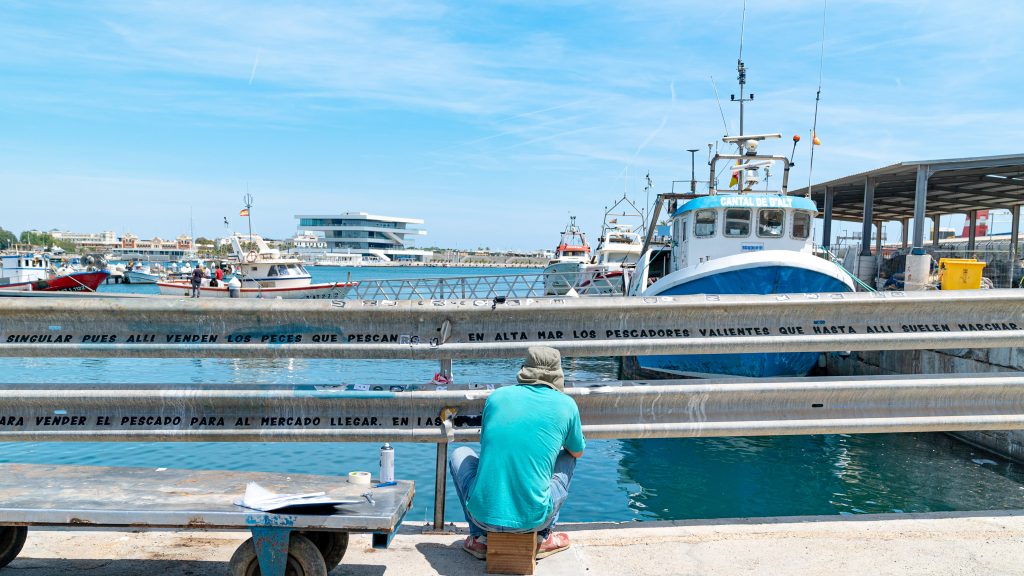
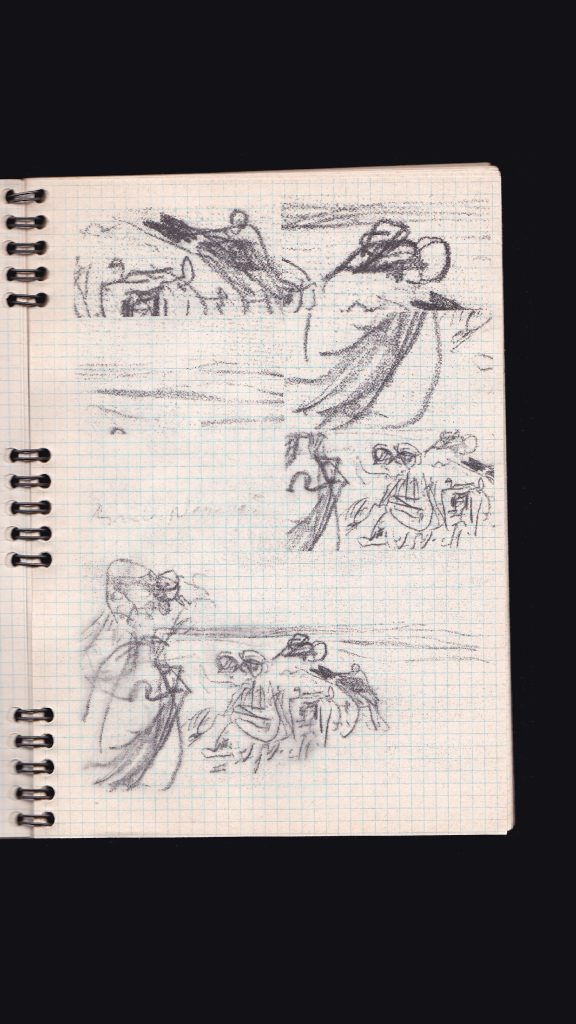
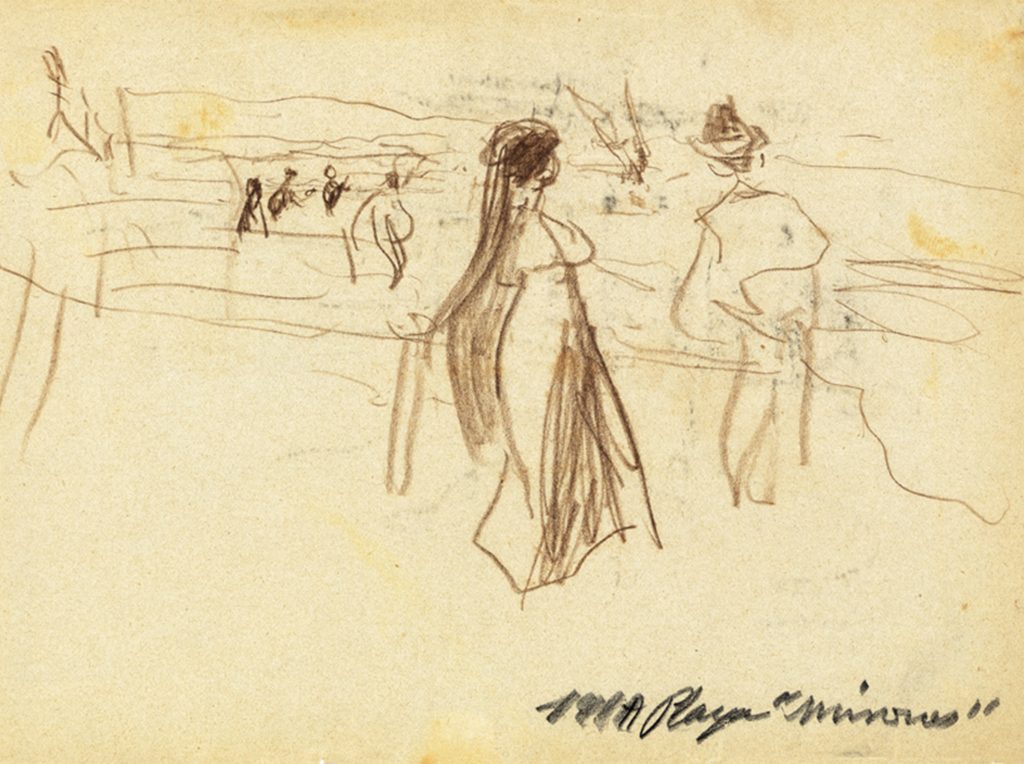
A cycle ride along the edge of the city of Valencia that borders on the sea. We will pedal in rhythm with the group, turn our gaze to dynamic and directed contemplation of those corners and places walked by LUCE and through which Pinazo is evoked. We will dissipate the timeline until the experiences of the painter and our collective experiences are on the same plane.
This is the suggestion for the third part of Shared Mapping, an activity that includes three different walks around Valencia with three protagonists: LUCE, Pinazo and the city itself. On this occasion, following the itinerary by bike will allow us to re-visit these common locations, to get around at greater speed and thereby get away from the square-on gaze and the passive contemplation of scenarios. In this way, we will bring our way of perceiving the visual field closer to the intentions of Pinazo and LUCE, which make constant movement in the public space a central theme in their practice of art.
*This activity is the third in a series of different walks offered by the artist and Eva Bravo. The programme also included – from the 1st of July to the 11th of September – the Open Studio in Lab2 at IVAM, which became a space in which to produce, create, show and share the different lines of action and research that link LUCE with the city of Valencia.
Through its practice, LUCE (Valencia, 1989) investigates the associations created between art and its surroundings. It promotes communication with the city as a means of understanding how it works and how we relate to it.
Eva Bravo (Valencia, 1974) combines archaeology with heritage management, teaching, cultural mediation and participation in research projects.
07 oct. 2022 – 16 apr. 2023
IVAM Centre Julio González
share
For more information, please check the Spanish version.
06 oct. 2022
IVAM Centre Julio González
share
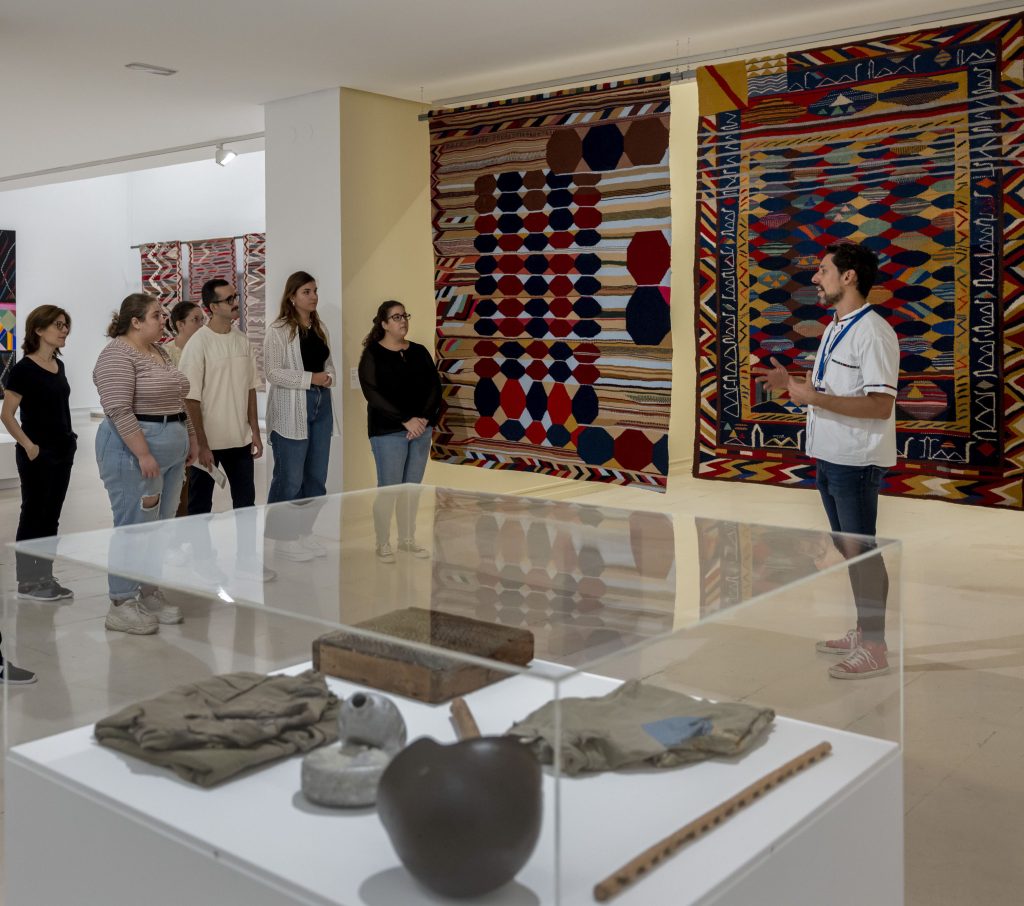
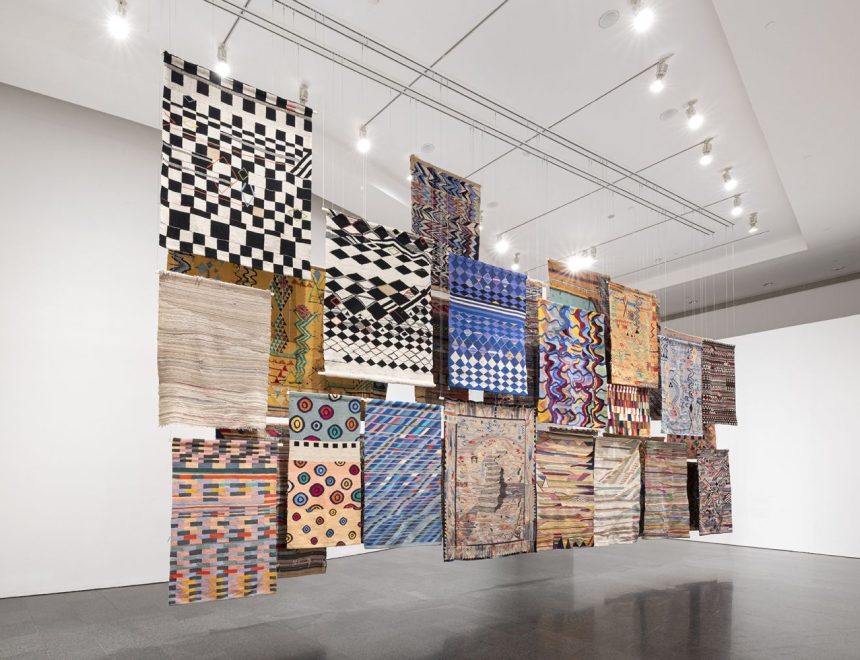
For the launch of the exhibition Teresa Lanceta. Weaving as open source, the artist and curators will talk about the distinctive characteristics of Lanceta’s work, from the beginning of its production in the seventies, to the modern day, in addition to the act of weaving as a critical activation of the imagination that goes beyond material limits.

17 and 19 oct. 2022
IVAM Centre Julio González
share
The activity is divided into two sessions aimed at reflecting on research systems and proposing speculative relationships between theoretical contexts, in addition to defining methods of data collection and research structures from visual arts, to the margins of university academicism.
These sessions, mediated by Sofía Alemán Arozena, Miguel Rubio Tapia and Álvaro Porras Soriano (artist from Programa d’Art i Context), are presented as a study group in which the research carried out by the attendees is gathered together to generate routes and exchanges – fluid, apophenic and chimerical – among the discursive proposals of each person involved in the activity.
Sofía Alemán Arozena (Tenerife, 1997) carries out research in photographic theory and practice, its relationship with the development of contemporary visual elements and their symbolic order. She graduated in Fine Arts from La Laguna University and Manchester Metropolitan University. She studied for a Masters in Photography, Art and Technique and the Masters in Artistic Production at the Polytechnic University of Valencia. She is currently studying towards a Doctorate Programme in Art: Production and Research at the Polytechnic University of Valencia.
Miguel Rubio Tapia (La Palma, 1999) works in artistic practice and curating. His subject of study relates to the formalisations made by power, from capitalist production trends to the production of knowledge, in order to legitimise and reproduce them through the body. He graduated in Fine Arts from La Laguna University, in the Multidisciplinary branch. He is currently finishing his Masters in Artistic Production at the Polytechnic University of Valencia.