16 jan. 2023 – 21 jan. 2023
IVAM Centre Julio González
share


16 jan. 2023 – 21 jan. 2023
IVAM Centre Julio González
share
Radicantes is a space for experimentation, research, observation and debate on performative practice.
The artists invited to this edition of Radicantes 2022-23 will be Laura Ramírez, Paz Rojo and Elena Córdoba.
A conversation between/with the three guests is scheduled for Friday, January 20, 2023
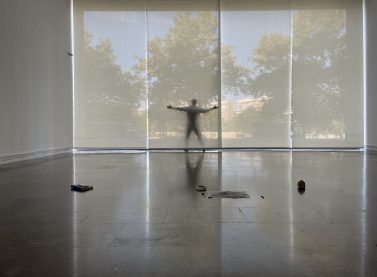
I once saw a brain in a tupperware. Elena Córdoba
From 16 to 21 January 2023. On Saturday 21st she will conduct a demonstration of her research.
During her stay she will work with a group of people. A call will be opened to form part of the laboratory.
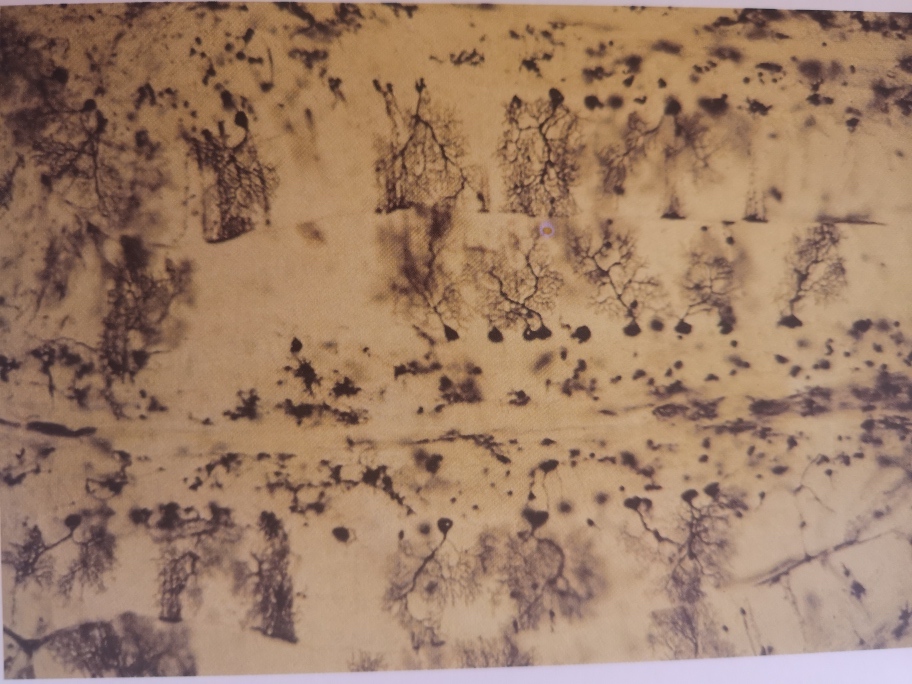
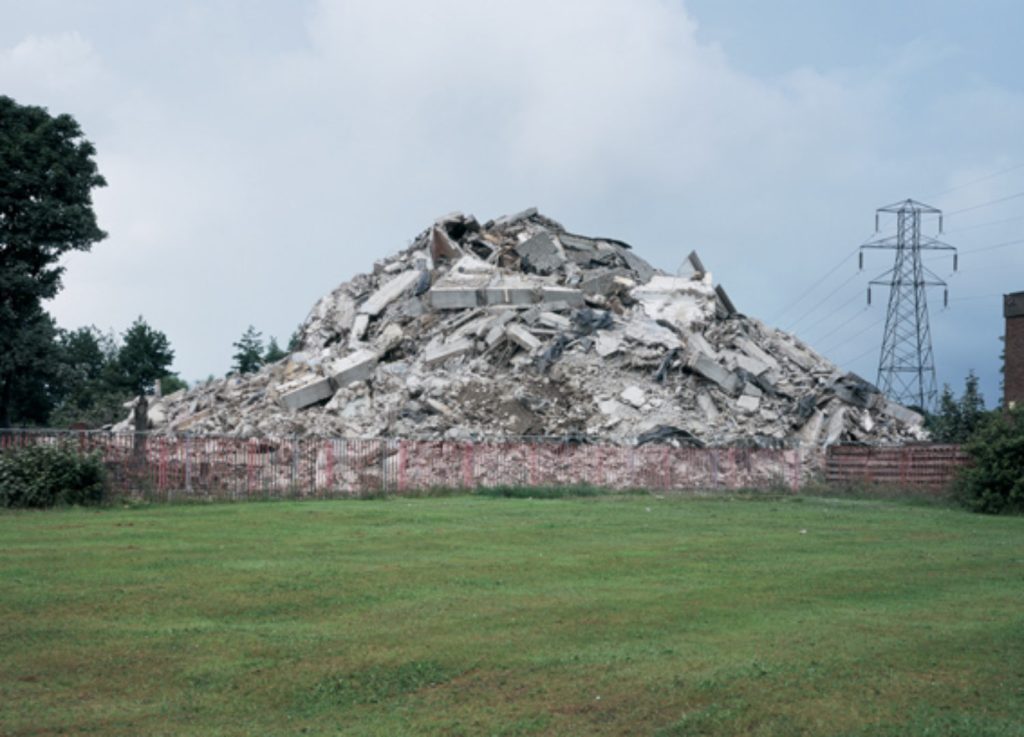
Once I saw a brain in a tupper, it was in the Anatomical Theatre of the University of Coimbra, it was a soft form floating in formaldehyde. By studying the brain I have learned that memories are not stored in any particular place, that we do not have a physiological space in the brain to store them. I have learned that memories and thoughts are connections that just as they are established they can disappear. In other words, memory is made of traces left by what we have lived in the soft matter, even though it seems impossible for something to remain etched in it.
I want to look at those traces, at the processes through which something is written and in which what is written is erased.
Elena Córdoba. Dancer and choreographer. Her work is based on the detailed observation of the body, as both guiding principle and material. She claims sensory experience as a form of knowledge and the act of dancing as one of its manifestations.
In 2008 she began Anatomía poética, a cycle of creation about the interior of the human body, which includes works and studies of different formats. She currently works with the body and botany as part of the Ficciones Botánicas, a project of study and creation around the plant world and its choreographic laws.
To dance, understood as a human manifestation, she has dedicated the collective projects: Bailar ¿es eso lo que queréis?, Déjame entrar o ¿Bailamos?.
https://www.elenacordoba.net/
09 jan. 2023 – 13 jan. 2023
IVAM Centre Julio González
share
Radicantes is a space for experimentation, research, observation and debate on performative practice.
The artists invited to this edition of Radicantes 2022-23 will be Laura Ramírez, Paz Rojo and Elena Córdoba.
A conversation between/with the three guests is scheduled for Friday, January 20, 2023
Die well. Paz Rojo
January 9-13, 2023. On Friday 13th she will conduct a demonstration of her research.
During her stay she will work with an inter-generational group of people. A call will be opened to form part of the laboratory.
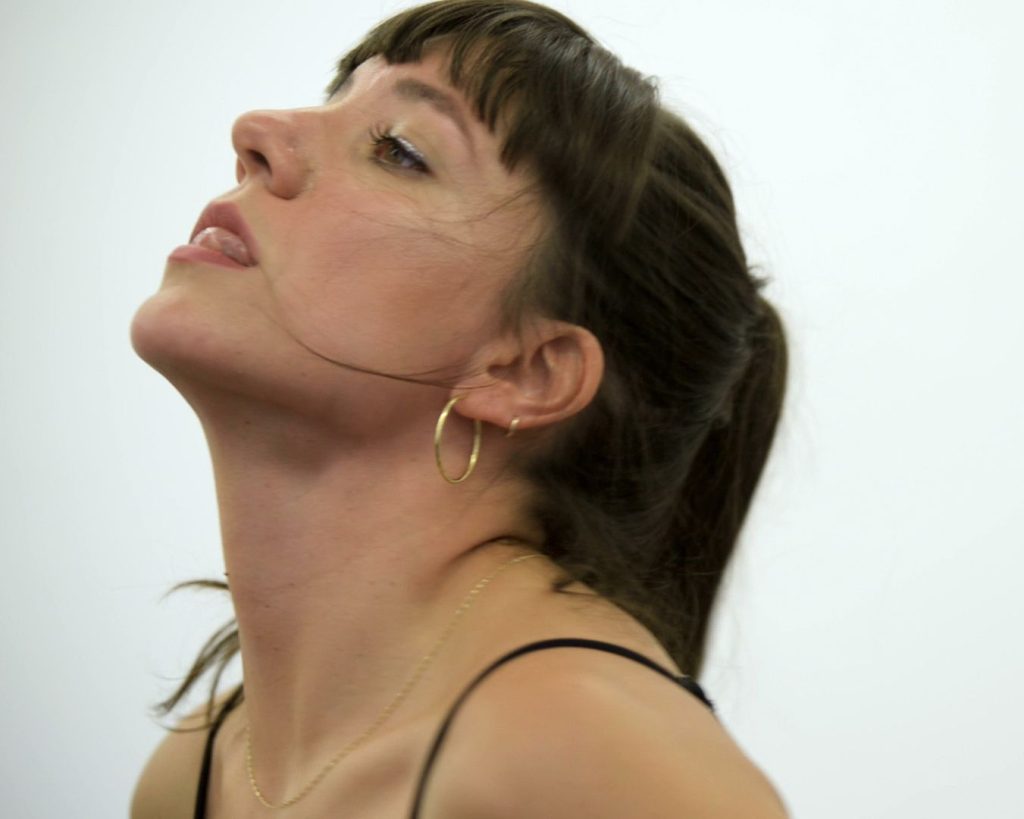
In the new cycle of Radicantes I would like to share an investigative process that I am just beginning. The project is entitled Die Well and is born from the desire to decolonize this future.
With the expression “die well” I try to understand a sustainable present through the practice of a pharmakon: a word of Greek origin that means both a poison and an antidote. “To die well” is perhaps the tragedy that remains for us to assume. We are at the end of this particular world. A fact that forces us to act assuming our own contingency and finitude, however. Understood in this way, the expression “die well” can be a practice involving reflection over the long term about the continuity of our practices, and the knowledge that they generate, in order to conceive together a culture which is connected to what it is to die, to age, to end, yet oriented towards what comes after the segment of time in which we live.
This laboratory appeals to a certain cosmological and inter-generational sensitivity: adolescents, young people, middle-aged people and people over 65 are invited to conceive together the implementation of a possible “post-future art”. An art conceived as if it were an object of the past, but in contact with what will come. An art descended from a performance and a dance in ruins. An art that recalls, as if it were a dark omen, that life carries in itself the dream – or nightmare – of survival.
We will approach these ideas from artistic research and dance based on practice. From a non-linear approach to time, we will focus on the temporal category of the “end.” This does not necessarily imply reaching the final term, but a “later” that allows us to think about the sustainability of our practices and knowledge “as if the end had taken place”. Each session will be contextualized via references that accompany the project’s research concerns, through which I will facilitate different movement practices and experiments of various nature. We will work individually or in groups in a quiet environment where there will be space to ask questions, share and self-regulate the learning-research process itself.
This workshop is aimed at anyone (with previous experience in dance or not) interested in performing arts, dance and artistic research.
Paz Rojo is an Artist, Dancer and Researcher. Degree in choreography, Amsterdam University of the Arts (1996–2000, AHK/SNDO). She studied dance at Movement Research and Susan Klein School, New York (1994-1995). In 2020 she received a PhD in Performance Practices with a specialisation in Choreography from Stockholm University of the Arts, Sweden, with the project entitled “The twilight of choreography and its movement: the path of a body”. Her work questions the power of dance and the possibility of an artistic production beyond the framework of capitalist value production. A long-running project that has had multiple formats and artistic manifestations. More information at: to dance in the age of no-future.
Since 2009 she has been teaching, organising seminars, meetings, conferences, lectures and supervising artistic projects both in European university art programs as well as in independent artistic initiatives in Spain and Latin America. Her work includes editing, writing and publishing projects such as the book To Dance in the Age of No-Future , (Circadian, nonprofit publisher, Berlin 2019). Self-publishing ¿De qué hablamos cuando hablamos de danzar en un plano de percepción destituyente? (Madrid 2018). And the co-edition of the book-laboratory Vocabulaboratories (Ámsterdam-Viena 2008). In 2020 she presented Invisible Labor and the solo show Lo que Baila (2021).
12 dec. 2022 – 16 dec. 2022
IVAM Centre Julio González
share
Radicantes is a space for experimentation, research, observation and debate on performative practice.
The artists invited to this edition of Radicantes 2022-23 will be Laura Ramírez, Paz Rojo and Elena Córdoba.
A conversation between/with the three guests is scheduled for Friday, January 20, 2023
Oasis of Serenity. Laura Ramírez
December 12 – 16, 2022 On Friday 16th she will conduct a demonstration of her research.
This proposal is an intersection between choreography, movement, narrative and sound. An oblique path, a deviant decision. Remaining in the investigation while it is being carried out. Incarnated voices and sound bodies that echo in space through a character called serenity rave. Where does the word end and the body begin? Where does your language come from? What’s its heartbeat? Alongside this, techno music (accompanist in my last works and fundamental part of my research), arises to make the body and memory coincide; to produce a sensory environment through which, perhaps, a rumour could emerge, another language… It is about proposing an investigation whose edges are full of cracks and fissures through which to be sneak, using the fragmentation and the unfolding of the body to open an intermediate space, for its narratives and images; to resignify all the time. So much so, that I might disappear. Navigate over the traced tension lines. Be in the middle. A game where ruin is the landscape that desperately invades the body of expectations, its speed and its actions.
From an opaque rock, clear water gushes forth.
The solid bowl contains the clarity. Drink, traveler. Pay attention. Drink.
Ursula K. LeGuin. Hard Words, The Eternal Homecoming.
Laura Ramírez Ashbaugh (Madrid, 1988). Choreographer and dancer. She works through dance, sound and choreography. Her practice focuses on intermediate spaces, sound, images and science fiction, using them to think about ways of doing and investigating languages of movement that escape the known forms, generating intermediate places where new logics can emerge, logics that separate us from established and capitalised systems of thought and get closer to the body’s perception and intuition. Graduate in physical theatre from the Royal School of Dramatic Art, she studied dance and choreography in the cities of New York, Paris and Amsterdam in schools such as Martha Graham School or SNDO.
In 2014 she created the collective Twins Experiment with Ainhoa Hernández Escudero. She has collaborated on pieces by María Jerez, Cris Blanco, Xavier Le Roy, Marten Spångberg, Adriano Wilfert, Sara Manubens, Esther Rodríguez Barbero, Andrea Zavala Folache, Lucas Condró, Claudia Pagès, Quim Bigas, Javi Cruz and Aitana Cordero among others; and four years ago she started in the world of DJ-ing as a practice that both sustains and complements her work, constituting an important factor within her research (https://soundcloud.com/sealaura/tracks).
Alongside her work, which mainly takes place in Madrid, Barcelona and France, she teaches workshops, movement classes and helps in the creative processes of different artists and collectives; she generates study spaces such as MovLab at La Casa Encendida or EL CLUB (reading club) at the Teatros del Canal; she creates a sport to disappear, music and texts together with Andrea Zavala and works in the education and mediation department of the Museo Centro de Arte Reina Sofía.
She has shown her latest creations and collaborations in France, Argentina, Mexico, Uruguay, USA, and Spain.

12 dec. 2022 – 21 jan. 2023
IVAM Centre Julio González
share
Radicands presents itself as a space for experimentation, investigation, observation and debate on performative practice.
Since its beginnings in 2017, it has been committed to making creation processes visible and sharing them with the public, giving value and significance to the moments in which an idea is explored.
Placing the body as the epicentre of the action, we devise relational settings far removed from the theatrical and/or artistic conventions, directing the focus towards experimentation, practice and reflection on the creative act, its production and exhibition mechanisms, providing the invited artists and the public with the appropriate conditions to share the creative act live.
An open exploration of creation, stripped of its customs, habits and inertia, to be contemplated from other angles. An encounter with the perspective of other bodies.
The artists invited to this edition of Radicands 2022-23 are Laura Ramírez, Paz Rojo and Elena Córdoba.
On Friday 20 January 2023 a conversation is programmed between/with the three guests
Oasis of Serenity. Laura Ramírez
From 12 to 16 December 2022. On Friday 16 there will be a sample of her research.
Die well. Paz Rojo
From 9 to 13 January 2023. On Friday 13 there will be a sample of her research.
During her stay she will work with an intergenerational group of people. There will be an open call to form part of the laboratory.
I once saw a brain in a tupperware. Elena Córdoba
From 9 to 13 January 2023. On Friday 13 there will be a sample of her research.
During her stay she will work with an intergenerational group of people. There will be an open call to form part of the laboratory.
Conversation between/with Laura Ramírez, Paz Rojo y Elena Córdoba
20 January 2023, 6pm
29 jan. 2025 – 31 dec. 2026
IVAM Centre Julio González
floor B, G2
share
For more information, please check the Spanish version.
29 nov. 2022
IVAM Centre Julio González
share
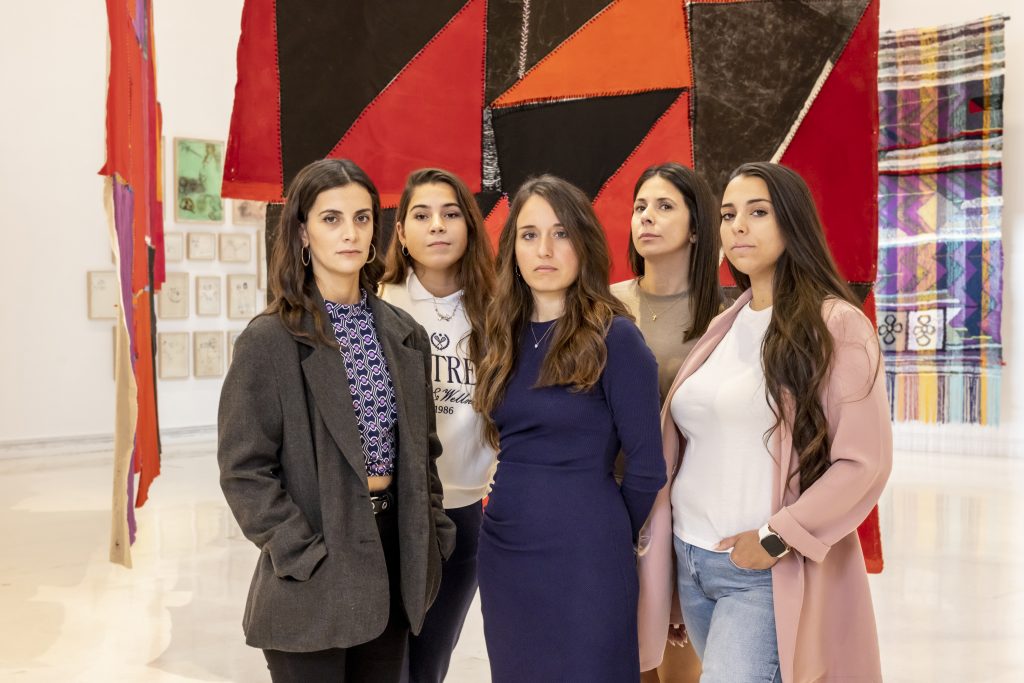
As a result of the collaboration between the Romani Women’s Association of Valencia (Asociación de Mujeres Romi de València) and IVAM, we are proposing a day of reflection about the role of Romani women in culture and, therefore, in the museum and art. A day to listen and learn from the activist experiences and stories of Romani women who, from their own work experience and their positioning and defence of culture, question the status quo of the society that surrounds us and set out their fight for equality.
16:00 Welcome address by Nuria Enguita, director of IVAM.
16:15 La mujer y la cultura (Women and culture) by Séfora Vargas Martín, lawyer, author and president of the APROIDEG Organisation.
Over the years, women in general and Romani women in particular, have been subjected to confinement, silence, cultural appropriation and sexual, physical, intellectual, hereditary violence. Under the cultural mould, everything has been perpetrated naturally, it was the morally acceptable normality. Seeing these issues in the light of a humanist, feminine view, from the premise of equality and dignity as the human beings they are, is new and conciliatory. The talk will revolve around the psychological, social, cultural, political and legal aspects that continue to keep women in inequality.
17.00 h. Mi feminismo es gitano, by Silvia Agüero Fernández, Asociación Pretendemos Gitanizar el Mundo.
Feminism is a tool with which to fight for equality and in my case, fight against anti-gypsyism. This conference explains the genealogy of thought, the Romani feminist practices and our main fights.
18:15 Cover and discuss IVAM together from the point of view of gender and Romaniness.
To end the day, we will do simultaneous guided tours of a section of pieces from the IVAM collection, discussed from a gender perspective and interspersed with Romaniness. The tours will be led by the IVAM mediation team in conjunction with the women from the ROMI association.
Speakers
Silvia Agüero (Madrid, 1985) mixed-race Romani, feminist, lactivist, communicator and actress. President of the Asociación Pretendemos Gitanizar el Mundo. She contributes to Pikara Magazine, Arainfo, El diario.es, La Marea and other media. She is the author of Mi feminismo es gitano (2020) and has taken part in collective books such as Disidencia en el cuerpo: perspectivas feministas, Feminismos: miradas desde la diversidad and Mirades a la Violència Obstétrica. Silvia has co-authored Resistencias Gitanas and is editor-in-chief of the Pretendemos Gitanizar el Mundo. She is currently starring in the theatre monologue No soy tu gitana at the Teatro del Barrio (Madrid).
Séfora Vargas Martín, activist, lawyer (specialising in criminal and administrative law), author, president of the APROIDEG Organisation, the Association for the Promotion and Comprehensive development of the Romany community since 2012. She founded AMURADI, the first women only Roma university students’ association in Europe and FAKALI, the first federation of women only Roma associations in Spain. She has worked extensively on defending the rights of female workers who work in itinerant trade, representing two macro causes in the cities of Seville and Huelva. She also played a fundamental role during the state of emergency caused by COVID-19, being one of the people responsible for getting the Andalusian Government to consider itinerant trade as an essential activity during the pandemic. She is the author of El precio de la libertad, the first book written by a Romani author about gender violence, sexual abuse, religious radicalism, abortion, etc.


16 feb. 2023 – 18 jun. 2023
IVAM Centre Julio González
floor B, G1
share
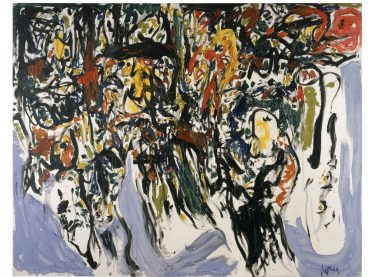
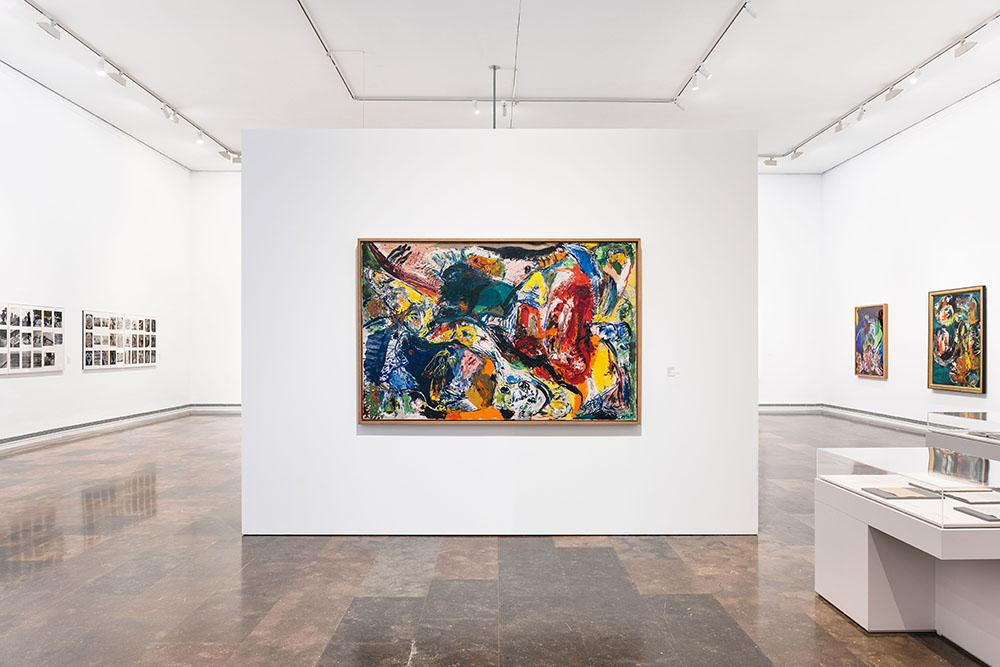
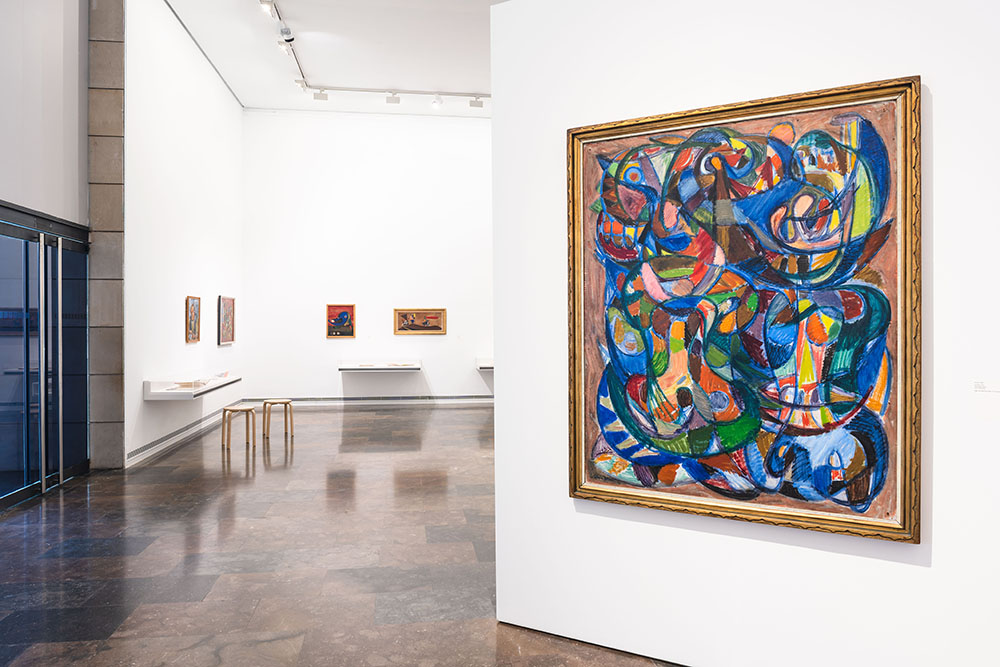
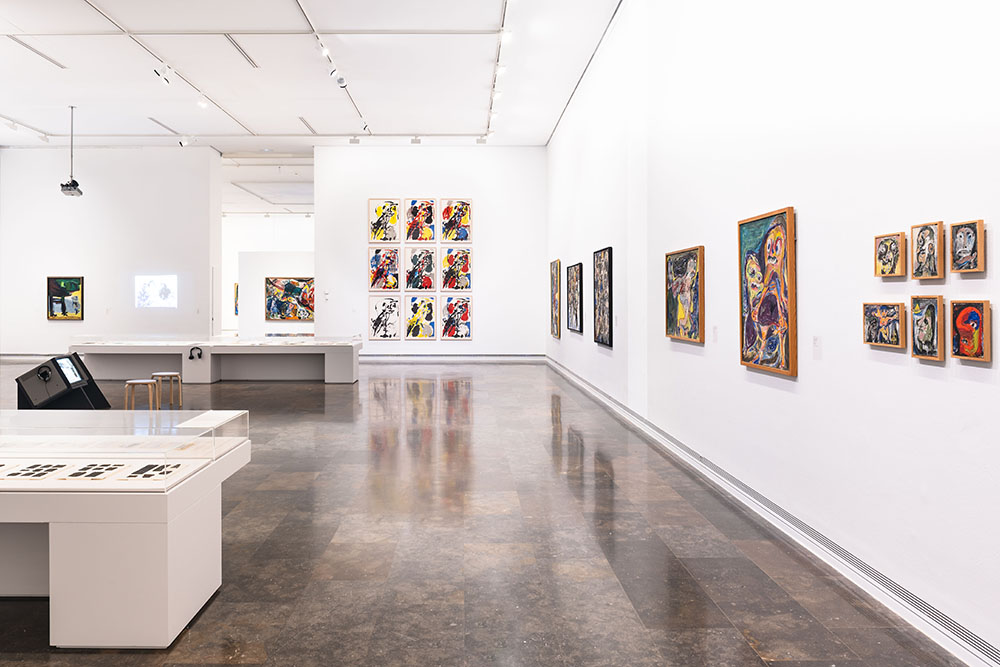
Everyone knows Asger Jorn. The best of painters. In addition to which, he did everything. Marvels: that is to say, in every domain, innovations. We are even beginning to learn—and here the latecomers will be forced to catch up quick—of his decisive contribution to the new urbanism and the creation of a situationist topology. Not to mention détourned painting, which is something quite different from ordinary painting; hundreds of pages of studies on aesthetics, from which aesthetics will never recover; the largest ceramic work in the world. And, of course, tapestry. Asger Jorn never stopped exiting painting, on every side.
Michèle Bernstein, 1960
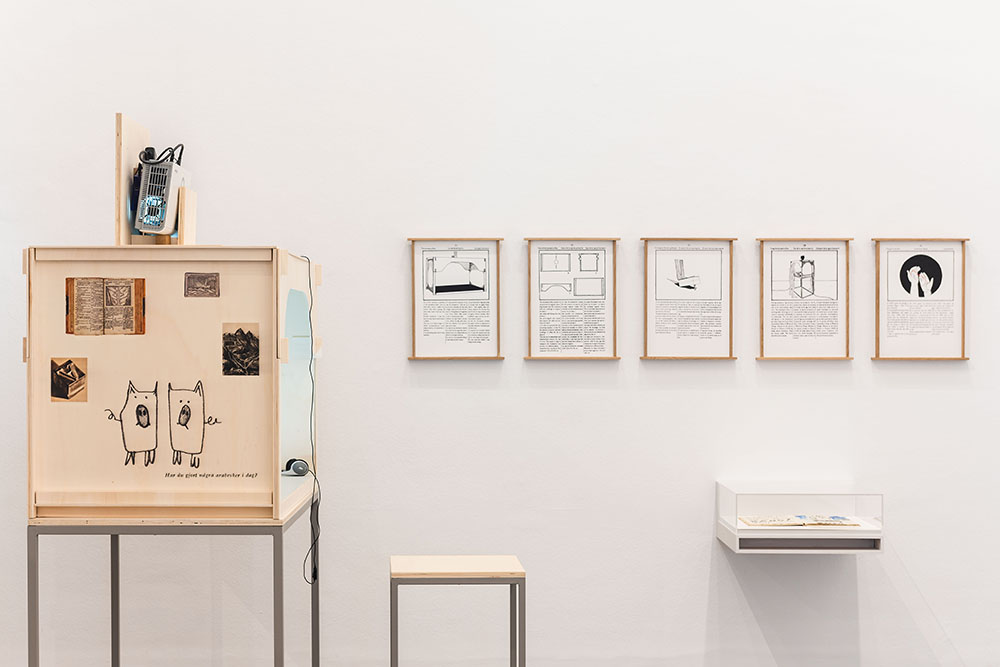
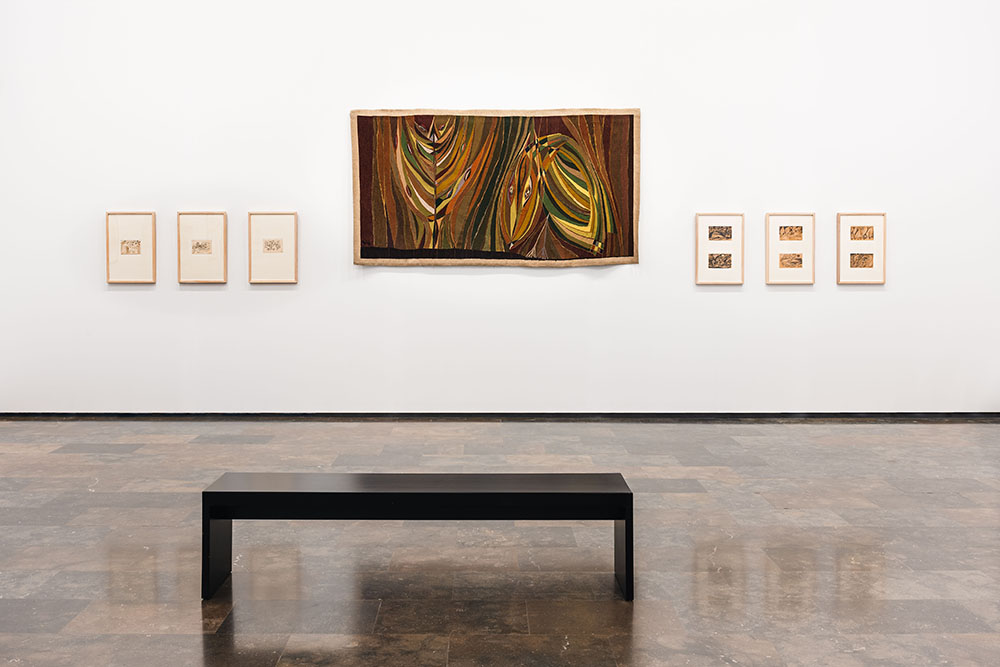
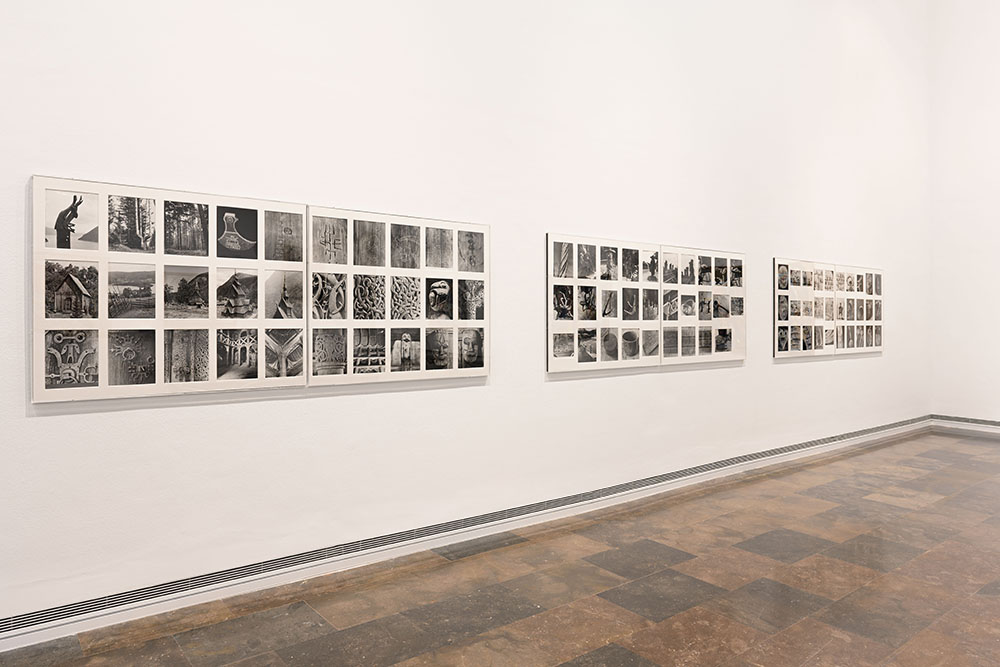
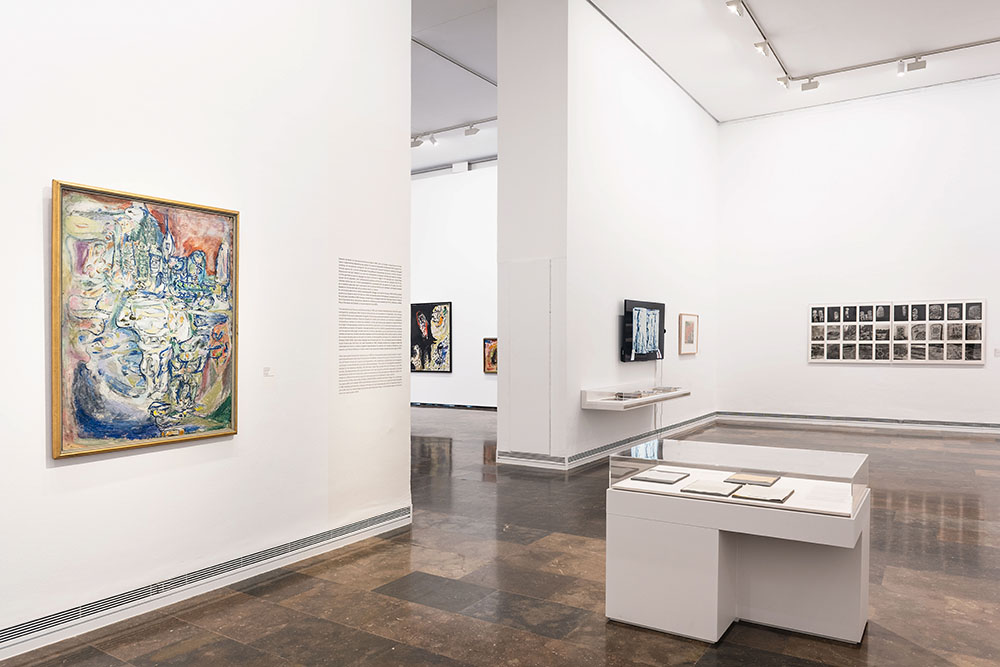
Open Creation and Its Enemies: Asger Jorn in situation presents the singular trajectory of the Danish artist Asger Jorn (1914–1973), a founding member of avant-garde movements such as Cobra and the Situationist International. While often acclaimed as an extraordinary painter, the exceptional range of Jorn’s practice merits a broader exploration. Open Creation and Its Enemies makes legible the experimental parameters of Jorn’s multifarious activities, charting his exits from, as well as his returns to, painting.
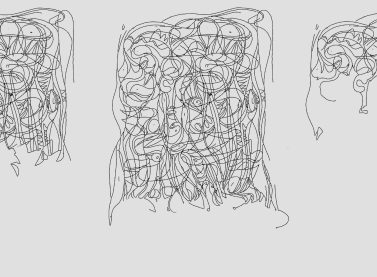
To Asger Jorn, producing, collecting, and reworking images was a way of transforming the world. In 1946 he made an automatic drawing during a stay in Saxnäs, a town in Sweden and Sápmi (the land of the indigenous Sámi people). Using pen and transparent paper, he then traced a series of drawings from the original while also inviting artist friends to do the same. The result was a proliferation of interpretations, among them remarkable paintings as well as theoretical elaborations. For Jorn, the experience proved the value of artistic experiments. It also demonstrated that an image is open to a multitude of interpretations depending on the “activity of the spectator, who in this way is no real spectator anymore.”
Taking its cue from this experiment, Open Creation and Its Enemies presents an expansive and inviting view of Asger Jorn. The exhibition includes commissioned works by Danish artist Anna Sofie Mathiasen as well as by the Institute for Computational Vandalism, who have been invited to engage with Jorn’s legacy from a contemporary perspective. Developed in close collaboration with the Museum Jorn in Silkeborg and curated by Norwegian art historian Ellef Prestsæter, the exhibition is accompanied by a comprehensive book featuring translations of canonical and hitherto unpublished texts by Jorn as well as new perspectives on his practice.
Collaboration:

13 nov. 2022 – 30 apr. 2023
IVAM Centre Julio González
share
For more information, please check the Spanish version.
18 and 19 nov. 2022
IVAM Centre Julio González
share
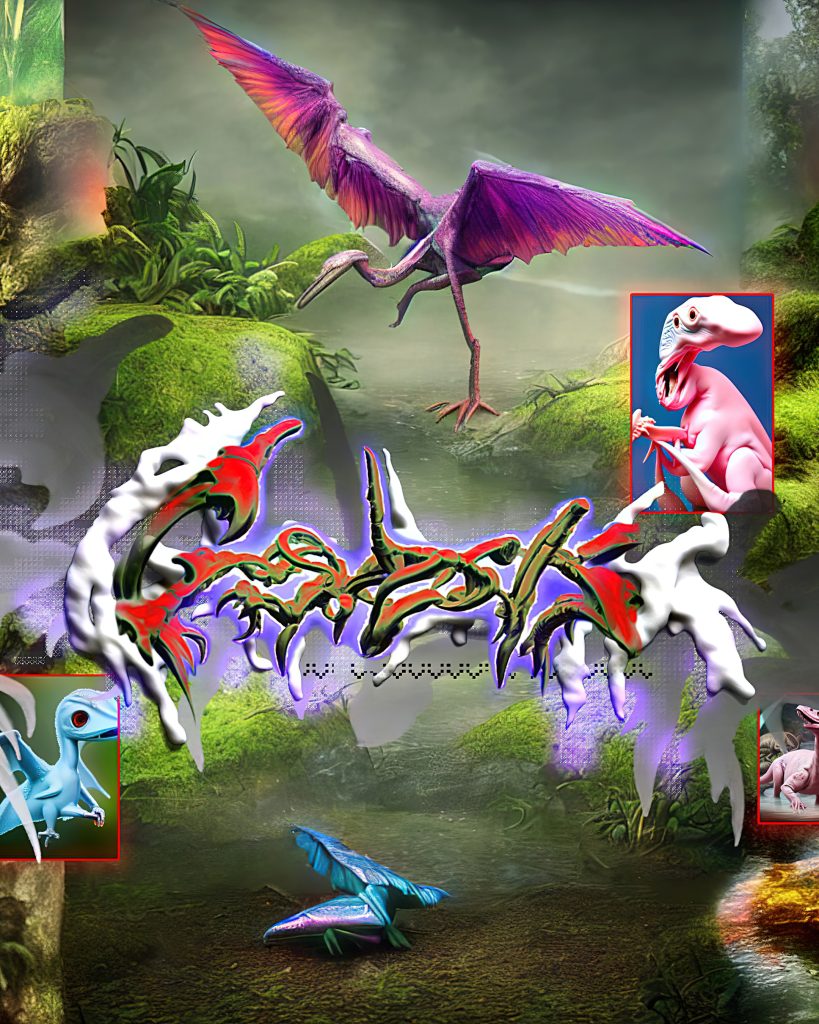
Diego Navarro and Darío Alva (from the Programa d’Art i Context), together with Laura Costas present Genesis: Conceptualisation of Imagined Lives, a two-part workshop on one of humanity’s oldest and most persistent imaginative exercises: speculation on fictitious ways of life and their life course. To do this, the first day will focus on the visualisation and analysis of fragments of cinematographic media, gameplay and literary media that deal with the representation of imagined beings and their relationship with natural environments and humanity. This leads to the second day in which some of the potential phases of development of an imagined being will be detailed, such as initial sketching processes, the use of tools and databases assisted by artificial intelligence for the iteration of initial ideas; sound manipulation processes to expand the personality of the imagined being and, finally, a look at examples from the world of video games where all these elements converge in simulations of imagined lives that awaken real emotions in us.
Laura Costas is a doll and artefact maker born in Vigo. Her work revolves around toys, childhood and violence with works such as Another foolish contender , To die in the countryside or Demon baby has its mother eyes. Her output goes beyond sculpture, working also with sound, performance and paper media.
02 nov. 2022
IVAM Centre Julio González
share
El gesto narrativo. Reading group facilitated by Álvaro de los Ángeles
The collection from IVAM is organised using six chronological and themed blocks which explain, with their own voice, the art developed from the beginning of the 20th century to the modern day. Perhaps not everything is as it is (or was), but it is everything that exists. Stories of the present – and those that come from far away but are updated in our present- should be told as a polyphony of voices and from contexts that make us sharpen our critical eye regarding their construction and relevance.
Over six sessions, using six books, we will delve into the narrative actions that literature offers us and we will link them together, sometimes with simple gestures and sometimes with more complex choreography, with the IVAM collection. The worlds of fiction build reality; they are reflective mirrors or transparent windows, but they always tell us what we are, or what we are eager to become, from our previous experience and towards our future possibility of transforming ourselves. In these narrative gestures, traversed by stories and lives, we will slow down.
1914-1939: Historic vanguards
«This period comprises from the First World War until the start of the Second, the same year in which the Spanish Civil War ended. IVAM possesses a significant collection of works belonging to historic European vanguards, especially from constructivism, dadaism, futurism, neoplasticism and non-figurative or concrete abstraction.»
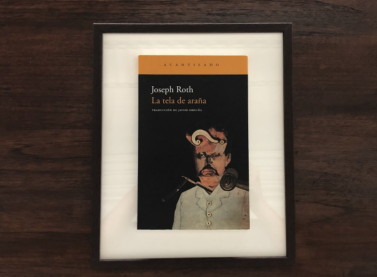
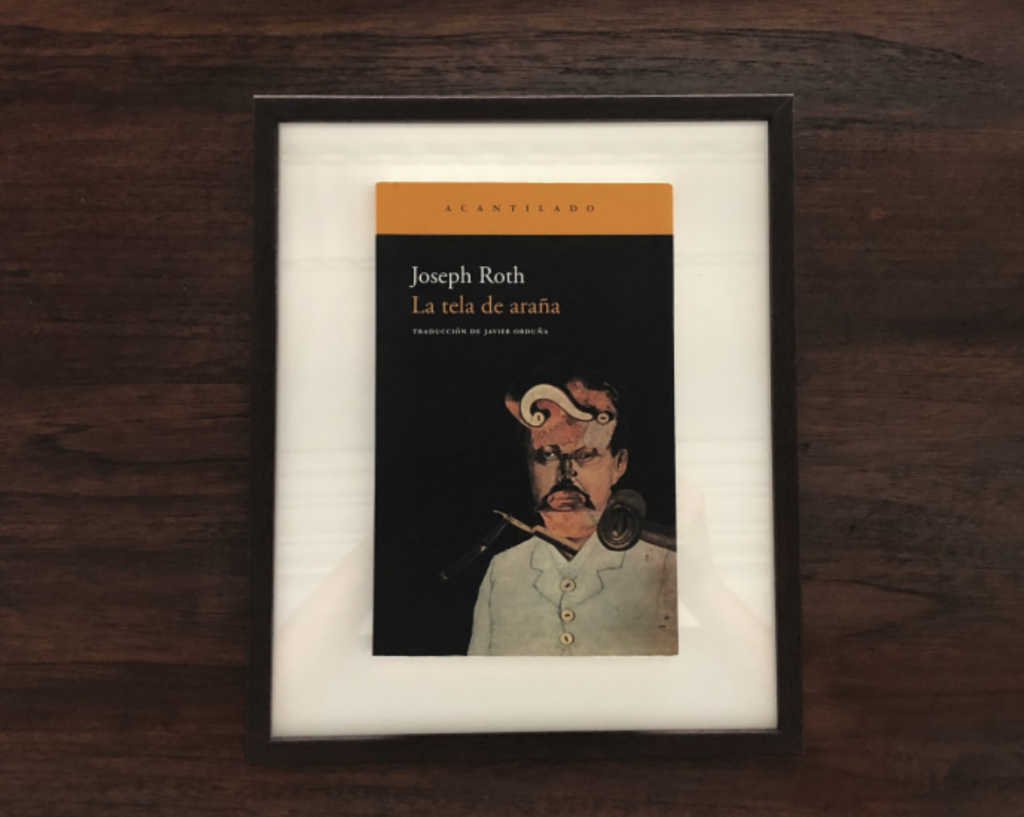
—La tela de araña (1923) de Joseph Roth. Ed. Acantilado.
Wednesday 2nd November 2022 at 18.00.
This foreboding book perfectly exemplifies what was happening in the countries resulting from the disappearance of the Austro-Hungarian empire. It was originally published in weekly instalments in the Viennese newspaper Arbeiter-Zeitung, between October and November 1923, just a few days before the Munich Putsch, the failed coup d’état by Hitler and Ludendorff. The importance of newspapers and the expansion of illustrated magazines will give us chance to talk about the entire graphic production resulting in the collages of John Heartfield, Raoul Hausmann, Hannah Höch and the universe of George Grosz and, therefore, of the historic vanguards. Joseph Roth died in 1939 in Paris, the city he had emigrated to in 1933. Few authors had reported so bravely on the rise of the Third Reich and the reasons for the collapse of the Habsburg empire.
14 dec. 2022
IVAM Centre Julio González
share
The collection from IVAM is organised using six chronological and themed blocks which explain, with their own voice, the art developed from the beginning of the 20th century to the modern day. Perhaps not everything is as it is (or was), but it is everything that exists. Stories of the present – and those that come from far away but are updated in our present- should be told as a polyphony of voices and from contexts that make us sharpen our critical eye regarding their construction and relevance.
Over six sessions, using six books, we will delve into the narrative actions that literature offers us and we will link them together, sometimes with simple gestures and sometimes with more complex choreography, with the IVAM collection. The worlds of fiction build reality; they are reflective mirrors or transparent windows, but they always tell us what we are, or what we are eager to become, from our previous experience and towards our future possibility of transforming ourselves. In these narrative gestures, traversed by stories and lives, we will slow down.
1939-1961: Art in post-war Europe
«The twenty two years that make up this period, covering four decades, stand out for the consolidation of artistic movements such as European informalism or American abstract expressionism, together with new proposals of geometric abstract art, in a context framed by the long European post-war period and the hardest years of the Franco dictatorship.»
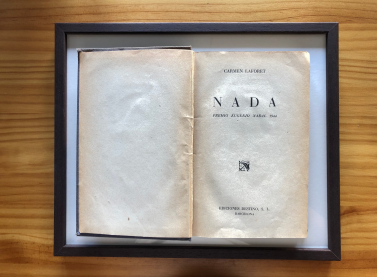
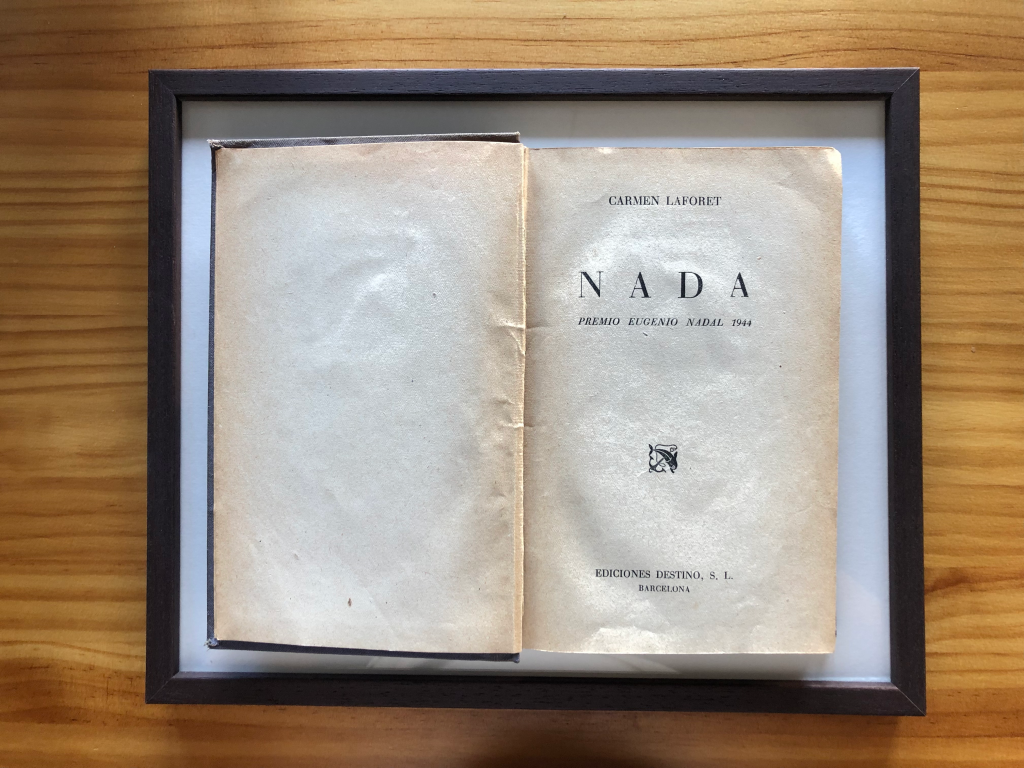
—Nada (1945) by Carmen Laforet. Eds. Austral, Cátedra…
Wednesday14th December 2022 at 18.00.
Barely five years after the end of the Spanish Civil War, and with the Second World War in its final stage, Carmen Laforet won the Premio Nadal literary prize with this simple, tough and profound novel. With the end of the conflict, the toughest repression of the first years of the 1940’s and the exile of hundreds of thousands of republicans, Spain is poorer, more ignorant and darker. This book is a door to a still inhospitable place which will gradually find new ways of expressing itself in literature, poetry, theatre and art. Informalism will be a window from which to be able to express, in silence, what still cannot be introduced to the Spanish stage, the victorious winds of an abstract expressionism that blow, continuously, from the United States.

10 nov. 2022
IVAM Centre Julio González
share
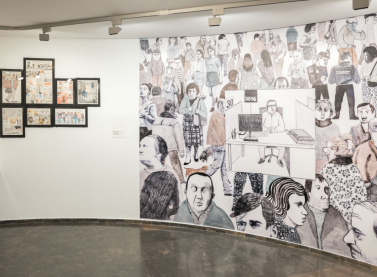
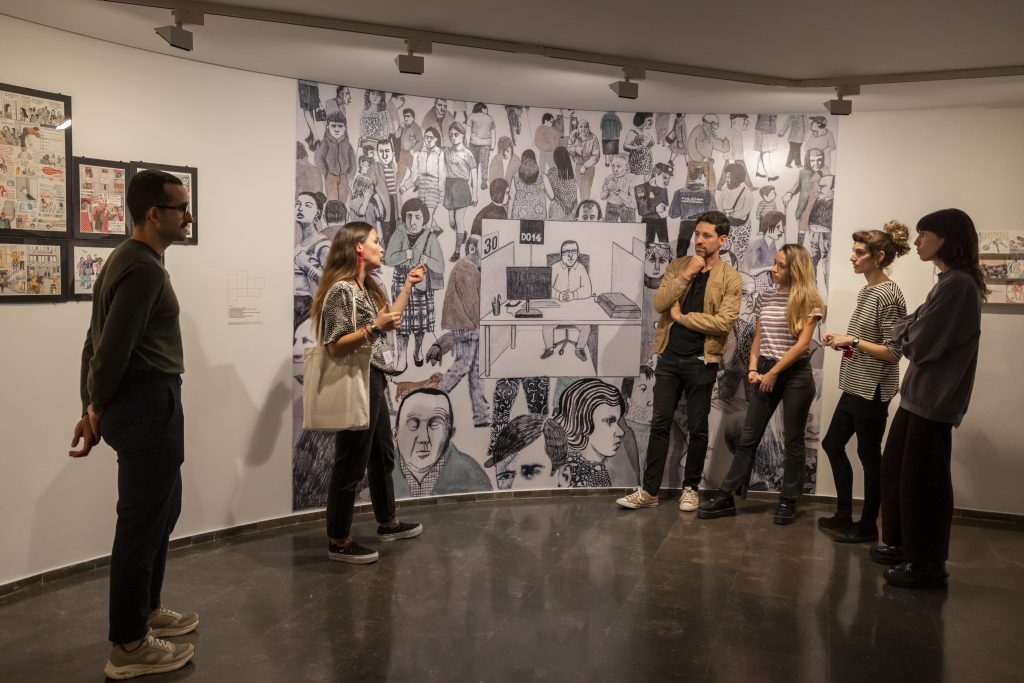
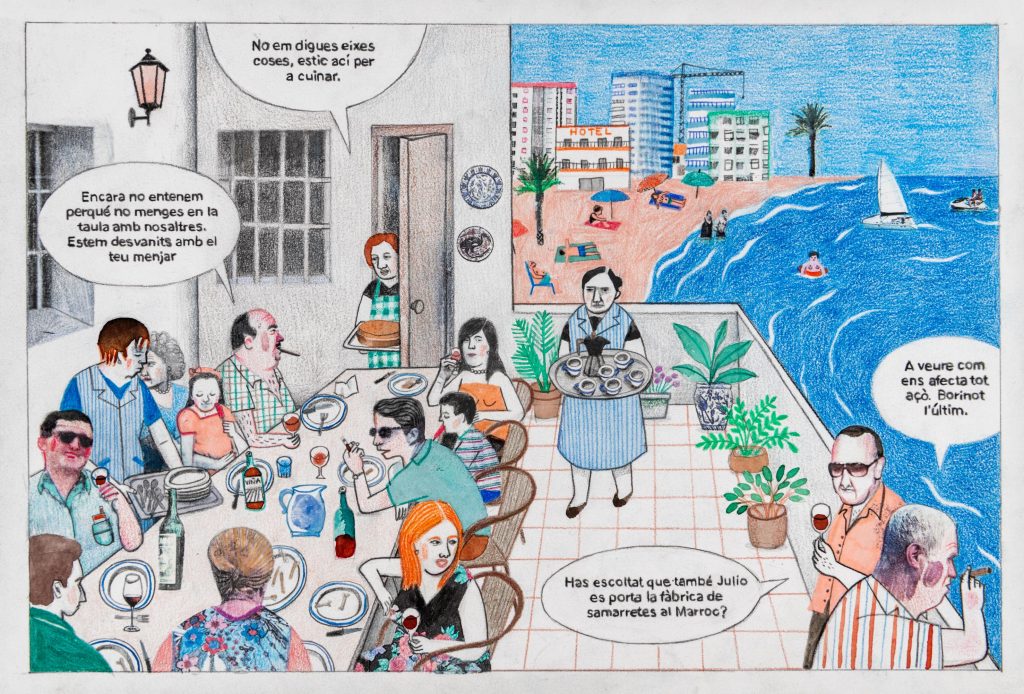
Artists Alba Herrero (Valencia, 1986) and Ana Penyas (Valencia, 1987), along with Nuria Enguita, director of IVAM, Marcela Bahamón and Diana Isabel Cruz, who are domestic and care workers, present the exhibition by Ana Penyas y Alba Herrero. En una casa. Genealogía del trabajo del hogar y los cuidados.
The exhibition is a project conceived by the artists specifically for Gallery 3 at IVAM. It presents the hybrid nature between the graphic narrative and social research. It puts domestic work and paid care into focus, the work that takes place outside one’s own home and within the privacy of someone else’s home, whether within or outside the formal economy. This is feminized and insecure work, where the social construct of responsibility is reproduced as an inherently female issue. Despite the importance of care for a sustainable life, historically, these workers have been ignored and displaced in spheres such as the economy and politics, which means that, even today, we do not collectively ask ourselves how we provide care and how we would wish to do so.
Ana Penyas and Alba Herrero propose a journey through the private and the political. Through the use of archive material and the life experiences of women of different ages and backgrounds – mostly domestic and care workers, but also employers – the project looks at the temporal, spatial and social changes linked to this work. It proposes an open re-reading of the family and work models, the trajectory of collective mobilization towards a recognition of dignified rights and conditions at work, and the motivations and expectations of life for those who carry out the work and those who receive it. In short, the social organization of care.