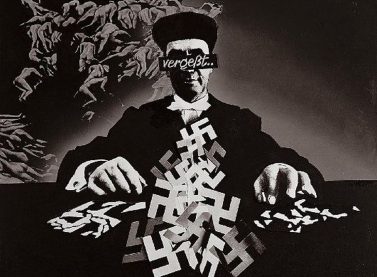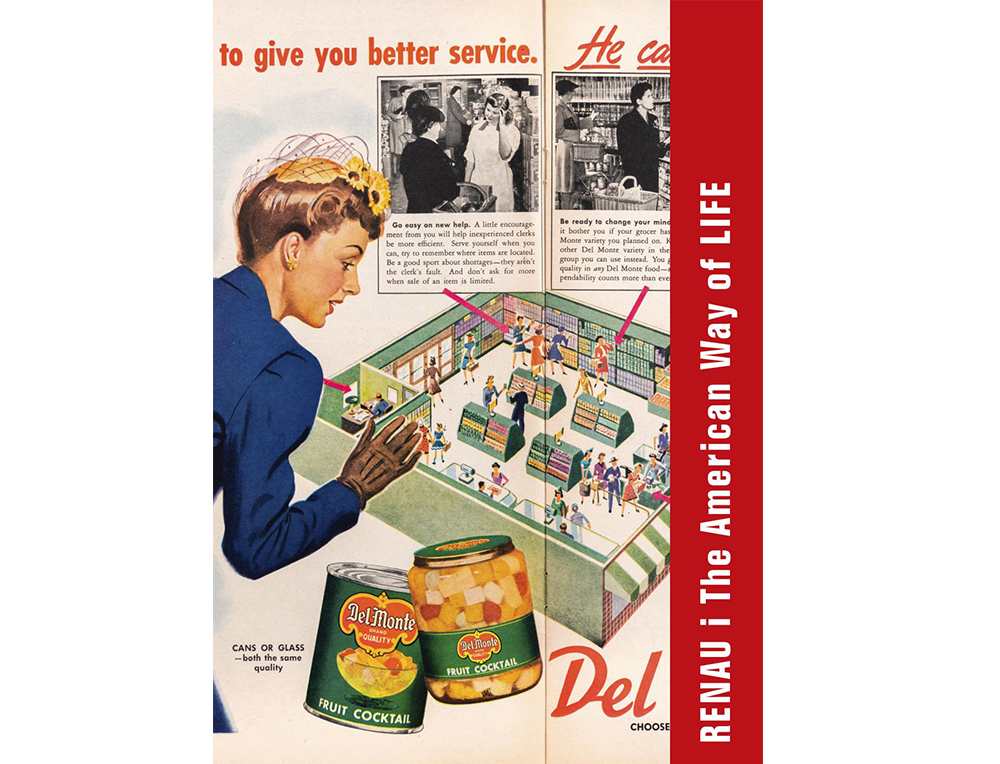
Magazine 'Life', 1936-1952. Offset impression. Biblioteca i Centre de Documentació IVAM
08 jul. 2021 – 09 jan. 2022
IVAM Centre Julio González
share


08 jul. 2021 – 09 jan. 2022
IVAM Centre Julio González
share
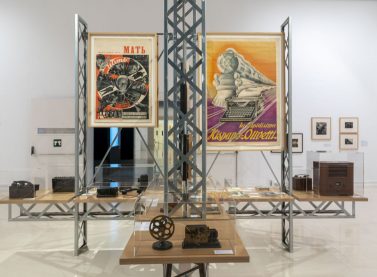
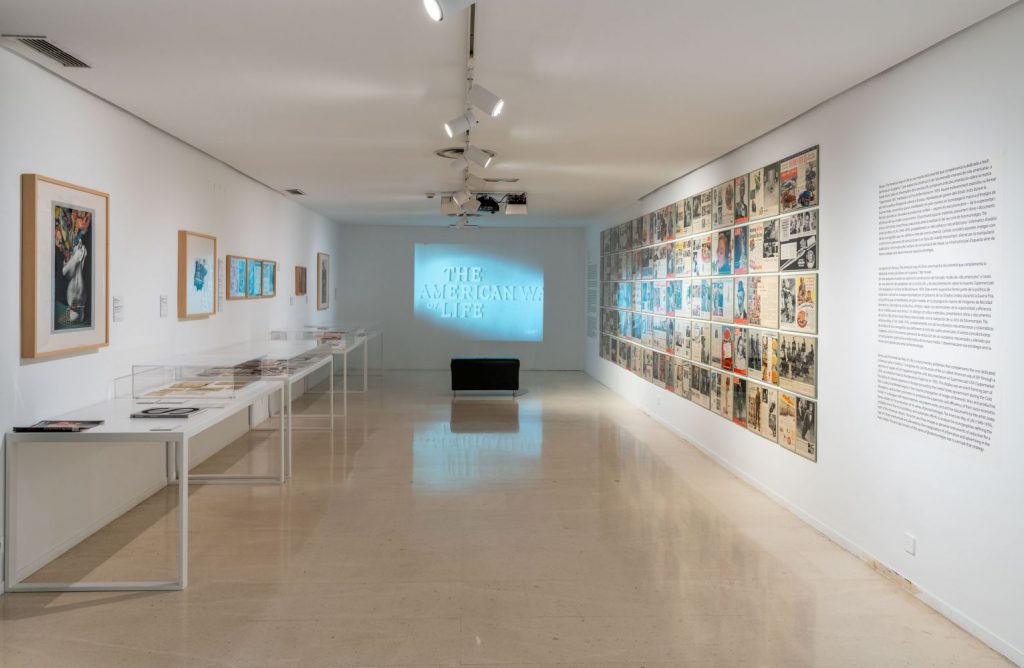
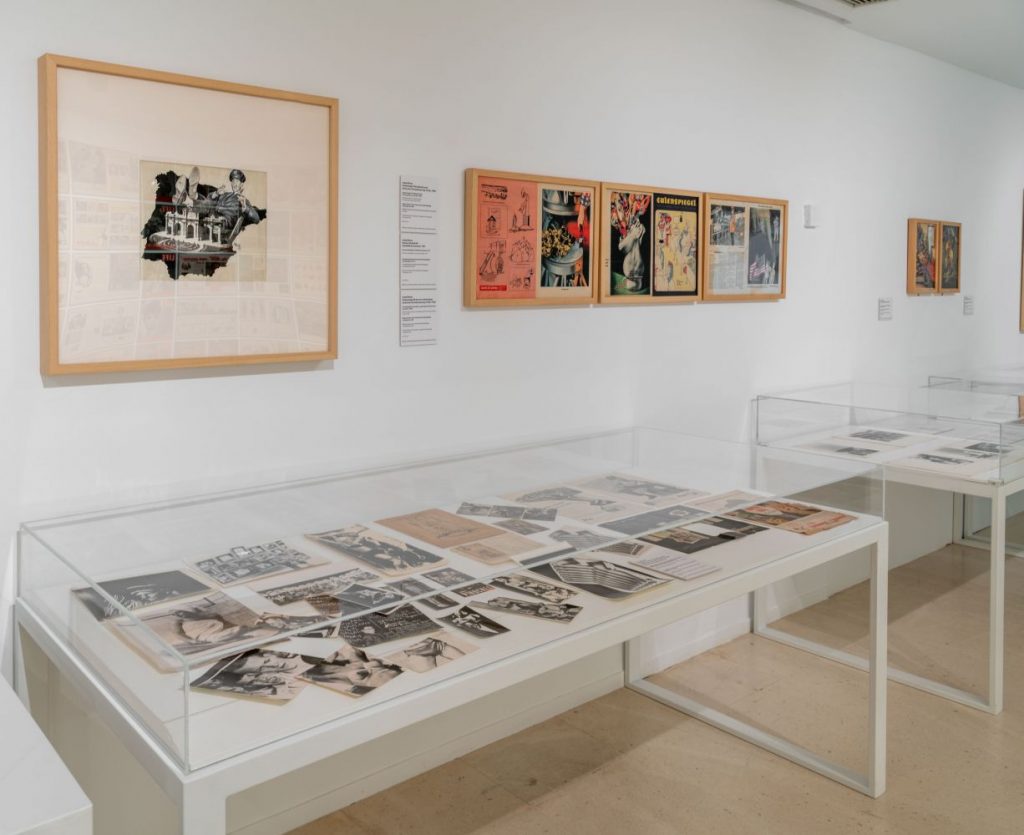
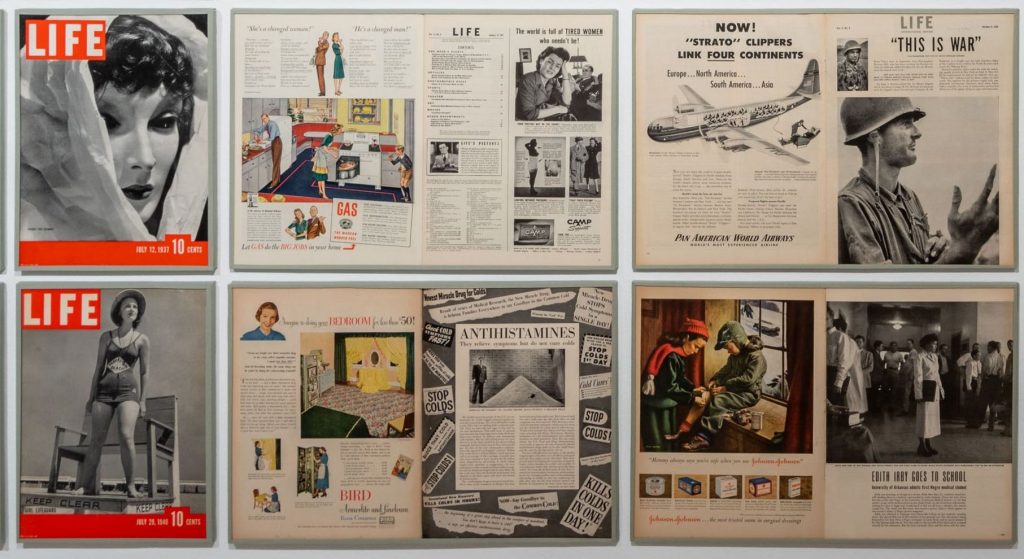
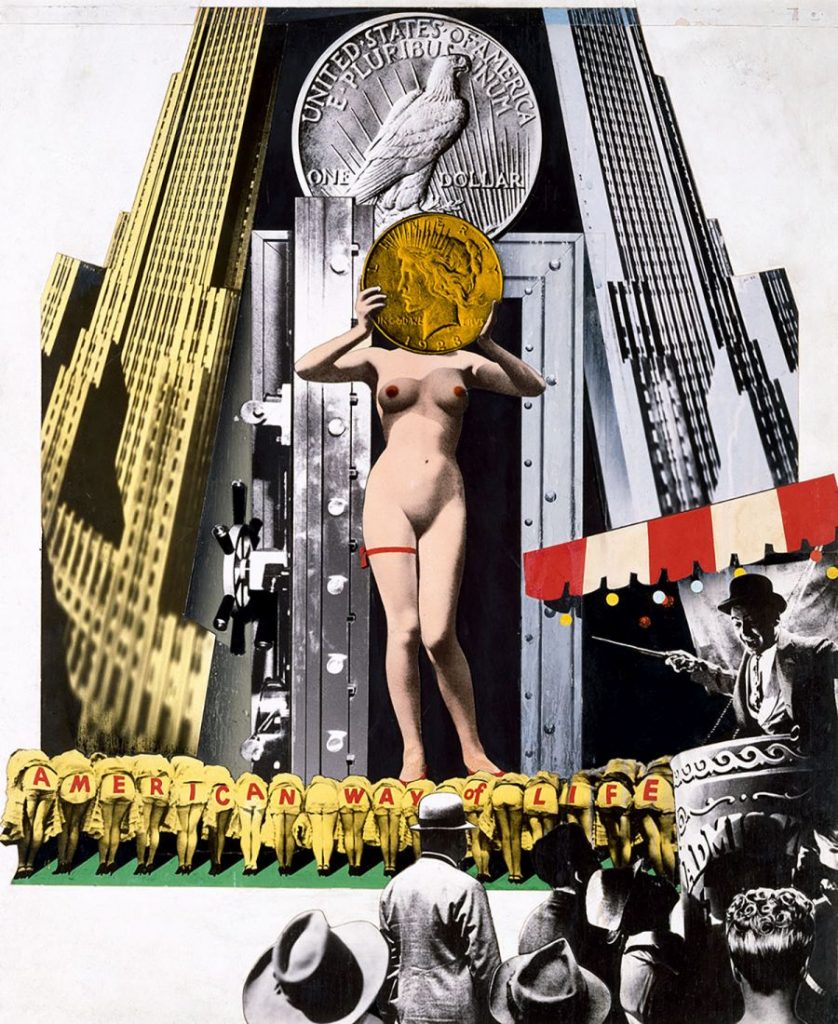
Renau and The American Way of Life is a documentary exhibition that complements the one dedicated to Renau’s exile in Gallery 7. It explores the construction of the so-called ‘American way of life’ through a selection of copies of Life magazine together with documentation on Supermercado USA (Supermarket USA), an exhibition held at the Barcelona Trade Fair in 1959. This display was an event forming part of the policy of cultural expansion in Europe pursued by the United States government during the Cold War, a policy manifested largely in the massive propagation of images of domestic bliss and productive abundance, said by their promoters to symbolise the superiority and efficiency of their socio-economic model.
In a dialogue with these materials, we present works and archive documents by the artist Josep Renau related to the production of his series of photomontages The American Way of Life (1949-1976), probably one of the most ambitious and systematic efforts to analyse the iconographies defining the myth of the American dream. The artist saw these images as perverse instruments of seduction for a type of citizen mechanised and alienated by the manipulation of information and advertising in the mass media. The principal mission of this series of photomontages was to unmask that strategy.
08 jul. 2021
IVAM Centre Julio González
share
The conversation between the two curators will reveal the keys to the research that led to the creation of the exhibition Renau in exile. This exhibition attempts to reconstruct the different historical and creative contexts to which the exiled poster artist, photomontage artist, muralist and writer Josep Renau had to adapt during his fascinating life journey.
Joan Ramon Escrivà and Josep Salvador, curators of IVAM, will pay special attention to the analysis of the contexts of Renau’s mural works in Mexico and in communist Berlin, as well as to the problematic of the so-called American Way of Life, one of the main areas of reflection in the work of the Valencian artist during the cultural Cold War.



15 and 29 may. 2021; 12 and 26 jun. 2021; 03 jul. 2021
IVAM Centre Julio González
share
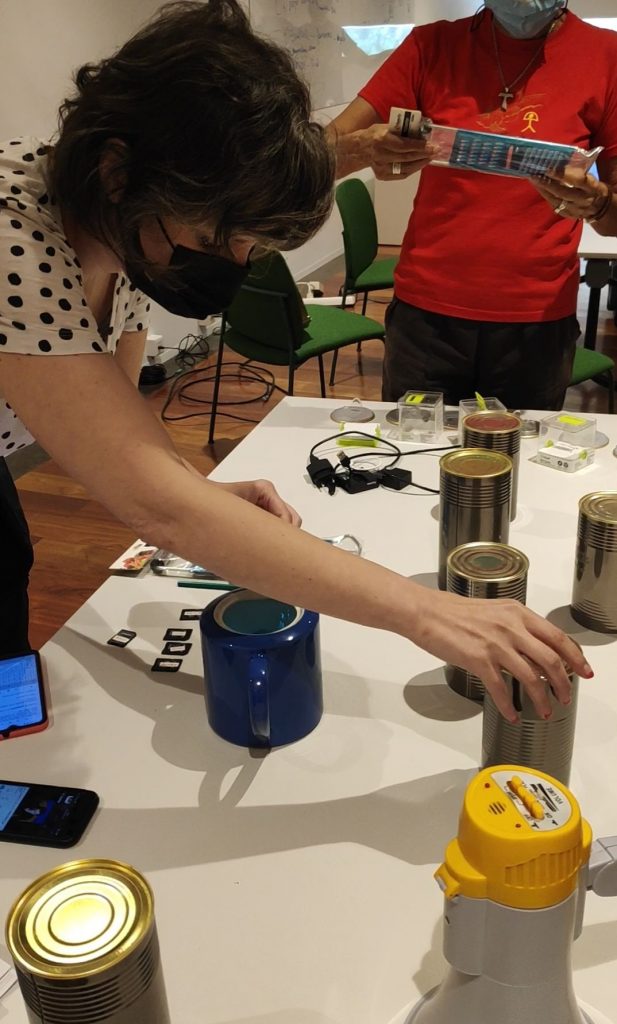
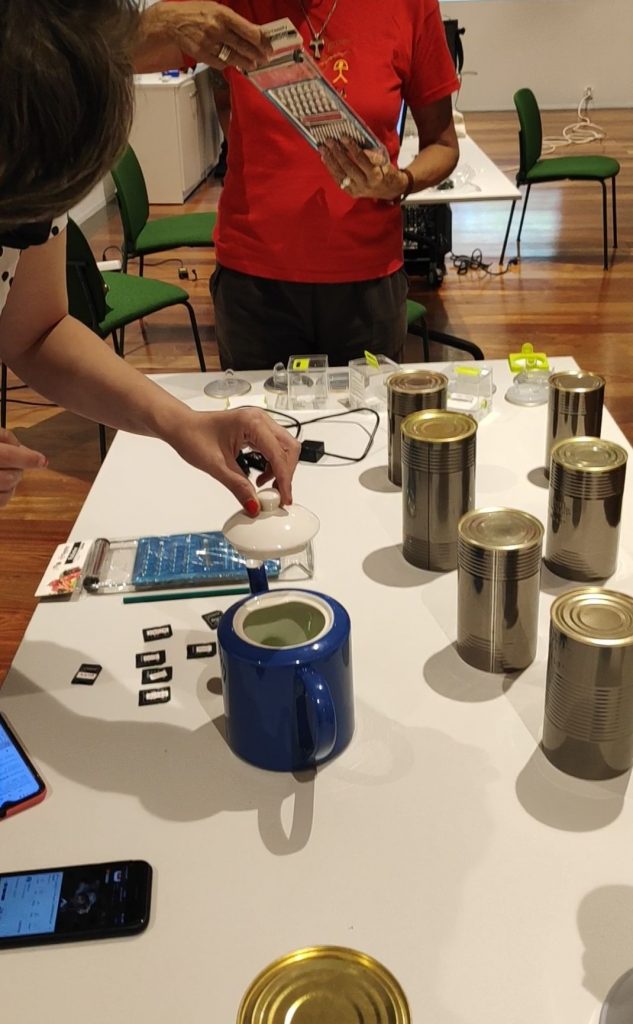
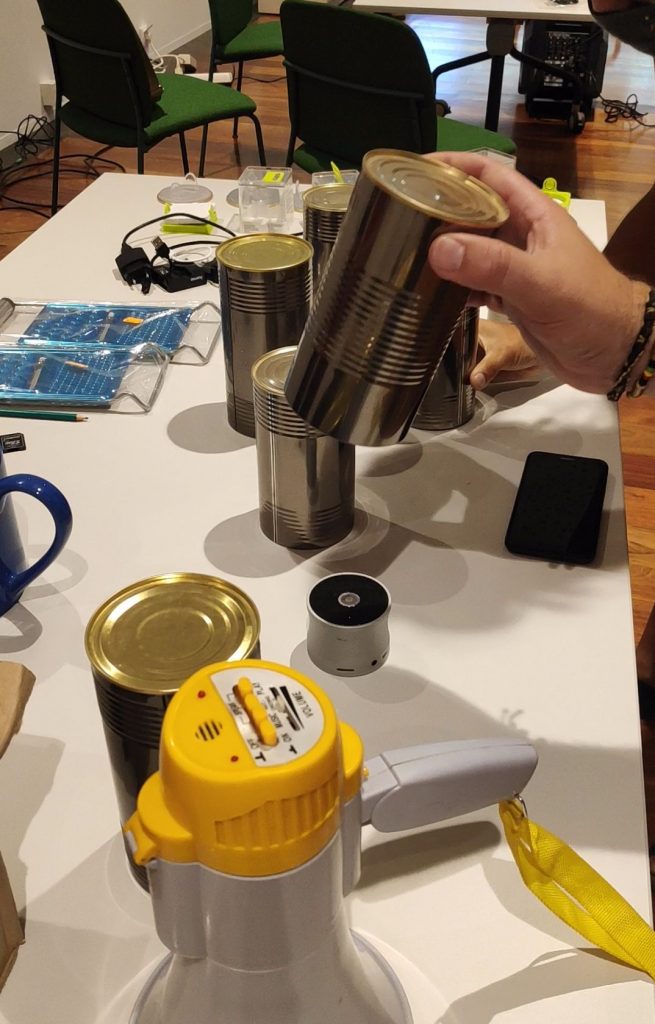
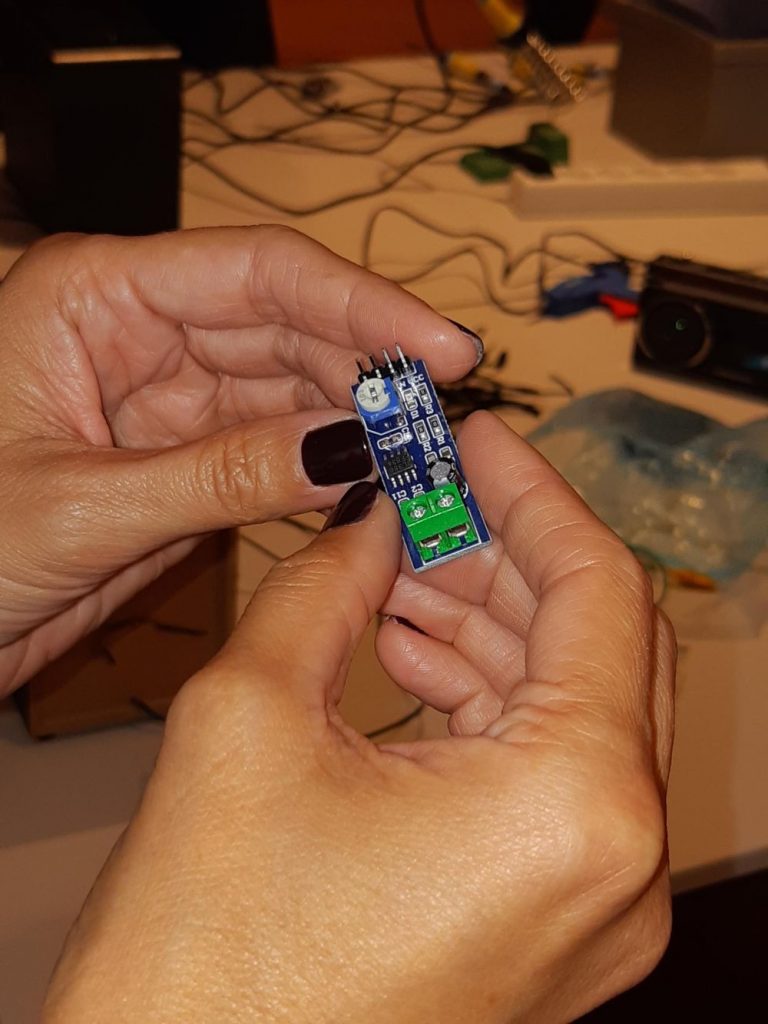
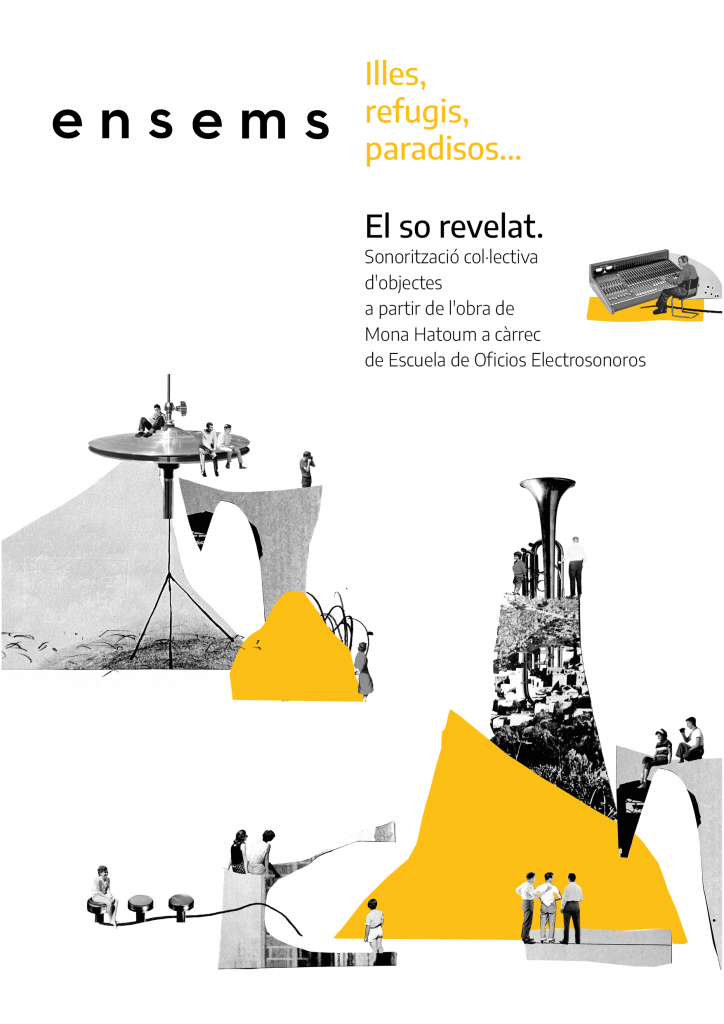
A parallel activity to the retrospective exhibition on Mona Hatoum, , is being held in the form of a workshop based on the artist’s production, directed by the School of Electro-Acoustic Crafts (Escuela de Oficios Electrosonoros) in collaboration with the ENSEMS festival. It will propose a reflection on our perception of everyday objects and how they change with the scale of their presentation. The workshop will seek to modify the acoustic perception of the everyday by exploring what happens when we play with amplifying things that are very small, soft and light.
It will introduce an experiment in education-art, a creative laboratory organized as a series of workshops to explore the possible meaning of amplified sound. Listening is often subordinated to the tyranny of our own attention. We do not listen to what is not interesting to us, and like this we demonstrate an infinite capacity for selective deafness. This workshop is intended to vindicate the existence of sounds that are blocked out, ignored or even scorned by an ear that depends too much on the sense of sight.
It is not necessary to have prior knowledge of working with sound. The sessions are independent, but registration is recommended for all of them to follow the workshop process.
Escuela de Oficios Electrosonoros (School of ElectroAcoustic Crafts) is an education art project centred on experimentation with sound, sound art, electronic music and listening. Two of its members are Patricia Raijenstein, a teacher and art educator who carries out educational projects at museums with a gender perspective, and Jesús Jara, a cultural mediator whose work endeavours in highlighting the importance of technology in contemporary musical creation.
Safety measures: For the proper functioning of the workshop and to do it with total safety, for the health of all, the wearing of a surgical mask is mandatory. It will be necessary to use hydroalcoholic gel before each session and at the end of the workshop. The safety distance of more than one and a half meters will be kept.
Session 1: The object speaks for me.
Session 2: Looks like you were not there.
Session 3: Sound construction.
Session 4: Amplify, please.
Session 5: Revealed sound.
29 jun. 2021
IVAM Centre Julio González
share
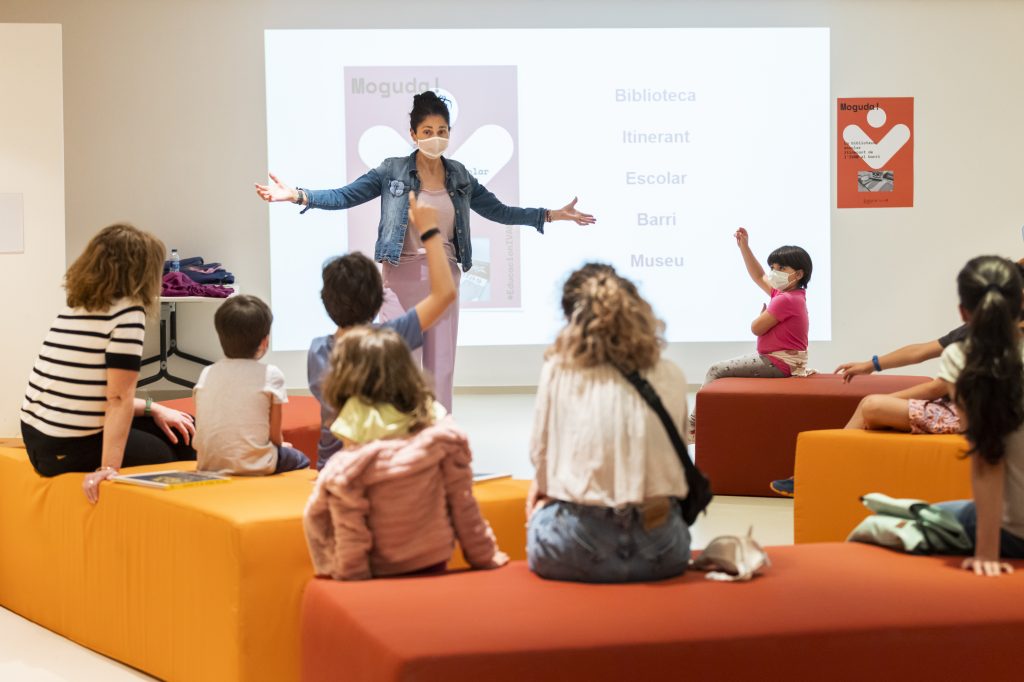
Moguda! IVAM’s itinerant school library has landed this year in five of the closest schools to IVAM. Its collection has 168 titles and more than 285 copies whose content revolves around painting, design, architecture, photography, illustration and graphics.
To celebrate the end of an atypical school year, we invited the writer Fani Grande to prepare a very special session to encourage family reading.
With this action, the itinerant library Moguda! gets active this summer with the families of the neighborhood of El Carmen and becomes the excuse to play, share and imagine, from the museum, from the books.
Capacity: 28 people (children and adults: everyone participates!). At least one adult must be present with each child during the activity.


09, 10 and 12 oct. 2021
IVAM Centre Julio González
share
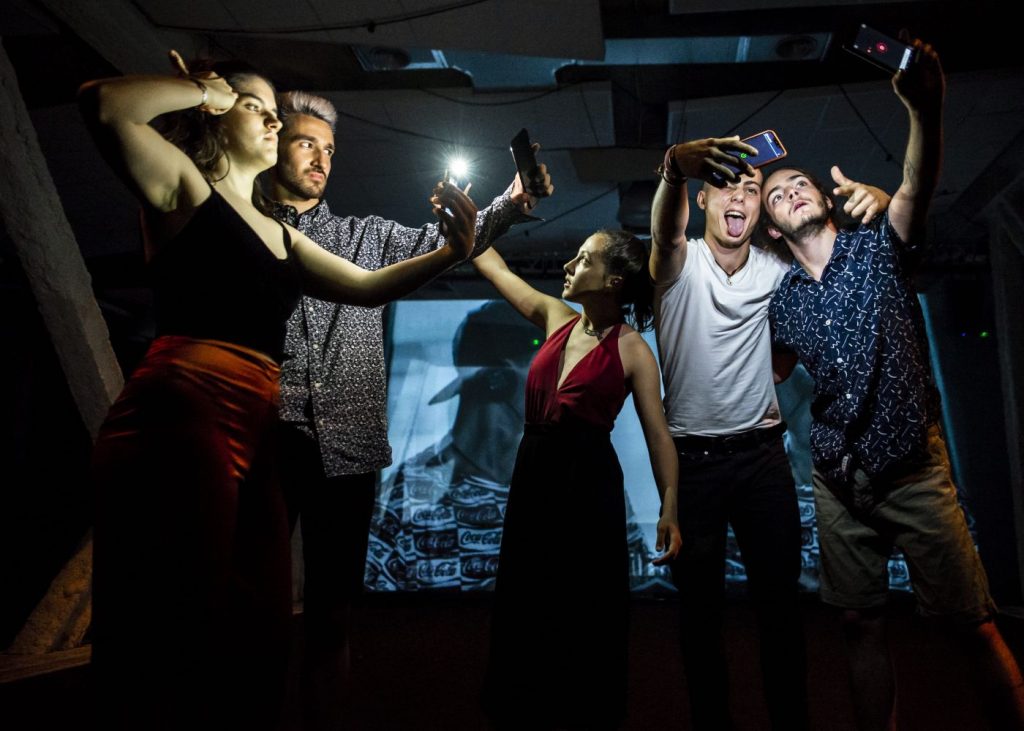
Spoiler alert: This is not a summer school, is a performing arts workshop for young people between 13 and 16 years. It is conceived as a flexible and creative space for co-production, expression, belonging and meeting. The young people will be the protagonists of their scenic research, experimenting with different materials, techniques and images.
The first session begins with a live presentation of the youth performance Spoiler Alert: No som unes YouTubers qualsevols, and will be followed by a debate and activities between the performers and the audience. The rest of the sessions will be structured around the main themes of the piece, such as personal and collective awareness, identity or personal and group confidence, and always using the body and its movement as the main tool through specific dynamics of interpretation, performance and dance or choreographic patterns.
Aurora Diago, graduated from the Conservatory of Higher Dance Studies of Valencia in the field of Contemporary Choreography, Master in Visual Arts and Multimedia. She has worked for companies and creators such as La Coja Dansa, Teatro de lo Inestable, EnÁmbar Danza, La Casa Amarilla, Teatro Círculo, Paterland, Anna Albadalejo, Pedro Lozano, Columpiant la Dansa and Alicia Gracia. She is co-founder of the transdisciplinary company La Lola Boreal, where she is a choreographer, performer and multimedia creator. Likewise, she has experience in different cultural mediation projects and, especially, in working with young people.
Sara Espinar, graduated in contemporary dance at the Professional Conservatory of Valencia with experience in Psychology. She participates in different projects and dance companies as a dancer, performer and creator.
This workshop is carried out in collaboration with the Servei de Promoció dels Drets de la Infància i Adolescència. General Direction of Childhood and Adolescence. Generalitat Valenciana. Vicepresidència i Conselleria d’Igualtat i Polítiques Inclusives.
*Safety measures: For the proper functioning of the workshop and to do it with total safety, for the health of all, the wearing of a surgical mask is mandatory. It will be necessary to use hydroalcoholic gel before each session and at the end of the workshop. The safety distance of more than one and a half meters will be kept. The materials used will have been in preventive quarantine or been disinfected after use and cannot be shared. Their use is limited only to who they are assigned to.
17 jun. 2021
IVAM Centre Julio González
share
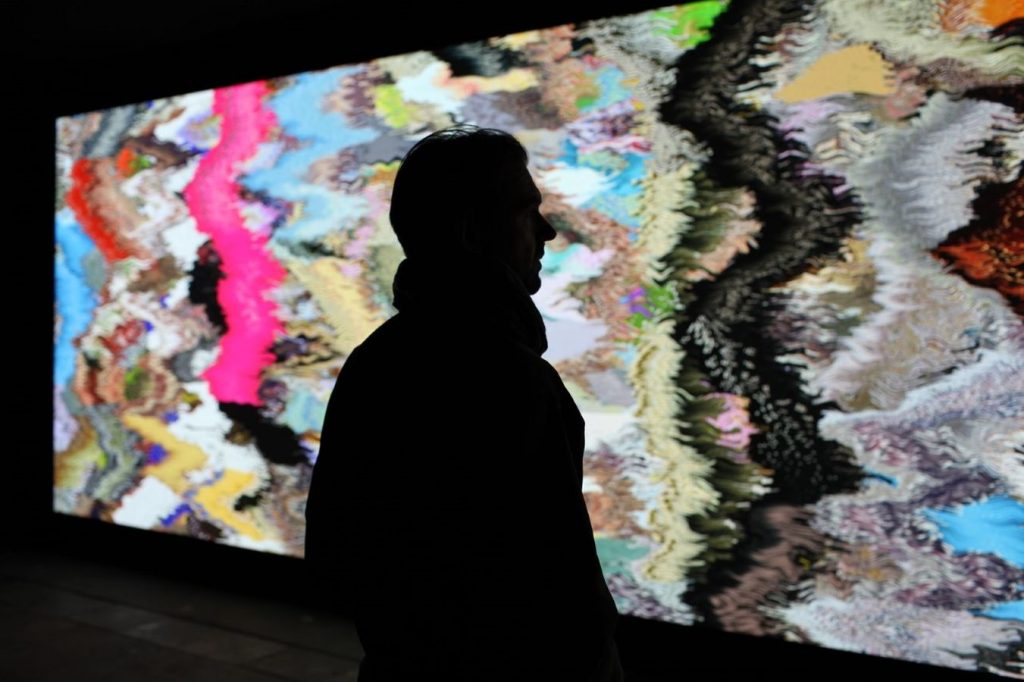
In recent years screens have acquired a huge presence in our daily lives. They have grown in size in our homes, they are embedded in consumer electronics such as watches and cell phones, and in public space we see them covering entire facades like a membrane.
“A visit to the stunning Amano collection of pre-Columbian textiles in Lima made me aware of the relationship of the contemporary screen with the textile tradition. Both generate images through visual intertwining, and although distant in time, both are surfaces used to represent a worldview of the world. As an artist who frequently works with screens, I begin to see a direct relationship of the internal wiring of screens to the threads and knots of a carpet or tapestry. This relationship allows me to see the screen not as a neutral window to the world, but as a cultural device that has a rich historical background.”
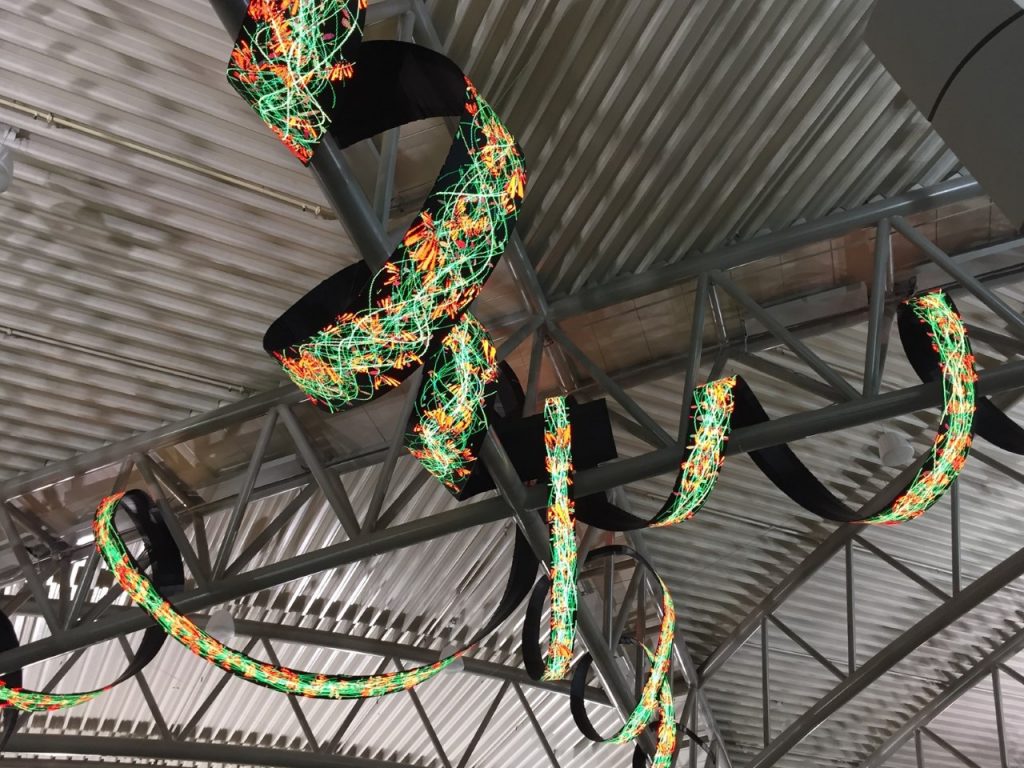
Daniel Canogar´s life and career have bridged between Spain and the U.S. He started with photography as his earliest medium of choice, receiving a M.A. from the New York University and the International Center of Photography in 1990, but he soon became interested in the possibilities of the projected image and installation art. He has created permanent public art installations with LED screens and has carried out numerous exhibition projects that have been presented in museums around the world.
More info here: http://danielcanogar.com/es/bio
15 jun. 2021 – 17 jun. 2021
IVAM Centre Julio González
share
The multimedia artist Daniel Canogar, who participates in the exhibition Mechanical and Technical Imaginaries in the IVAM Collection with the work Contrabalanza (1999), will lead a workshop focused on generating an artistic project based on specific exercises proposed in each session. At the beginning of each day of the workshop, the artist will give a theoretical presentation that will serve as a basis for making quick artistic installations. Anyone interested can register.
Daniel Canogar´s life and career have bridged between Spain and the U.S. He started with photography as his earliest medium of choice, receiving a M.A. from the New York University and the International Center of Photography in 1990, but he soon became interested in the possibilities of the projected image and installation art. He has created permanent public art installations with LED screens and has carried out numerous exhibition projects that have been presented in museums around the world.
More info here: http://danielcanogar.com/es/bio
09 jun. 2021
IVAM Centre Julio González
share
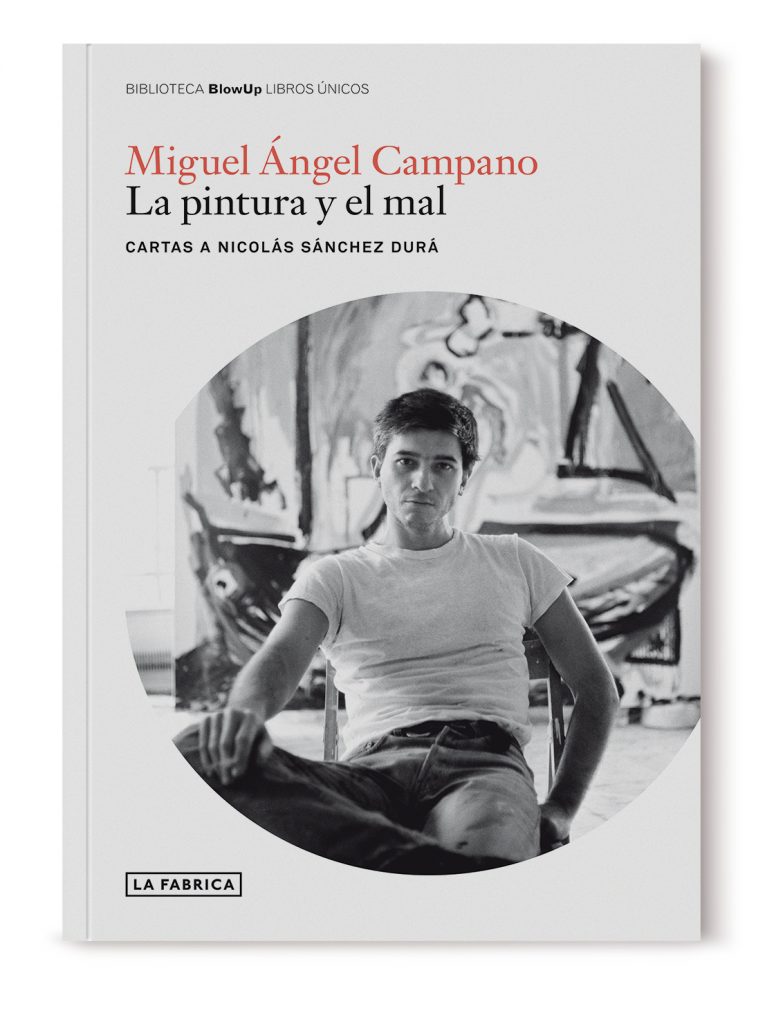
This book is an unusual collection of letters that the painter Miguel Ángel Campano, winner of the National Prize for Plastic Arts in 1996, sent to the professor of Philosophy Nicolás Sánchez Durá, between 1971 and 2012. The impetuous spirit of the artist emerges from them. Campano goes through his biography, expresses his ideas about painting, his reflections from psychoanalysis or his passion for art or literature. A volume that shows his character, at times somber, at times euphoric -always magnetic-, in the words of Sánchez Durá, “as radical as lovely, extremely demanding and splendid”.
Miguel Ángel Campano has been one of the most evocative and modern Spanish painters of recent times, owner of a stroke that gained depth as he approached abstraction. While studying Fine Arts in Valencia, he became friends with Nicolás Sánchez Durà, professor of Philosophy at the University of Valencia and passionate about contemporary art, a hobby that led him to found the Temple Gallery and to curate exhibitions (including several by Campano) in institutions such as the IVAM in Valencia, the Círculo de Bellas Artes in Madrid or the National Bank of Athens, among others.
Participants in the presentation: Nicolás Sánchez Durà, Simón Campano, César Martínez-Useros and Nuria Enguita.

05 jun. 2021
IVAM Centre Julio González
share
The cycle Presentes densos. Around the arts of living on a damaged planet, began in September 2020 and is curated by Miguel Ángel Martínez. The title of the cycle comes from an expression by Donna J. Haraway, who in her latest book, Staying with the Trouble, talks about the contemporary era as a “dense present”. As Haraway, this project invites us to become capable of giving a responsible and perhaps partial response to the challenges and horrors of the Anthropocene. For that purpose, the project begins with the ecological emergency situation of the Natural Park of l’Albufera de València.
17th session of the cycle. Workshop Around attention and imagination, coordinated by Carmen Pardo Salgado.
The session focuses on our ability to pay attention, and it is developed as a “workshop to learn to listen (also to birdsong)”. It is proposed as a theoretical-practical experience in which an introduction to the learning of listening is carried out. This introduction, which will be developed in three stages, involves a journey through the ways in which attention and imagination are articulated in our listening:
Carmen Pardo Salgado works in the interface between philosophy and sound art. She is a tenured lecturer at the University of Girona and Professor of the Sound Art Master’s degree at the University of Barcelona. As a post-doctoral researcher in the IRCAM-CNRS unit in Paris (1996-1998), she carried out research into the soundscape in contemporary music. She edited and translated Escritos al oído by John Cage (1999) and is the author of En el silencio de la cultura (Sexto Piso, 2016); La escucha oblicua: una invitación a John Cage (Sexto Piso, 2014; Robert Wilson (in collaboration with Miguel Morey, Polígrafa, 2003); Las TIC: una reflexión filosófica (Laertes, 2009); and En el mar de John Cage (La Central, 2009).
Check out the microsite of “Presentes densos”:
03 jun. 2021
IVAM Centre Julio González
share
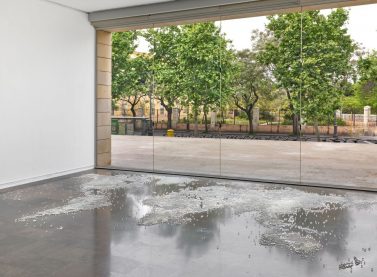
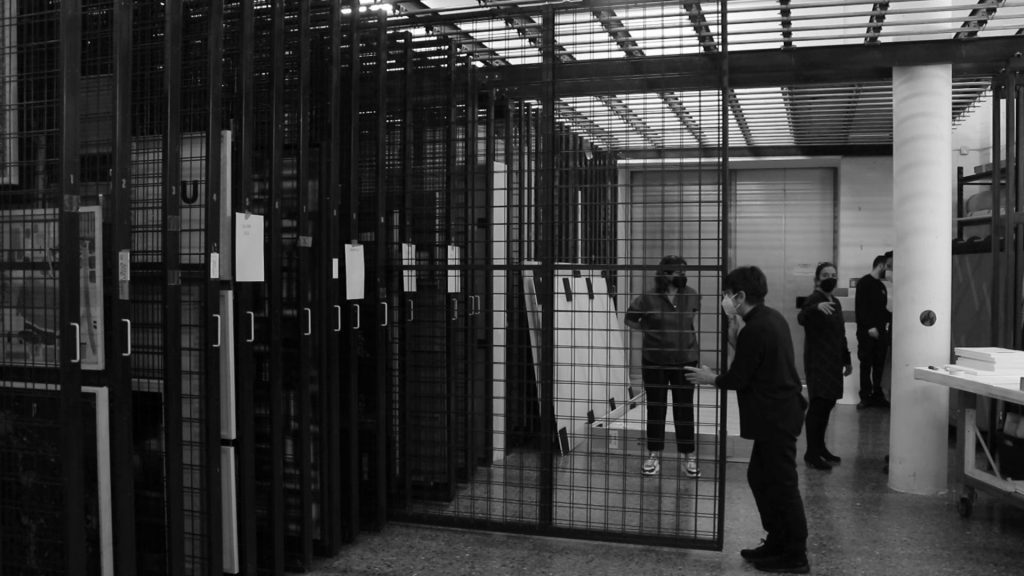
José Miguel G. Cortés, curator of the exhibition Mona Hatoum, will give a lecture on those aspects of the artist’s work that are related to the overcoming of limits and static boundaries. We will analyze the thematic issues as well as the questioning of identities and the diversity of materials that have been used in her installations. Mona Hatoum’s work bets on fluid or porous approaches that generate more open and inclusive attitudes and positions. They tend to questioning or contradictions: precariousness and instability, the ambiguous and paradoxical or memory and identity are some of the most relevant.
José Miguel G. Cortés is professor of Art Theory at the Faculty of Fine Arts of the UPV. He was IVAM’s director between September 2014 and September 2020 and has published several books and curated numerous exhibitions of modern and contemporary artists.
18 may. 2021 – 30 jan. 2022
IVAM Centre Julio González
share
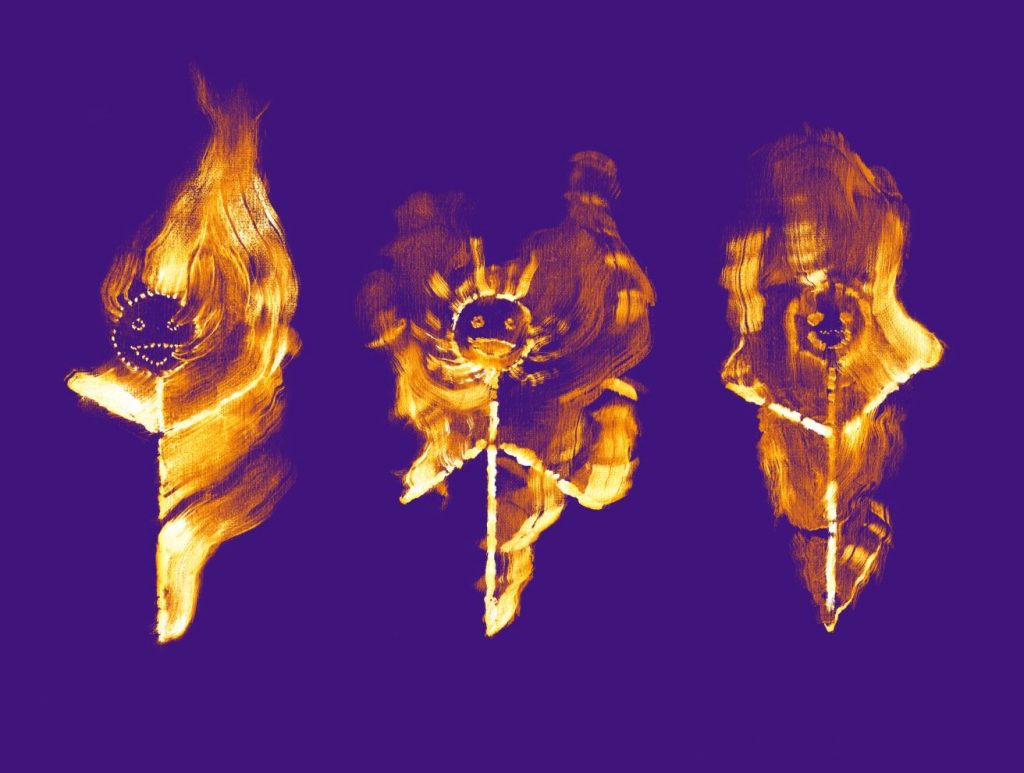
“24 Frames” is an interactive audiovisual installation created specifically for the place where it is located. It is linked to the exhibition Mechanical and Technical Imaginaries in the IVAM collection.
The project was born in the group Laboratorio de Luz, belonging to the Universitat Politècnica de València.
The installation offers the public a multiple view of the museum space, articulating in its images and sounds, different places and times. The here and now that the machines record in real time is juxtaposed with images and pre-recorded sounds of the museum’s internal spaces, which also constitute a distribution network of non-visible elements to the public: air conditioning ducts, electrical or computer networks. All of them reflect other mechanical and technical imaginaries that support the IVAM collection.
The small technical devices that “24 Frames” installs in the space, allude to a cinematographer with multiple eyes/ears. What they see and hear is also shown, multiplied and fragmented in two rows of visual and sound devices. The first row, composed of 24 screens, displays the movement of the frames. In them, what is seen in the here and now is superimposed on what is not seen, what is imagined or what could not be there. Images and sounds are juxtaposed on the here and now which the machines register in real time (a transmission without recording).
The second row is made up of loudspeakers and is placed at some distance from the screens, in a bright corridor that receives the sound of the museum.
The movement of incorporeal signs through the space also reflects the transformations that the contemporary art museum model itself has been undergoing. The machinery fragments it as dispersed and heterogeneous situations.
“24 Frames” is one of the results of the research project Desarrollos de sistemas interactivos para la generación y proyección de imagen-luz y sonido: revisión de su incidencia en arte público (HAR2017-87535-P-AR), funded by the State Research Agency, Ministry of Economy, Industry and Competitiveness and has been carried out at the Universitat Politècnica of València.
Laboratorio de Luz
Since 1990 Laboratorio de Luz is in the Faculty of Fine Arts of the Universitat Politècnica de València and has worked as a space for meeting, study and research of artistic and expressive elements related to light. At present, the members of the group belong to different departments and their participation depends on the project they are working on, combining the collective and the individual, university research and artistic activity, production of projects and dissemination of texts.
The participants in the “24 Frames” project were:
Trinidad Gracia, Emilio Martínez, Moisés Mañas, Carlos García Miragall, Francisco Sanmartín, Pepa L. Poquet, Paco Giner, María José Martínez de Pisón, Emanuele Mazza, Rubén Marín, Sergio Lecuona and Sergio Martín.
22 may. 2021
IVAM Centre Julio González
share
On the occasion of the exhibition Cardiogram by the artist Lola Lasurt, we propose a visit to the Ciutat Fallera of València. We will be accompanied by Iván Esbrí, head of the Centre de Documentació del Gremi Artesà d’Artistes Fallers. In this tour we will visit the Museu del Gremi and some studios of falleros artists.
During the tour of the studios we will learn, from the artists, about the tradition and technique that surrounds the traditional work linked to the world of the fallas. A celebration that we understand as an exercise of diagnosis to the most immediate sociopolitical current situation. This year, this celebration is doubly suspended due to the pandemic.
At the Museum, we will visit the place where usually happens to be the ninot Democracia, a work by the fallero artist José Azpeitia. Currently, the artist has asked to move it to Gallery 6 of the IVAM as the central piece of the exhibition Cardiogram.