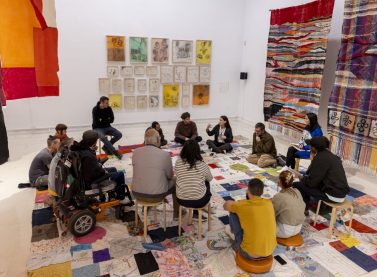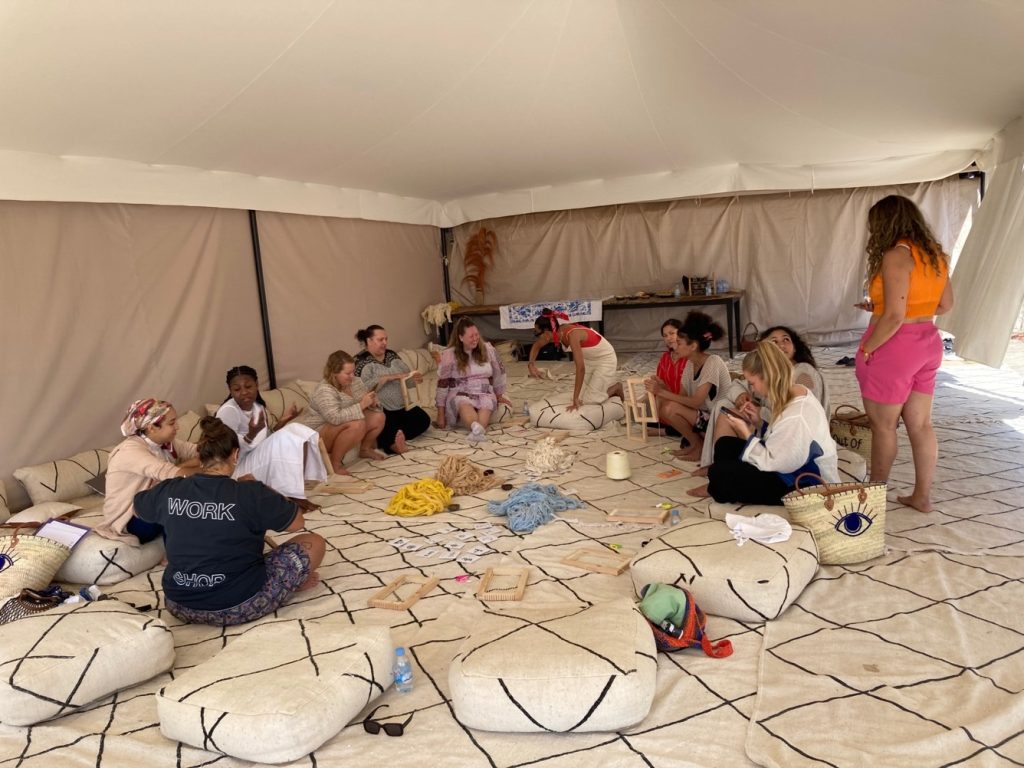
Courtesy of Zineb Achoubie. Workshop held during the inauguration of @outofofficeretreat
24 jan. 2024 – 26 jan. 2024
IVAM Centre Julio González
share


24 jan. 2024 – 26 jan. 2024
IVAM Centre Julio González
share
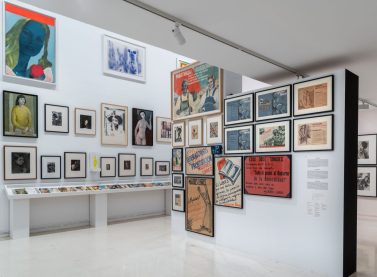
Khyout Jdor/The Threads of Roots/خيوط جذور is a workshop proposed by Teresa Lanceta and Zineb Achoubie at the invitation of Pedro G. Romero and framed within the exhibition popular.
Like tattooing, Berber weaving techniques are the result of old social phenomena. By borrowing these techniques, the participants of the workshop will work through weaving on telling this story from yesterday, still very present today.
It is from this heritage that the participants will create a fusion between the traditional and the modern guided by the artists, while trying to translate this into an artistic workshop, by using a mixed technique and including in particular traditional weaving with Bouchrwite.
The workshop is aimed at anyone interested, with an intergenerational and multicultural desire. It will take place in a fluid dialogue between Spanish, Berber, Arabic, French or English.
Teresa Lanceta is a pioneer of contemporary textile art. Since the 1970s, his practice has pushed the boundaries between what was considered art and craft. She is interested in elements of formal exploration, but also in material and technical issues, as well as in the traditions and ways of life associated with the act of weaving, a form of creation that operates without a prior sketch and in which figure and background are constructed at the same time. time. Lanceta understands weaving as a primordial code of humanity through which it has come into contact with the cultures of various groups such as the Roma population and Moroccan nomadic weavers. Artistic traditions and ways of life with which he has maintained a dialogue through his tapestries, paintings and drawings and his theorization.
Zineb Achoubie is a visual artist and master weaver. Zineb Achoubie Graduated from Beaux-Arts college in Casablanca, major interior design , Zineb Achoubie She practiced interior design for 2 years , and went on to study weaving in the royal academy of traditional arts She will not stop there, she starts in 2018 a research about amazigh culture , now she is managing a weaving cooperative in high atlas. She participated in many exhibitions national and international art fairs. Her practice unfolds through the reflection on gestures, materials and colors. She experiments, tests, explores with the deep desire to discover and preserve the old practices.


15 feb. 2024 – 19 may. 2024
IVAM Centre Julio González
floor B, G1
share
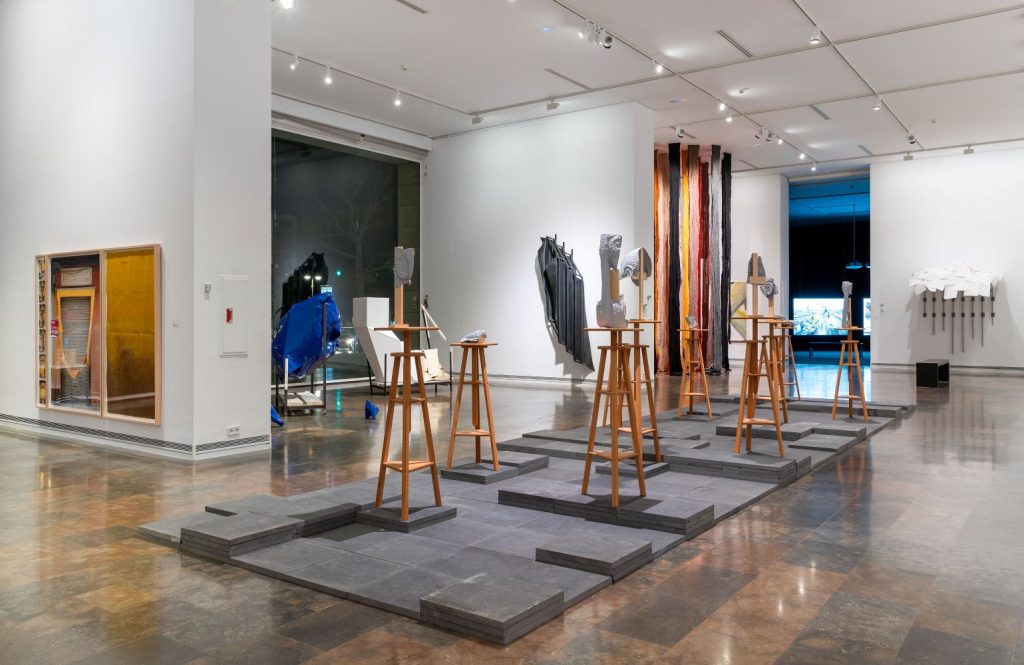
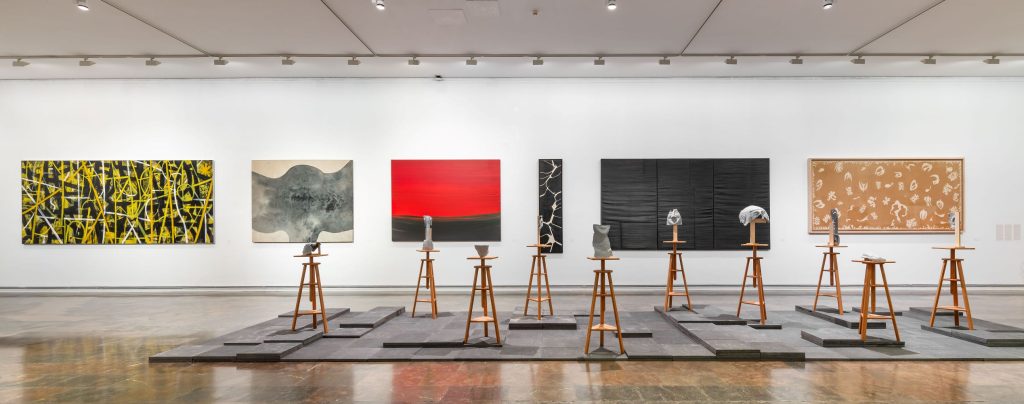
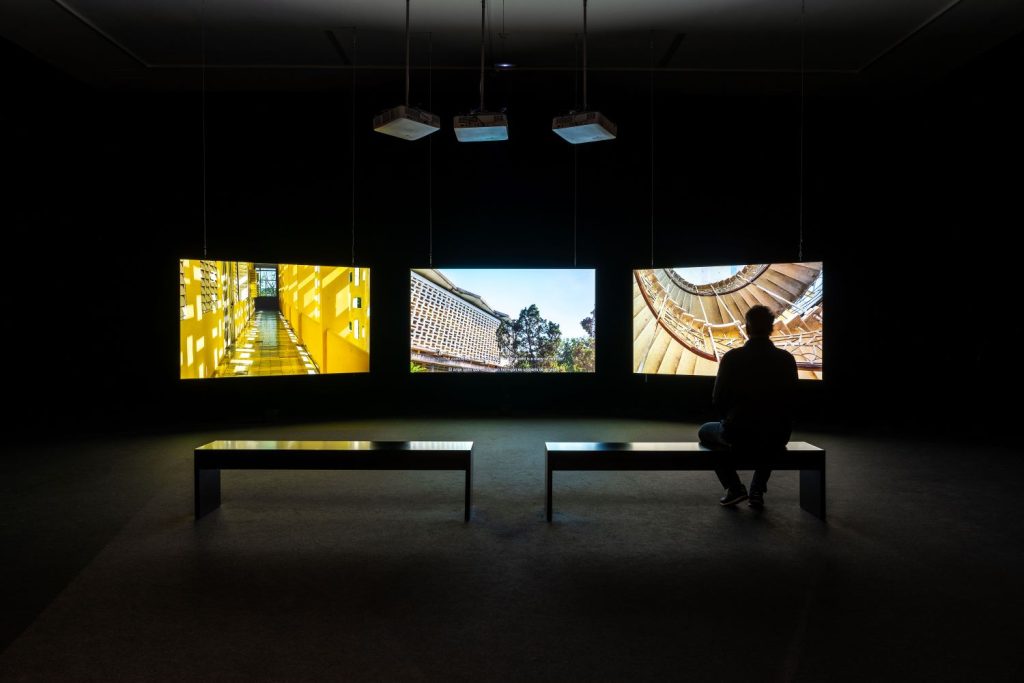
In February 2024, the IVAM turns 35 years old. For this reason, we are starting a series of exhibits that under the heading of Scenes from the IVAM Collection will show space-time combinations of our collections, in the form of assemblies that will allow us to know the multiple meanings of the works and documents that make up the IVAM collection. A scene is a moment in time, an articulation of different situations; a scene is constructed, transformed and disappears. This is how we understand the work with the IVAM collection, a work of construction, reconstruction and memory, with what is there and what is missing, in constant transformation. Along with other more global readings of the collection, in this case it would be about showing various threads of meaning based on specific works.
In the first presentation, under the title of Making landscape, and based on Pierced Spiral, 1973 by Robert Smithson, we work on the idea of the museum as a catalyst of a context and the idea of landscape as a construct that combines architecture, reflections about the lived landscape, ways of life and thinking; connecting to issues of space-time, architecture, archaeology, and memories of shared lives. This will include works by Manolo Millares, Darcy Lange, Cecilia Vicuña, Ludovica Carbotta, June Crespo, Helena Almeida, Àngels Ribé, Claudia Pagés, Rayanne Tabet, Miquel Navarro, Berta Cáccamo, Ángeles Marco, LUCE, Adolph Gottlieb, Nico Munuera, or Thao Nguyen Phao, among others.
Collaboration:




14 mar. 2024 – 09 jun. 2024
IVAM Centre Julio González
floor 2, G6
share
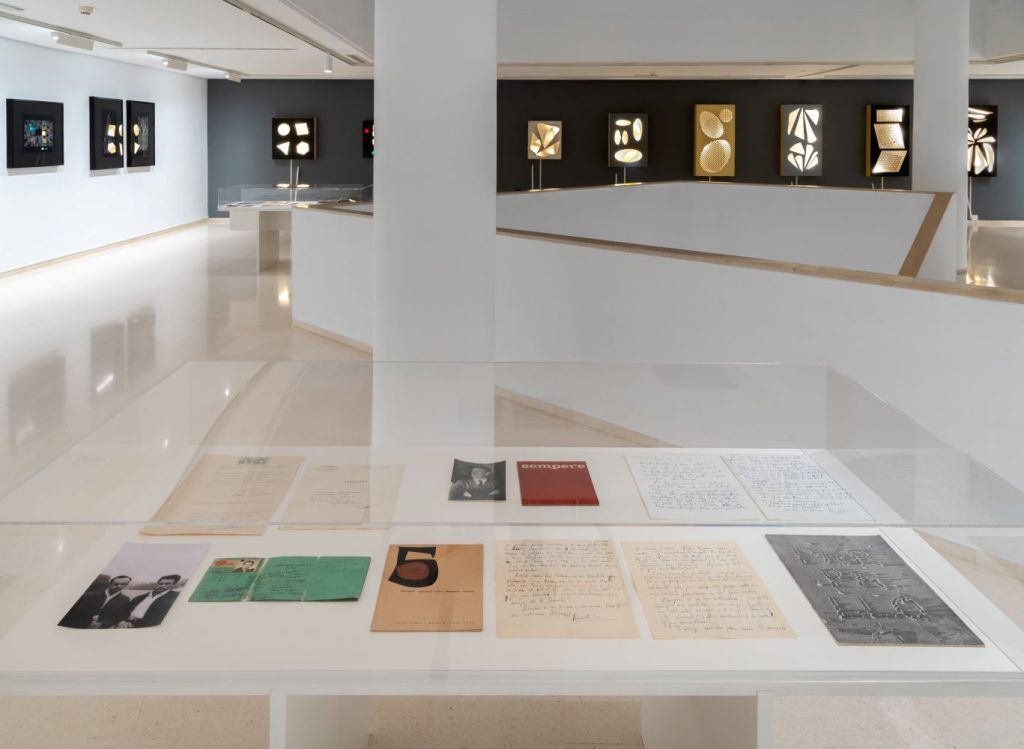
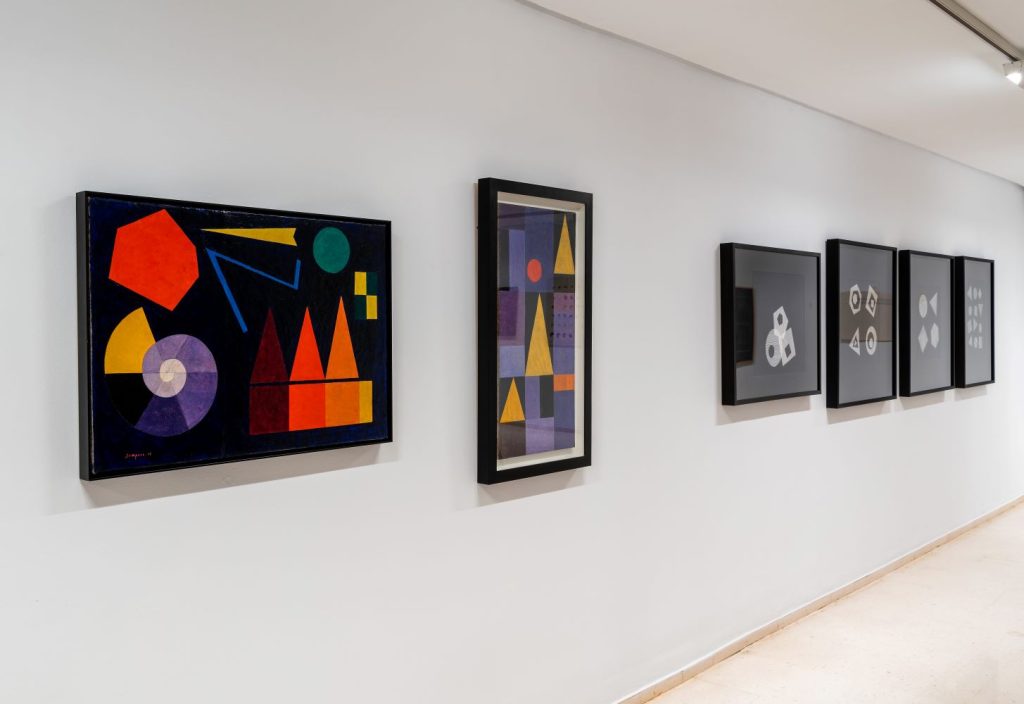
As part of the commemoration of 100 years after the birth of the Alicante artist Eusebio Sempere and in collaboration with the MACA, Museum of Contemporary Art of Alicante, the IVAM offers an exhibit about Eusebio Sempere limited to his time in Paris, a period of time that extends from early 1949 to January 1960.
Despite his small successes, Sempere lived through difficult times, but he produced two very important series in his career: on the one hand, the series of gouaches on cardboard, the so-called Paris Gouaches; on the other, the luminous reliefs, a type of artifact with electrical installation which simulates movement through the different alternately illuminated planes where the geometric shapes are cut out. Although he first began using gouaches, with simpler and cheaper materials and workmanship, the luminous reliefs coexisted with them until the early sixties. And both respond to the same aesthetic concern. The luminous reliefs are one of Sempere’s most important contributions to optical and kinetic movement. A very important number of works from these two series are preserved in the collections of the IVAM and the MACA.
In Paris, Sempere builds a universe of personal and artistic relationships that are the basis of his personality and which forever establish his talent. His friends at the Colegio de España school Eduardo Chillida, Pablo Palazuelo, Salvador Victoria, Lucio Muñoz and the Valencians Doro Balaguer and Vicente Castellano. His relationship with the Denise René Gallery and the geometric artists Vasarely, Arp, Schoffer, Soto, Sobrino, Mortensen, etc. His contact with avant-garde artists such as Kandinsky (through his widow Nina Kandinsky), Braque (whom he visited in his studio) or Julio González, whom he met through the latter’s friendship with his daughter Roberta. Also belonging to this period is the learning of the silkscreen technique in the workshop of Wifredo Arcay, a Cuban artist whom he met through Loló Soldevilla, a Cuban painter and cultural attaché at the Cuban Embassy in Paris, who introduced him to the artistic circles of the French capital.
All of this is reflected in the large amount of documentation that is preserved in this regard and which can be seen in the exhibit: scrapbooks, texts by the artist, press, photographs, extraordinary epistolary collections, correspondence with family members, artists, critics, etc.
08 feb. 2024 – 16 jun. 2024
IVAM Centre Julio González
floor B, G3
share
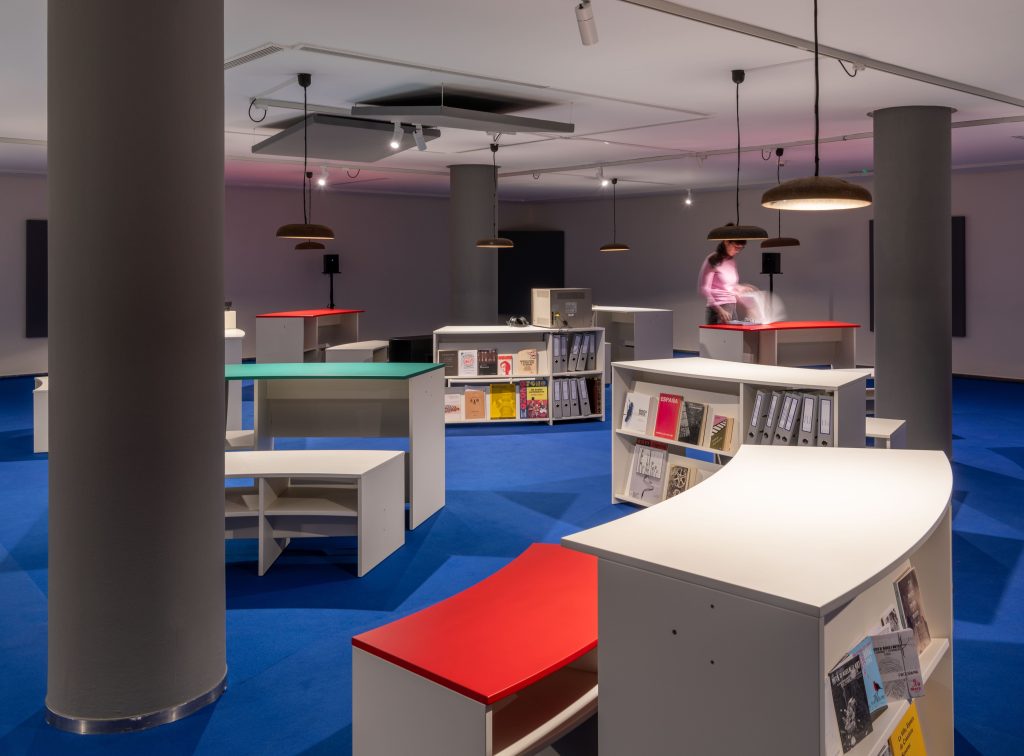
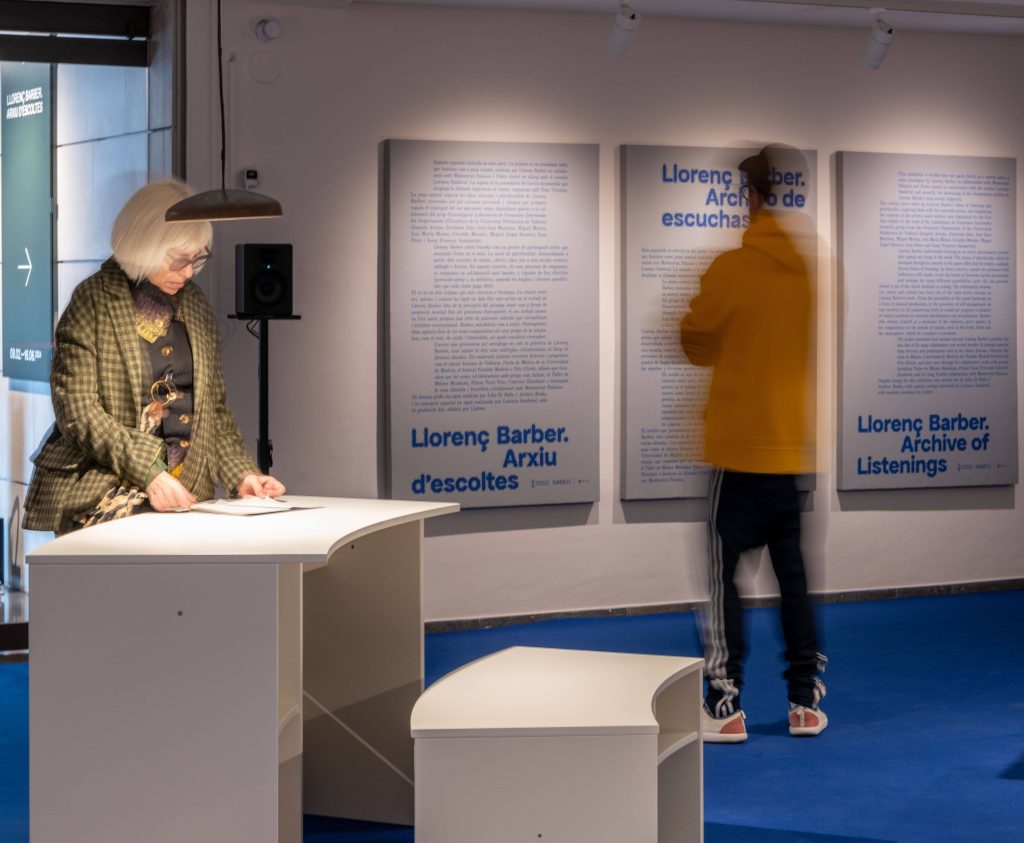
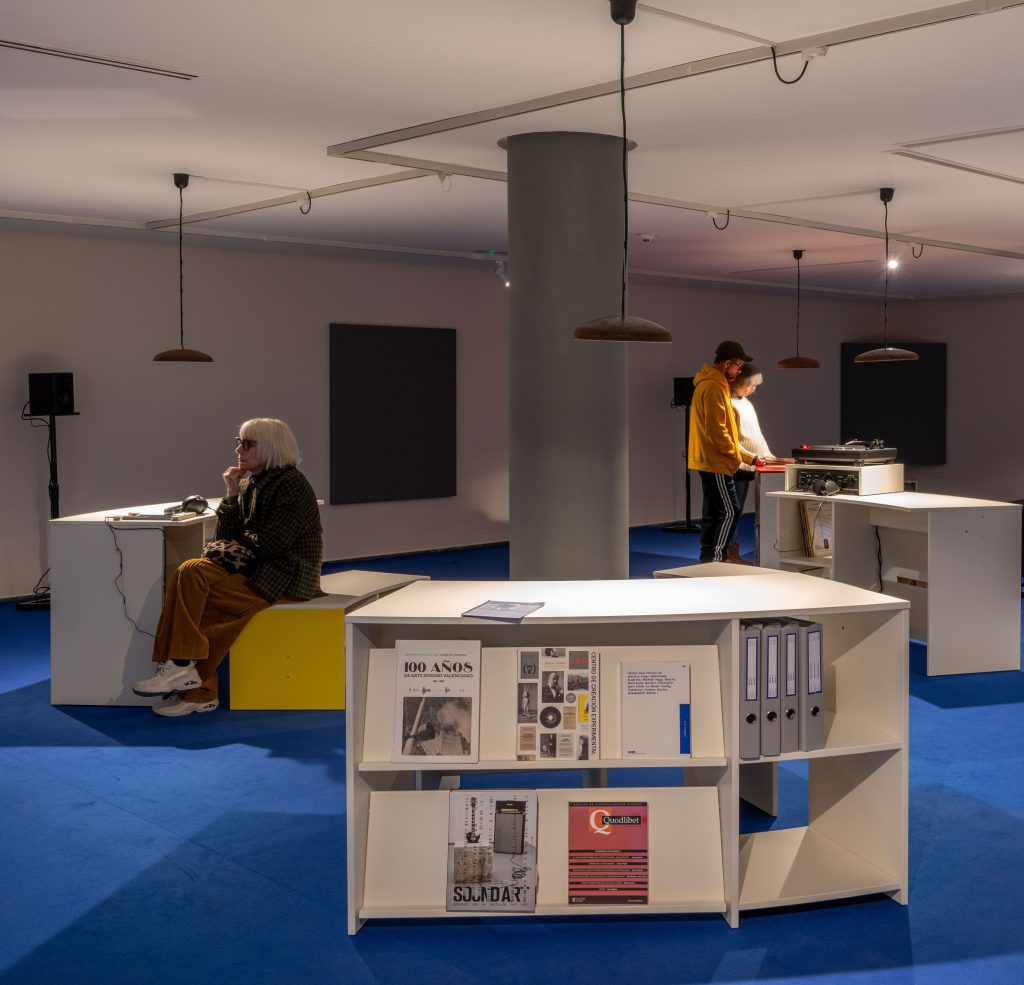
Sound is one of the media that comes closest to ecology. The relationship between art, music and the environment has been one of the channels with the most presence in Llorenç Barber’s work. From the perception of the soundscape as a form of musical production to self-management processes, his pioneering work in sound art proposes a series of radical positions that are constantly updated. The notion of plurifocality with which the city concerts have been developing offers keys to a work of the multiple and the diverse: in these concerts, the sounds come from bell towers, from bands, or from the different possibilities that each of the cities can offer. Likewise, the listening points are multiple and varied; all of them valid.
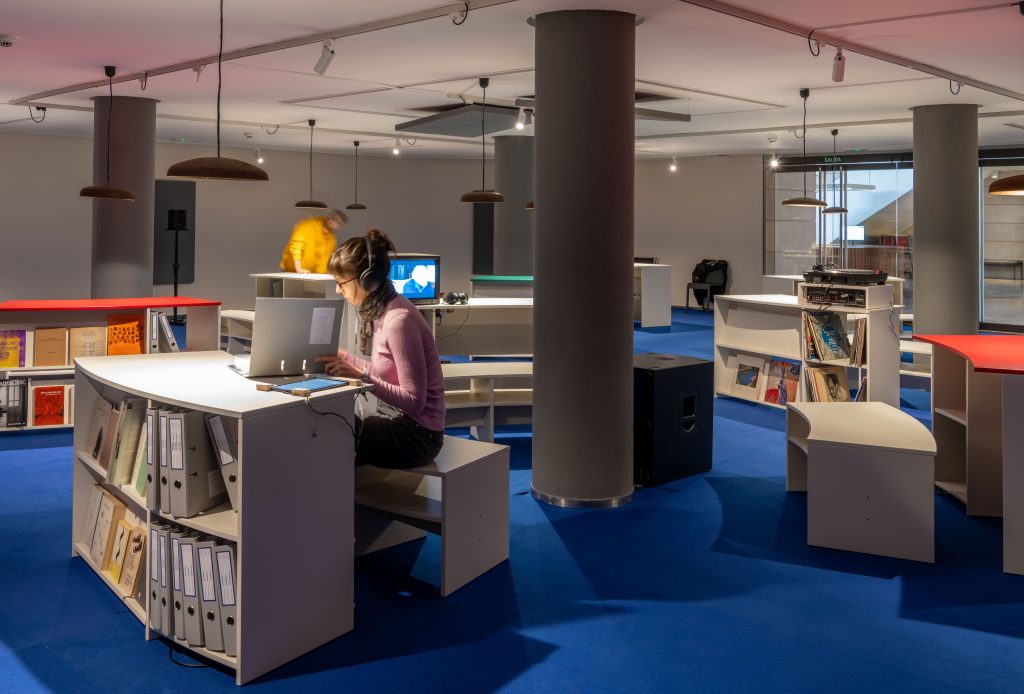
The archive we present places special emphasis on the practice of listening. It includes the practice not only of Llorenç Barber, but also that of his many collaborators over several decades. The archive materials pass through festivals and programs such as the classic Ensems de Valencia, the Aula de Música of the University of Madrid, Paralelo Madrid or Nit’s de Aielo, as well as through their collaborations with groups such as Actum, Taller de Música Mundana, Flatus Vocis Trio, Colectivo Elenfante or his long collaboration with Montserrat Palacios. In addition to the documents in paper, the archive presents for the first time the digitization of its numerous sound collection through collaboration with the Intermedia Creations Laboratory research group of the Department of Sculpture of the Polytechnic University of Valencia.
The proposal presents the idea of plurifocality applied to the archive, through a new composition made from archive materials. This proposal is made by Llorenç Barber, Pedro André and Monserrat Palacios, in conversation with Lorenzo Sandoval, presenting a sonic travelogue from the digitized contents. Tono Vízcaíno also collaborates as a documentalist.

12 dec. 2023
IVAM Centre Julio González
share
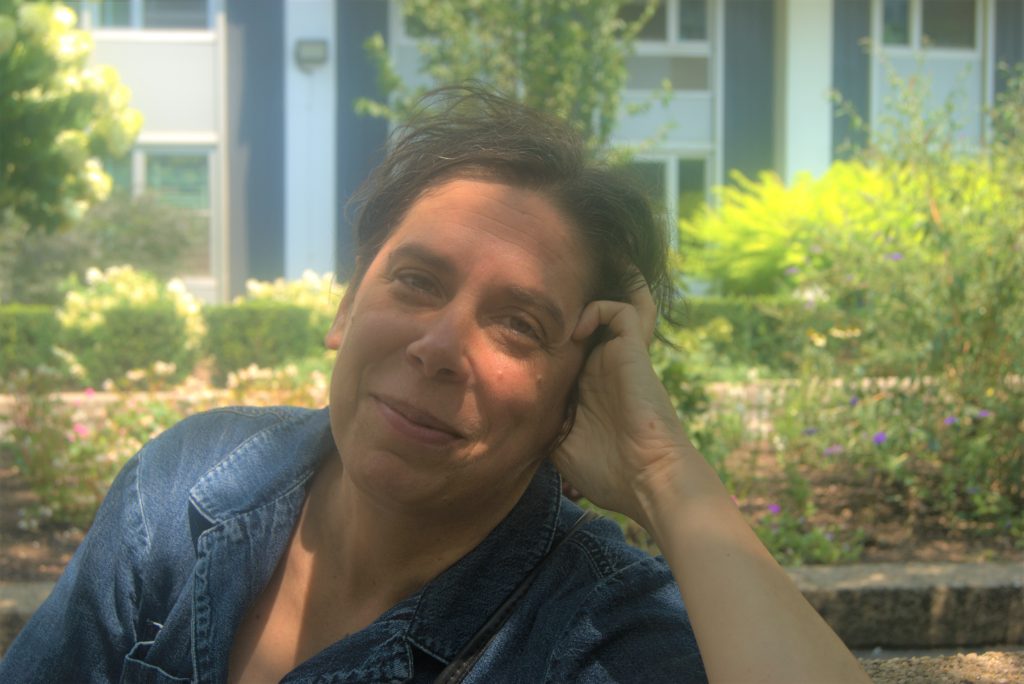
Jordana Mendelson presents the lecture Modern Banalities: Recto and Verso of the Artistic Self as part of the seminar Ser artista. Seminario Julio González, coordinated by Juan José Lahuerta, which seeks to propose a new reading of the artist’s work.
“This talk explores the role of postcards in the creation of artistic selves that circulated widely in the twentieth century among artists, writers, and the general public. Featuring subjects that ranged from artistic masterpieces to tourist locations and ethnographic subjects, modern artists expressed their amuseument and admiration for these tiny, ephemeral pieces of modern visual culture while sharing them with family, friends, and acquaintances. Placed in the context of other artists who turned to the postcard fo communication (and creativity), Julio González’s cards offer another opportunity to consider the ways his adoption of mass culture mirrored that of other artists, like Pablo Picasso, Joan Miró, and Salvador Dalí among others. Postcards were particularly fascinating for the surrealists, especially poets like Paul Eluard. González’s turn to the postcard was part of a generational phenomenon that was registered in the literary and general press as something that marked a nostalgia for the turn of the century, and kept the postcard circulating in the mind and work of artists well past its golden age” Jordana Mendelson.
Jordana Mendelson (1970). PhD in art history from Yale University. Director of the King Juan Carlos I of Spain Center and a professor in the Department of Spanish and Portuguese at New York University. She is the author of Documenting Spain: Artists, Exhibition Culture, and the Modern Nation 1929-1939 (2005) and co-editor of Postcards: Ephemeral Histories of Modernity (2010) . She has curated or co-curated Miró i ADLAN (2021), Encuentros con los años 30 (2012), Revistas y Guerra 1936-1939 (2007), Other Weapons: Photography and Print Culture during the Spanish Civil War (2007), Margaret Michaelis: Fotografía, Vanguardia y República en la Barcelona de la República (1998). She serves on the advisory committee of the Archivo Español de Arte and Culture & History, is a member of the Editorial Board of Modernism/Modernity, and is currently the Editor of the Journal of Spanish Cultural Studies. She directed the IVAM’s International Seminar: Renau in Exile in 2021.
12 dec. 2023
IVAM Centre Julio González
share
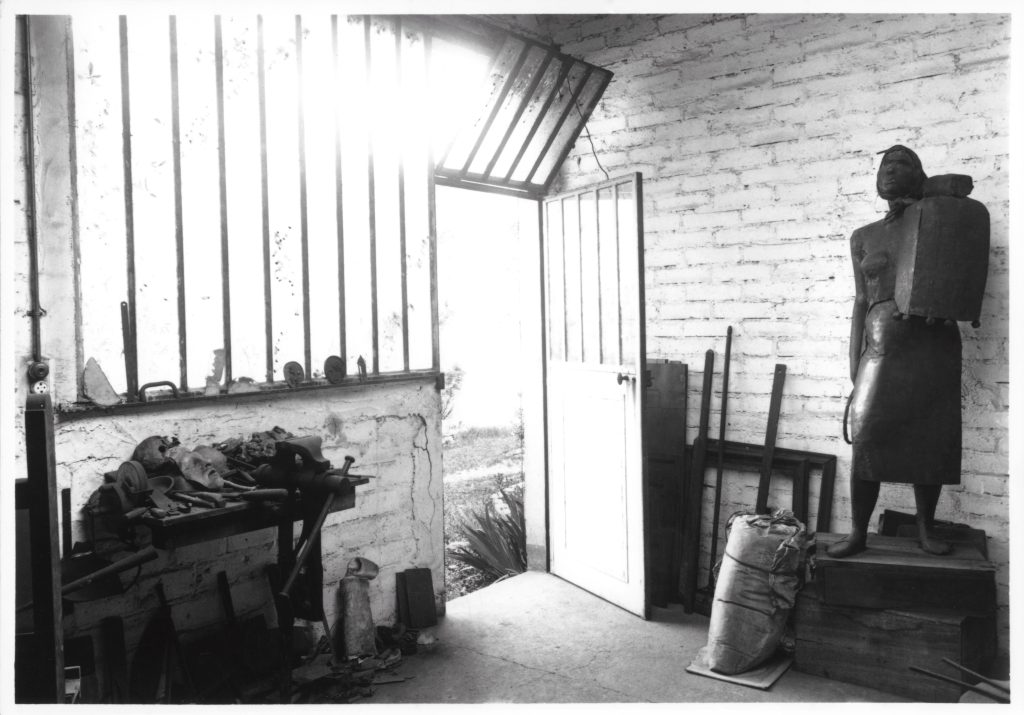
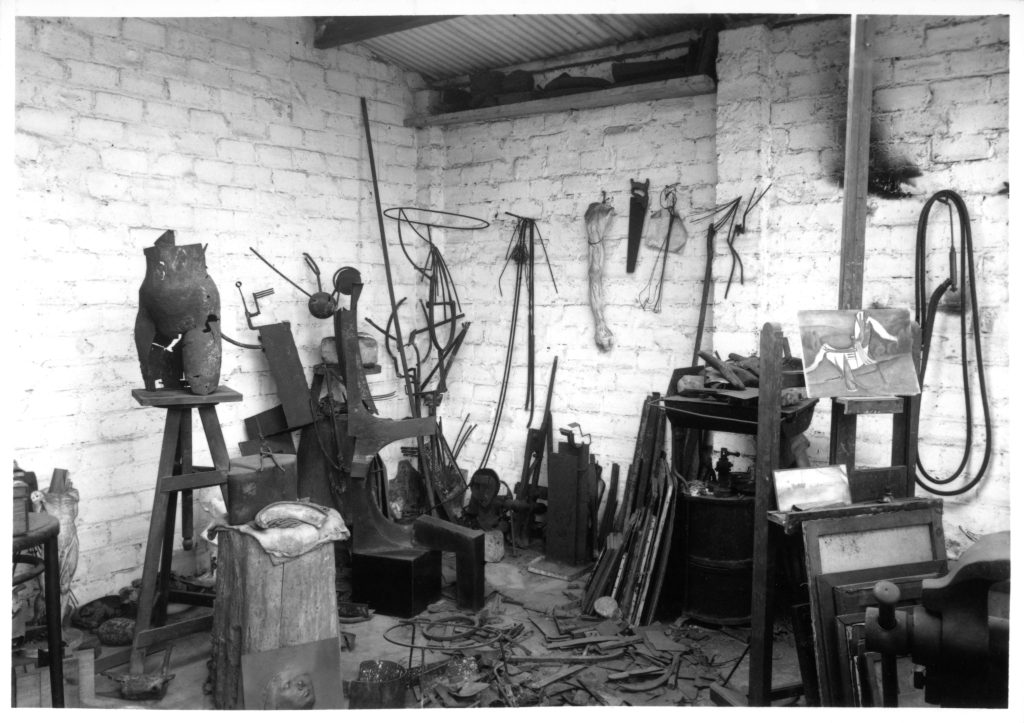
Coinciding with the exhibition Being an artist. Julio González, and with the upcoming publication of the book that accompanies this exhibition, the Institut Valencià d’Art Modern (IVAM) organizes a seminar that proposes a new reading of the work of Julio González. Coordinated by Juan José Lahuerta, curator of the exhibition and author of the book, the seminar will feature the participation of Jordana Mendelson, Rocío Robles Tardío and Celia Marín.
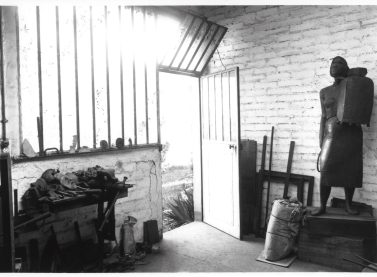
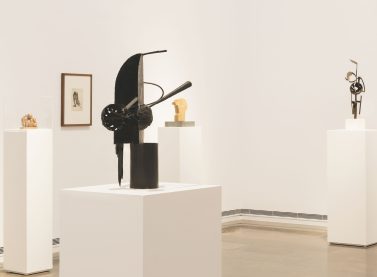
Both the exhibition and the book propose a continuous vision of the work of Julio González through themes that, coming from the academy, run through it completely: from the female nude, an academic theme par excellence, which González develops in all its aspects, to motherhood, which culminates in the sculpture Montserrat in the Pavilion of the Spanish Republic from 1937. In addition to drawings, paintings, jewelry and sculptures from the IVAM collection, the exhibition includes a large number of manuscripts, letters, documents and photographs that are not They only complement or contextualize his work, but are an essential part of it, and have also been included in the pages of the book.
On this basis, the two faces that coexist in the work of Julio González can be better explained: on the one hand, his origin in an artisan workshop, his father’s metalwork, which would also seem to be his destiny, and, on the other, in the face of this destiny, one will is to be an artist, in the idealized sense that the end of the century gives to that word. The extraordinary work of Julio González is that of a sculptor who has defeated that “tyranny”, making craft and iron, precisely, the condition and material of a radically new work, the undisputed protagonist of the great transformations experienced by art. in the era of the avant-garde.
The seminar will focus on deepening some of these topics, such as, for example, Julio González’s relationship with Picasso in his training as an avant-garde artist; González’s use of materials of popular origin, such as postcards, so abundant in his archives and presented together for the first time in this exhibition; González’s manuscripts and his vision of art and the artist through his attempts to theorize his work; the review of González’s life in the setting of the Paris of modernity and the avant-garde; or, finally, the posterity of Julio González’s work and its presence in the construction of the history of modern art. All these visions will be complementary and designed to allow open discussion and critical insight into a work from which there is still much to learn and enjoy.
SEMINAR PROGRAM
Tuesday, December 12, from 11 a.m. to 7:30 p.m. IVAM Center Julio González
11:00 a.m.- Welcome Nuria Enguita. IVAM Director
11.15 a.m.- Julio González Conference: iron, planes, war, cards and masks by Juan José Lahuerta. Professor of Art History at the TS School of Architecture of Barcelona.
12:30 p.m.- Conference Modern Banalities: Recto and Verso of the Artistic Self by Jordana Mendelson. Director of the King Juan Carlos I of Spain Center of Spain in New York. In English with simultaneous translation.
Pause
4:00 p.m.- Commented visit to the exhibition. IVAM mediation team
4:45 p.m.- Conference Pablo Picasso, Julio González: being an exhibition by Rocío Robles Tardío. Professor of Art History at the Complutense University of Madrid.
6:00 p.m.- Conference Sewing and Welding by Celia Marín. Lecturer in the Department of Theory and History of Architecture of the Higher Technical School of Architecture of Barcelona (UPC-BarcelonaTech)
7:15 p.m.- Conclusions by Juan José Lahuerta and Nuria Enguita
22 nov. 2023
IVAM Centre Julio González
share
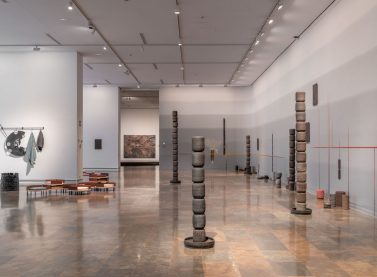
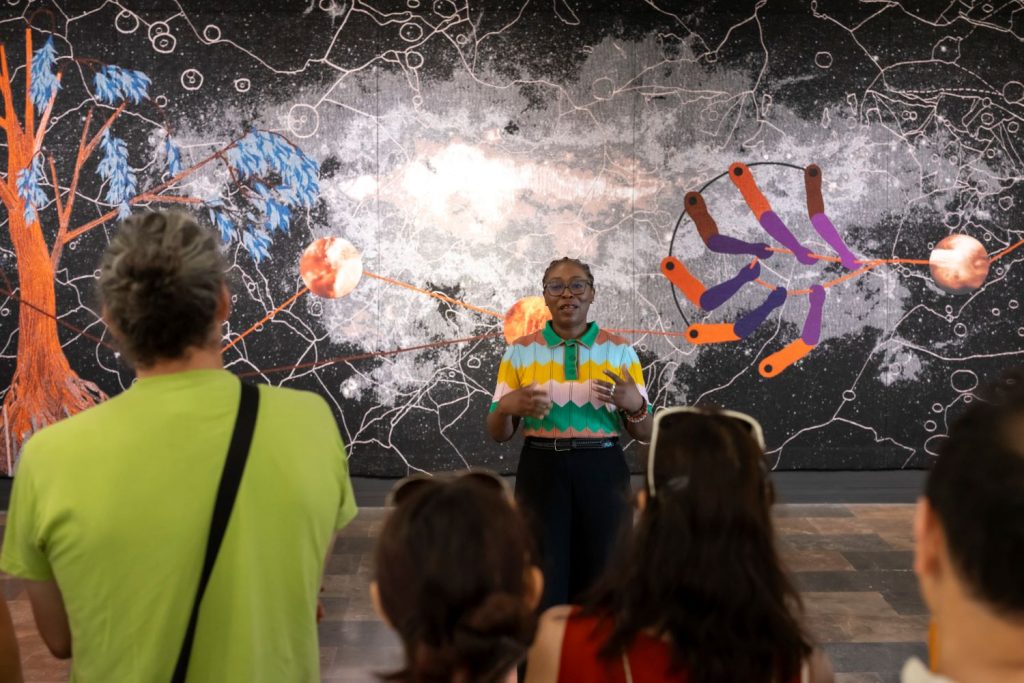
On the occasion of her participation in the Articulacions study program, the artist Otobong Nkanga will conduct a dialogue visit to her exhibition Craving for Southern Light. We invite you to join us on this tour of the exhibition where Nkanga herself will describe her work processes, her methodologies, references and imaginaries as well as the urgencies and drivers of her practice.
Otobong Nkanga (Kano, Nigeria, 1974) is an artist who sees the world as a succession of interconnected occurrences and superimposed layers. In her understanding, nothing happens if not in relation to the environment we live in or flee from, to our personal and political histories, our bodies and memories. This might be why she requires different artistic means to complete her broad understanding of the world. Using drawing, painting, collage, sculpture, installation and performance, Nkanga opens up the possibilities of complexity to synthesize an idea, life process or viewpoint that will define the present moment. Her position and practices are deep and poetic and never leave the viewer indifferent.
01 dec. 2023
IVAM Centre Julio González
share
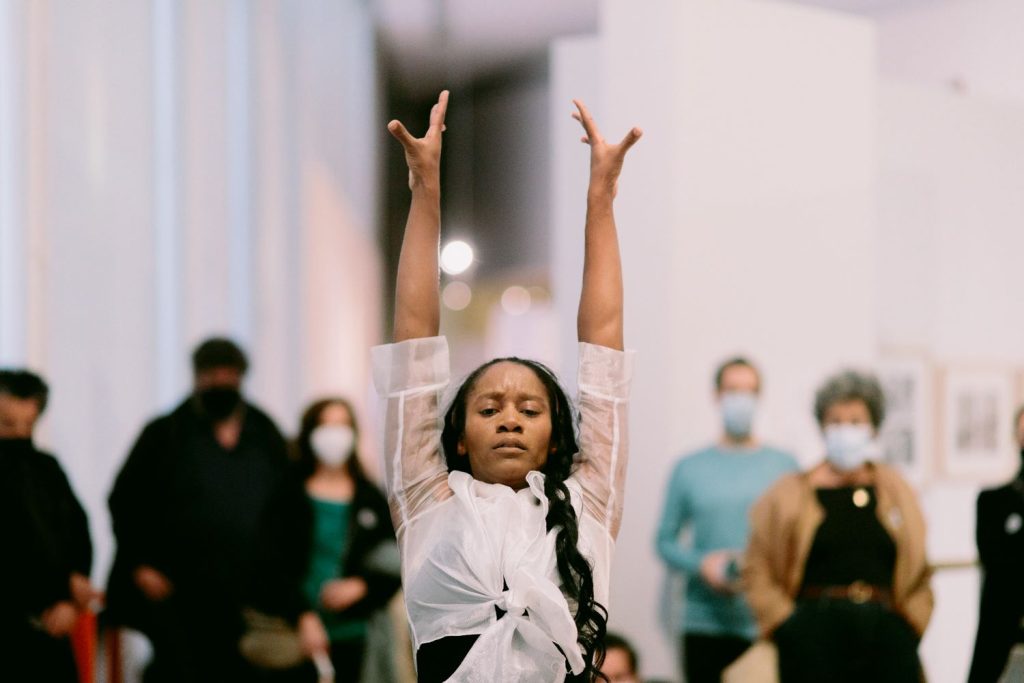
Within the framework of the popular exhibition curated by Pedro G. Romero, Yinka Esi Graves will perform the specific performance Transposition. The artist also participates in the Articulations study program.
Transposition
Hack, stalk, commune,
Hack, stalk, commune,
Hack, stalk, commune,
Hack, stalk, commune,
transpose invisibility.
Make it a dance, repeat it
Transposition
Hack, haunt, commune,
hack, haunt, commune,
hack, haunt, commune,
hack, haunt, commune,
transpose the invisibility.
Make it a dance, on repeat.
Yinka Esi Graves continues to think through the framework of her work The Disappearing Act to reflect on how to position oneself between the intramural place and sudden overexposure without burning in the light.
Her work explores the links between flamenco and other forms of bodily expression, particularly from a contemporary and African diaspora perspective.

30 nov. 2023 – 02 jun. 2024
IVAM Centre Julio González
share
For more information, please check the Spanish version.
23 jan. 2024 – 26 mar. 2024
IVAM Centre Julio González
share
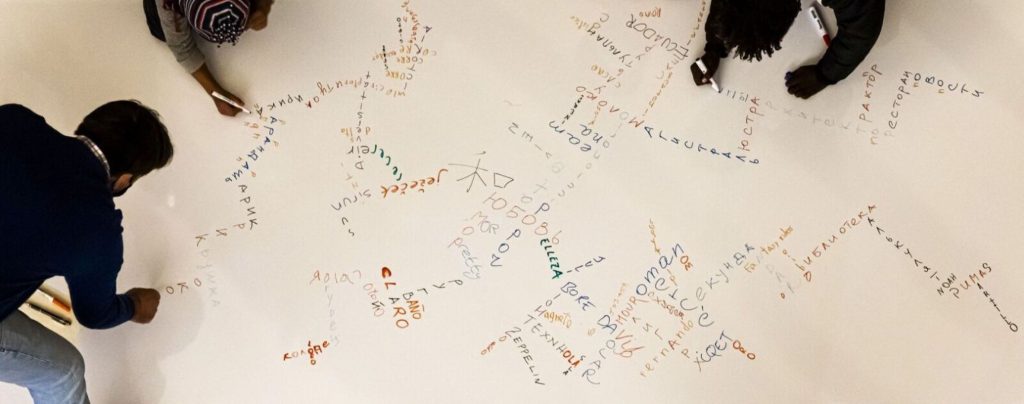
All languages contain different ways of expressing similar feelings, ideas, emotions. Based on the languages, cultures, knowledge and experiences contributed by the participants in the narrative laboratory, we will construct stories linked to the exhibition popular, curated by Pedro G. Romero. Reading, orality and writing will be the axes around which the sessions revolve, which aim to generate a space for mediation and creation in the museum through the oral and written word, as a continuation and development of the Escuela de Saberes Diversos . A space that summons other imaginaries and other crossed stories. At POLIGLOTÍA we invite you to participate in this laboratory for experimenting with polyglot narratives arising from a global, transversal and multilingual conversation.
Sessions:
January 23 and 30, 2024
February 6, 13, 20 and 27, 2024
March 5 and 12, 2024



30 nov. 2023 – 02 jun. 2024
IVAM Centre Julio González
floor 2, G7
share
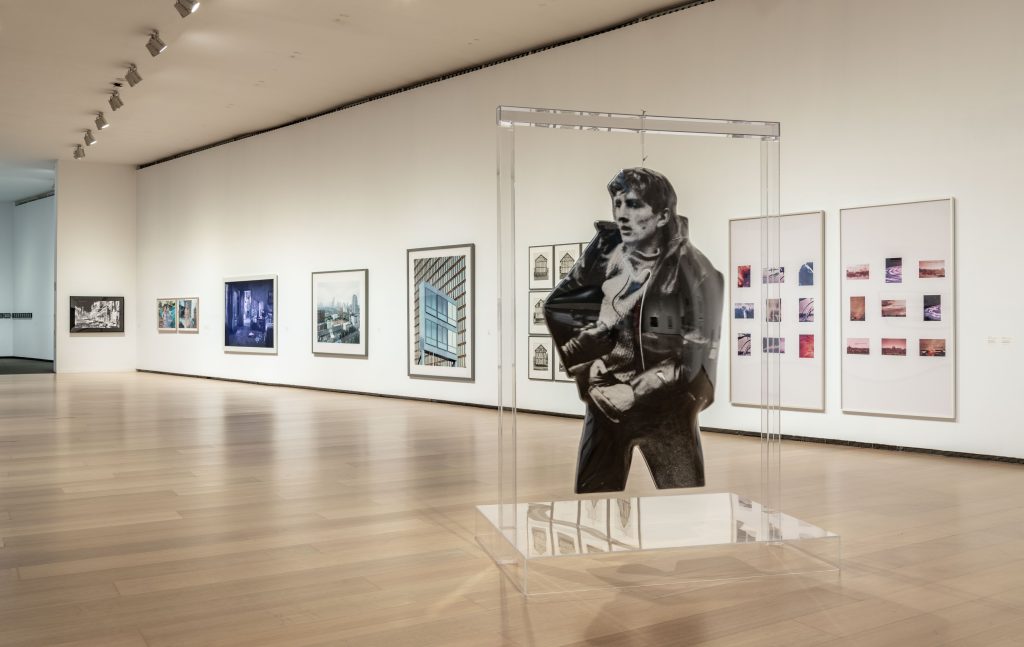
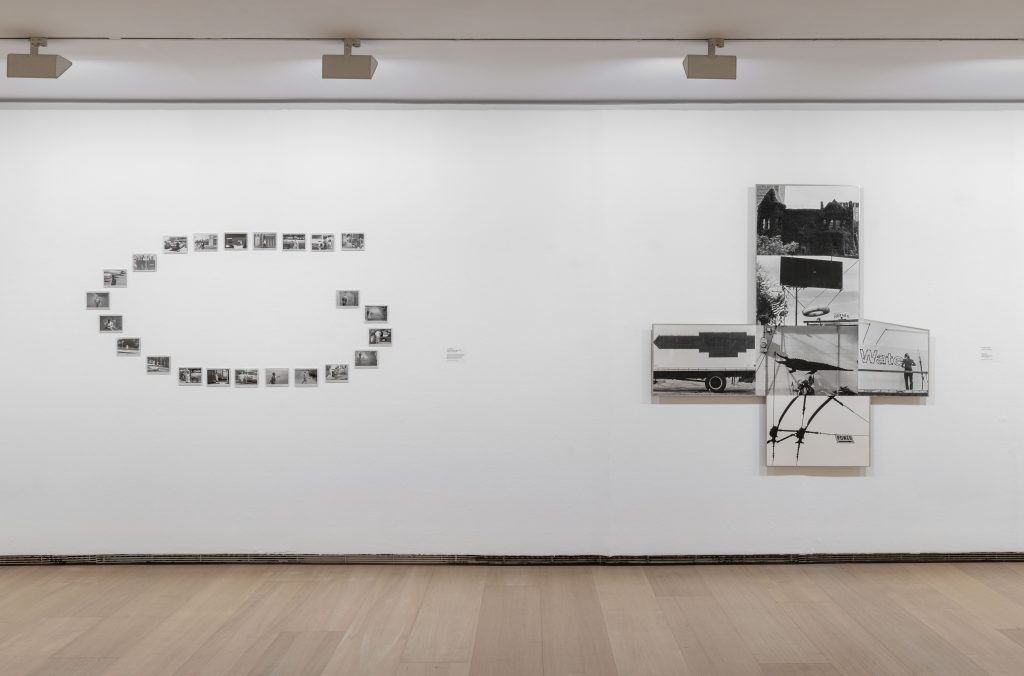
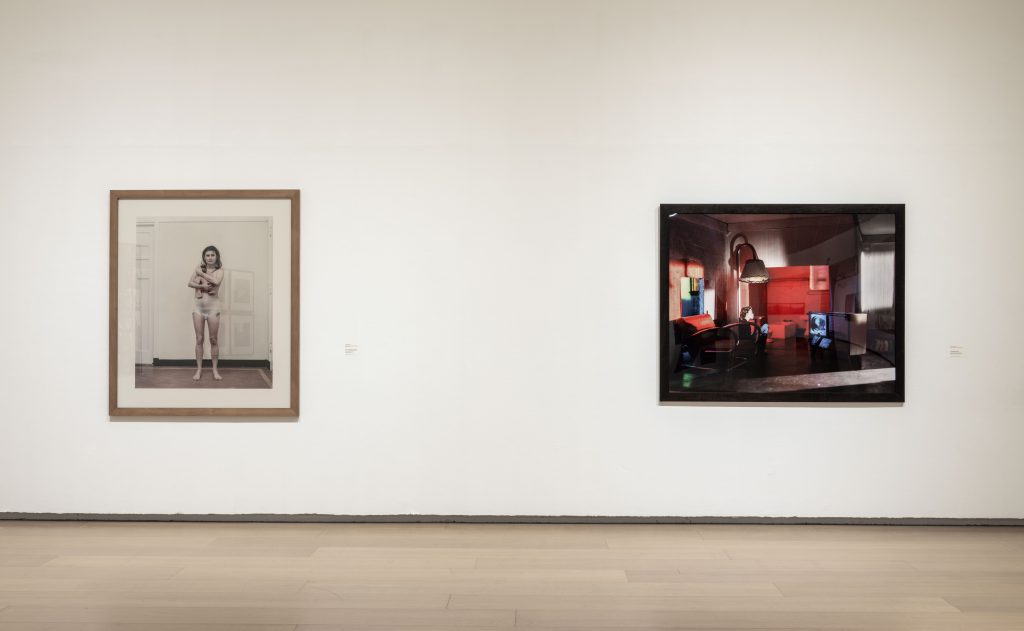
This exhibition project focuses on the role of the photographic image as a device of special significance within artistic practices after 1950. Questions related to the body and identity, memory and history, the public and political sphere, the role of the media or the phenomenon of mass consumption have permeated artistic proposals, which have incorporated photography as an expressive language, code or document in a process of hybridisation of the artistic media.
From 1950, the date taken as a starting point, the collection of the IVAM includes a number of key works and artists ranging from the New Documentalism of Robert Frank and Lee Friedlander to the Pop and Post-pop productions of Baldessari and Prince, the various courses taken by conceptual art and action art with Fulton and Export, the theme of the archive with the Bechers, the visual potency of the German New Objectivity of Ruff, the narrative strategies of Gordon and Wearing, among others.
To this series of international names we must add those of essential Spanish authors such as Soto or Valldosera, as well as those from Valencia such as Mira Bernabeu or Navarrete, among others. Names that show the diversity and richness of the IVAM photographic collections.

04 oct. 2023
IVAM Centre Julio González
share
Most of the works in the exhibition come from the collection of the IVAM. These are complemented by pieces from the Colección Michael Jenkins & Javier Romero housed at the Museo de Arte Contemporáneo de Alicante (MACA), the Museo Nacional Centro de Arte Reina Sofía (MNCARS), the Archivo Miguel Trillo and the Archivo Lafuente at the Library and Documentation Centre of the MNCARS, and the Museu Nacional d’Art de Catalunya (MNAC). The show also includes works from the following institutions and private collections: Colección Ricardo Borja, Residencia de Estudiantes de Madrid, Museo Ramón Gaya (Ayuntamiento de Murcia), Archivo de la Fundación Anselmo Lorenzo, Galería Rafael Ortiz (Sevilla), Herederos Llorens Peters C.B, Colección Antonio García y Sebastián Becerra, Galería Alarcón Criado (Sevilla), Occupational Centre of the Day Centre of La Puebla de Cazalla, Collection Kai Dikhas (Foundation Kai Dikhas, Berlin), Prometeo Gallery Ida Pisani (Milan), KOW (Berlin), CRAI Biblioteca Pavelló de la República (Universitat de Barcelona), Collection APRA Foundation (Berlin), Odin Teatret Archives Collection (Denmark), Fondazione Echaurren Salaris (Rome), Biblioteca Històrica de la Universitat de València, Monasterios Loeches, Light Cone Collection, Archivo Fundación Federico García Lorca (Granada), Film collection of Radiotelevisión Española (RTVE), Filmoteca Española, Médiathèque du patrimoine et de la photographie, diffusion RMN-GP and Colección Instituto de Estudios Giennenses.
Download complete dossier in English here