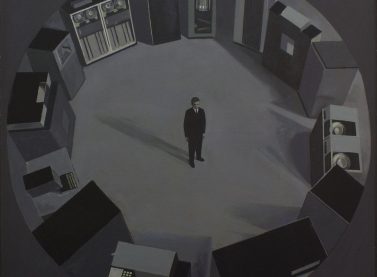
12 and 26 nov. 2017
IVAM Centre Julio González
share


12 and 26 nov. 2017
IVAM Centre Julio González
share
Guided tours to exhibitions by Pilar Martínez, BA Art History.
Visits:
Fake. It is not true, it is not a lie
January 8th and 22nd
Case study: RICHARD HAMILTON. Objects, interiors, self-portraits and people.
February 12th and 26th
Xavier Arenós. Presence and absence.
March 12th and 26th
Las constelaciones de Julio González.
April 2nd and 9th
Helena Almeida. Corpus.
May 7th and 21st
Joana Hadjithomas & Khalil Joreige.
June 11th and 25th
Carmela García. Images of power – cartography of the invisible
September 17th
Case study: Robert Frank
September 24th
Anzo. Isolation
October 8th and 22nd
In rebellion. Female Narratives in the Arab World
November 12th and 26th
*** THIS VISITS WILL BE IN SPANISH***

03 and 17 dec. 2017
IVAM Centre Julio González
floor B, G3
share
Guided tours to exhibitions by Pilar Martínez, BA Art History.
Visits:
Fake. It is not true, it is not a lie
January 8th and 22nd
Case study: RICHARD HAMILTON. Objects, interiors, self-portraits and people.
February 12th and 26th
Xavier Arenós. Presence and absence.
March 12th and 26th
Las constelaciones de Julio González.
April 2nd and 9th
Helena Almeida. Corpus.
May 7th and 21st
Joana Hadjithomas & Khalil Joreige.
June 11th and 25th
Carmela García. Images of power – cartography of the invisible
September 17th
Case study: Robert Frank
September 24th
Anzo. Isolation
October 8th and 22nd
In rebellion. Female Narratives in the Arab World
November 12th and 26th
Case study: Ignasi Aballí
December 3rd and 17th
*** THIS VISITS WILL BE IN SPANISH***
06 nov. 2017
IVAM Centre Julio González
share
Lecture “Autopsia de un subtierro. Retrato de la Guerra Civil Española” of Francisco Ferrándiz, organized by the Chair of Artistic Studies. 20th / 21st centuries.
Francisco Ferrándiz
(PhD in Anthropology, University of California, Berkeley, 1996) is a Senior Scientist at the Instituto de Lengua, Literatura y Antropología (ILLA) of the Centro de Ciencias Humanas y Sociales (CCHS) of the Consejo Superior de Investigaciones Científicas (CSIC).
His fields of interest include cultural studies, popular religiosity, visual anthropology, medical anthropology, body anthropology and the anthropology of violence, with special emphasis on research related to memory and social trauma. So far her two major ethnographic projects have been aimed at the spiritualist cult of Maria Lionza in Venezuela and, since 2003, the policies of memory in contemporary Spain, through the analysis of exhumations of mass graves of the civil war (1936-1939).
He has been Professor and / or Researcher of the Universities of Berkeley, Virginia, Central Venezuela, Utrecht, Autonomous State of Morelos, Deusto and Extremadura. He has also taught postgraduate studies at the Central Universities of Barcelona, Complutense, Rovira i Virgili and the Basque Country. At the University of Deusto (1999-2006), he was Director of the UNESCO Chair for Human Resource Training for Latin America (2001-2002) and Director of the Doctorate Migrations and Conflicts in Global Society (2002-2006). He is currently Coordinator of the EDEN (European Doctorate Enhancement on Peace and Conflict Research) network, funded by the European Commission’s Erasmus program. He has published numerous articles in national and international magazines.
CHAIR OF ARTISTIC STUDIES. 20th/21st CENTURIES
IVAM-UV-UPV (Institut Valencià d’Art Modern-Universitat de València-Universitat Politècnica de València-Universidad Miguel Hernández)
Directors: Juan Vicente Aliaga / Vicente Sánchez-Biosca
The life in images of contemporary culture outruns the (material and immaterial) traditional spaces in which they were entrapped in the past, even the recent past. Their genres and registers, their ambits of circulation, their ceaseless migrations give the impression of offering a previously unknown experience of the real at the same time as, in an apparent paradox, they display a not in the least feigned technological pride.
Nevertheless, however much studies of the History of Art, Fine Arts, Journalism and Audiovisual Communication have attempted to adapt to the demands of this state of affairs, the lability of the borders between creation and reflection, technology and art, the media and the collective imaginary, among others, requires more ductile ambits of reflection and debate than those to be found in university studies and traditional research. On the other hand, unlike classical philology, palaeography, the exegesis of written texts and the image still presents an imbalance between its (emotional, conceptual, political, memory-based) impact and the instruments provided to analyse it.
The aim of Cátedra Estudios Artísticos, arising from the collaboration between the University of Valencia, the Polytechnic University of Valencia and the IVAM, will consist in encouraging this reflection about the life of images both in the world of art and in social life, including imaginary. It will do so broadmindedly, avoiding academic, artistic or technological restrictions, but, nevertheless, thriving on and taking advantage of all the academic, museum-based and institutional aids at its disposal. For that reason, the fact that it is held at the IVAM is propitious because it can enrich its activities with the reflection about exhibitions, installations or lectures, and also the series of projections.
22 sep. 2017
IVAM Centre Julio González
share
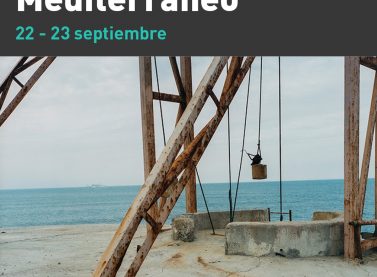
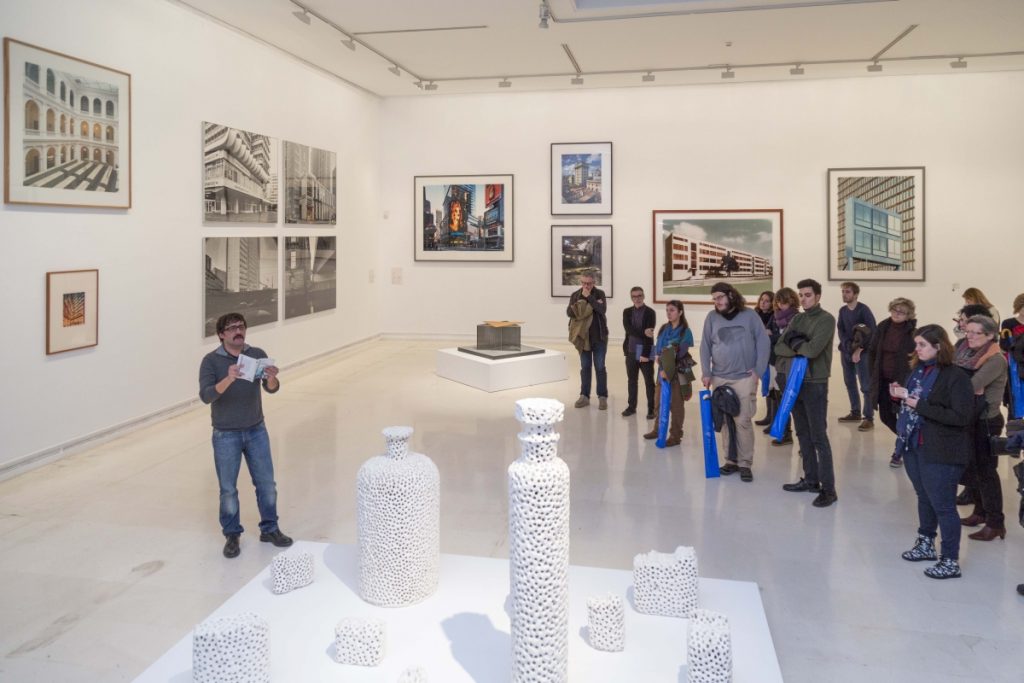
On the occasion of the Congress Imagining the Mediterranean, the actor Ximo Solano performs a theatrical reading texts by Jean Genet in the exhibtion hall of “In Rebellion. Female narratives in the Arab World”
19 oct. 2017
IVAM Centre Julio González
share
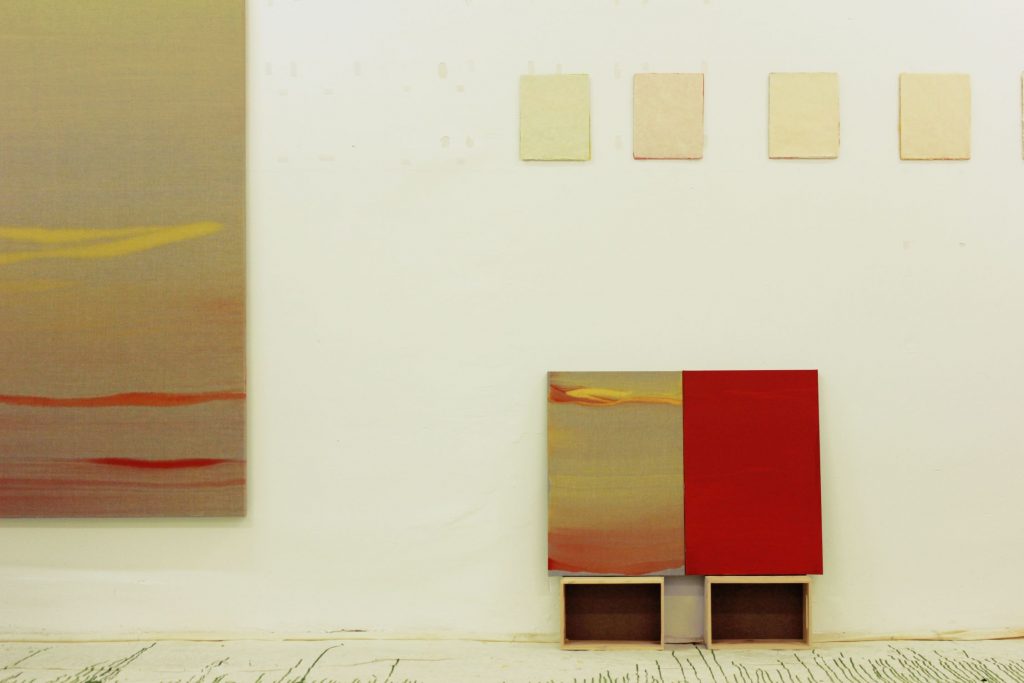
Conversation between the artist Nico Munuera and the art critic David Barro on the occasion of the exhibition “Praecisio: Nico Munuera”.
The starting point for the proposed site-specific exhibition for Valencia that will be presented in the IVAM’s Gallery 6 with the title Praecisio is the idea of a physical limit and how the conception of this limit influences the ability to perceive.
The exhibition will examine the areas that are delimited plastically in the process of painting and will offer an extrapolation of the act of observing connected with the systems of representation of territory, ranging from the continuously changing pattern caused by the movement of the sea on the coast to the clear lack of definition involved in walking and not knowing exactly where the city ends and the countryside begins. In other words, physical places where the end of one state is mixed up with the beginning of the next one.
Areas of interchange or self-definition owing to their difference, whose borders of interrelation that cut and join are fundamental states in painting, where attention is intensified in order to reveal the imperceptible. For this reason, setting out from this questioning and the idea that the limits of the city are always clearly perceptible on a plan but not on the ground, Nico Munuera will establish certain relationships with painting, focusing on the physical boundary as something that constantly generates points of attention.
15 sep. 2017
IVAM Centre Julio González
share
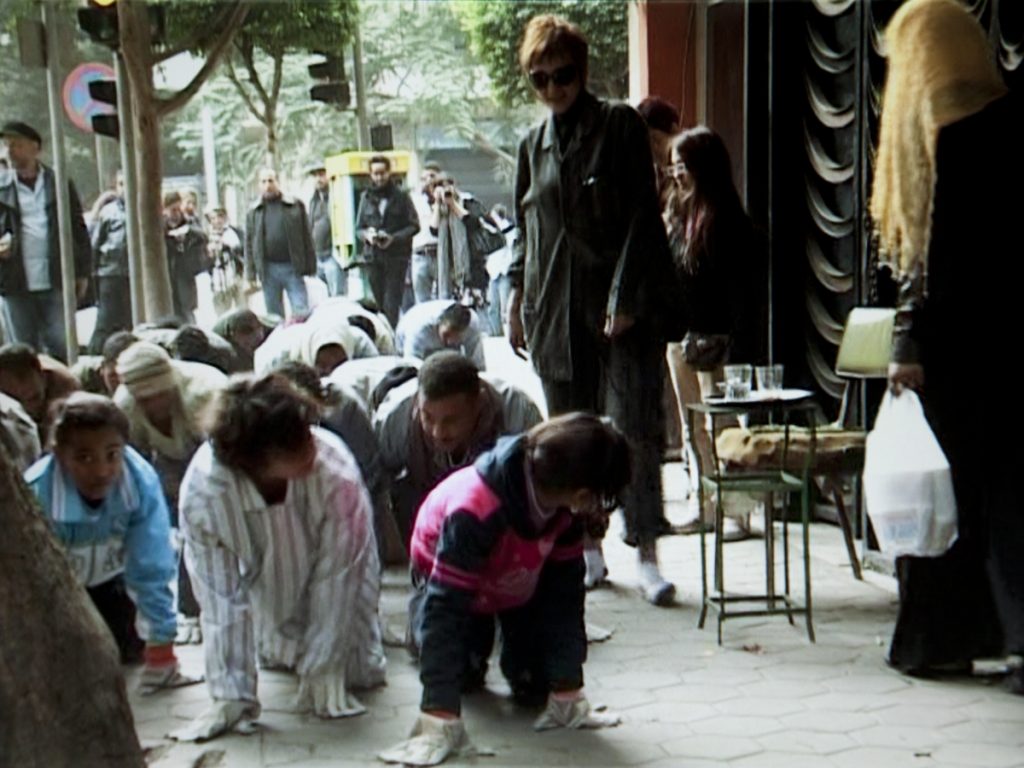
Guided tour to the exhibition “In Rebellion. Female Narratives in the Arab World” with Juan Vicente Aliaga, curator of the exhibition
Free activity. Priority for Honorary Members and Friends of the IVAM.
Application must be made 15 minutes before the start of the tour at the counter in the IVAM entrance hall. Places limited (allocated by order of application).
12 jul. 2017
IVAM Centre Julio González
share
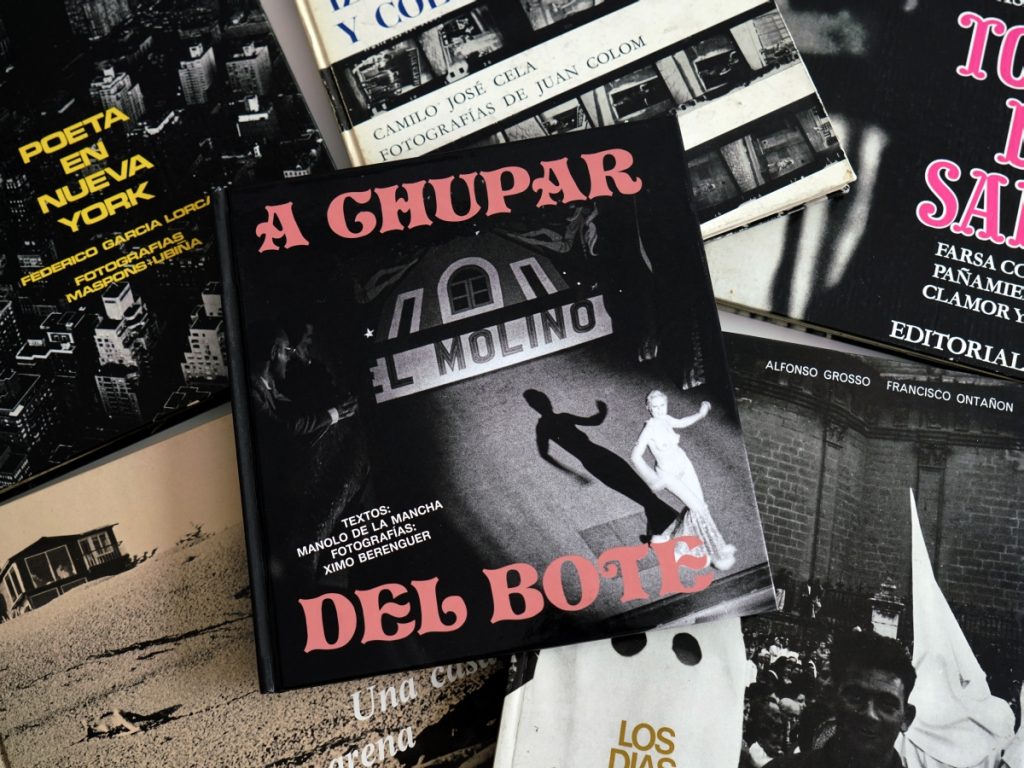
The IVAM added to his collection six photographs of Ximo Berenguer (Picanya, 1946) from the series “El Molino”, which were produced between 1974 and 1976 at the Barcelona Variety Hall.
The presentation will include the participation of:
This book sums up the recovery for the history of Spanish photography from the legacy of Ximo Berenguer, an author who died prematurely in 1978 at 32 years of age. Valencian by birth and Barcelona of adoption, Berenguer was an exceptional witness of the process of political transition, which documented from the trenches of the clandestine left, the marginal culture and, particularly, the Spanish Homosexual Liberation Movement. His work, reduced but intense, has been equated with the work of Anders Petersen in his Café Lehmitz: a humanism broken between tenderness and tear.

06 jul. 2017 – 17 sep. 2017
IVAM Centre Julio González
share
The PAM! PAM! Exhibition is a continuation of the PAM! Program, which aims to present emerging art by alumni of the Masters in Artistic Production and Visual Arts and Multimedia (UPV). A committee of experts selects 10 artists who after a year of work display their work, coordinated by the Master in Cultural Management (UPV-UV). The works presented in this fourth edition are diverse and answer to the different positions of the art of nowadays. We find painting, projections, drawings, videos, sound pieces, performance and installations. Likewise, the topics covered are very diverse, although they concur at certain common points such as those related to identity, the distortion of reality and its image, and the questioning of one’s artistic practice or the artist’s precarious situation.
This exhibition aims to offer a work space in which the first steps of artists whose work begins to make a hole in the complex contemporary creation panorama. For those artists, it is a challenge to face an institutional exhibition demands like this one, which is a necessary work to continue tackling new creative challenges, against the difficult perspectives with which, in general, Contemporary art and, in particular, the younger art dealt with.
Artists: Ana Ciscar, Carlos Correcher, Marina González, Valentina Henríquez, Marina Iglesias, Rubén Marín, Inma Mendieta, Agustín Moreno, Marta Negre and Sonia Tarrazona.
Expert Committee: Fermín Jiménez Landa, Johanna Caplliure, Sandra Moros, Isabel Pérez, José Gandía Blasco, Javier Molins and Ricardo Forriols
Curator: José Luis Clemente
Coordination IVAM: Marta Arroyo Planelles
Coordination (Master of Cultural Management UPV-UV): Ana Jiménez, Edurne Vaello, Julia Herráiz, María Alós, Omar Cervera and Sara Torralba.
13 nov. 2016
IVAM Centre Julio González
share
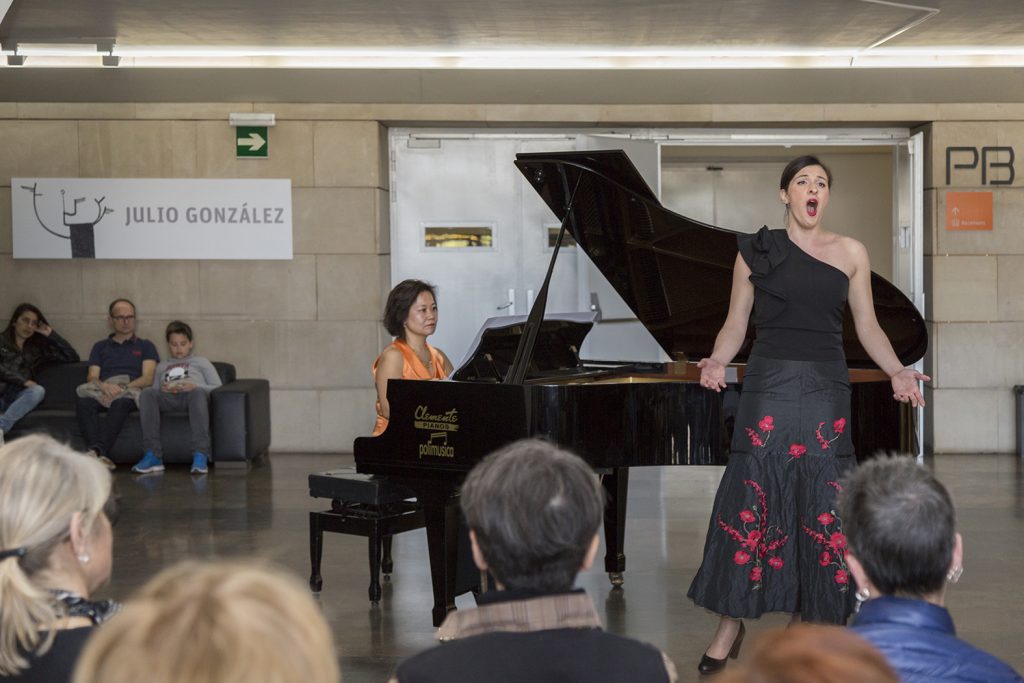
The IVAM and the Centre Perfeccionament Palau de les Arts Reina Sofia, continue with the series of musical performances that will take place between October 2016 to July 2017.
21 jul. 2017
IVAM Centre Julio González
share
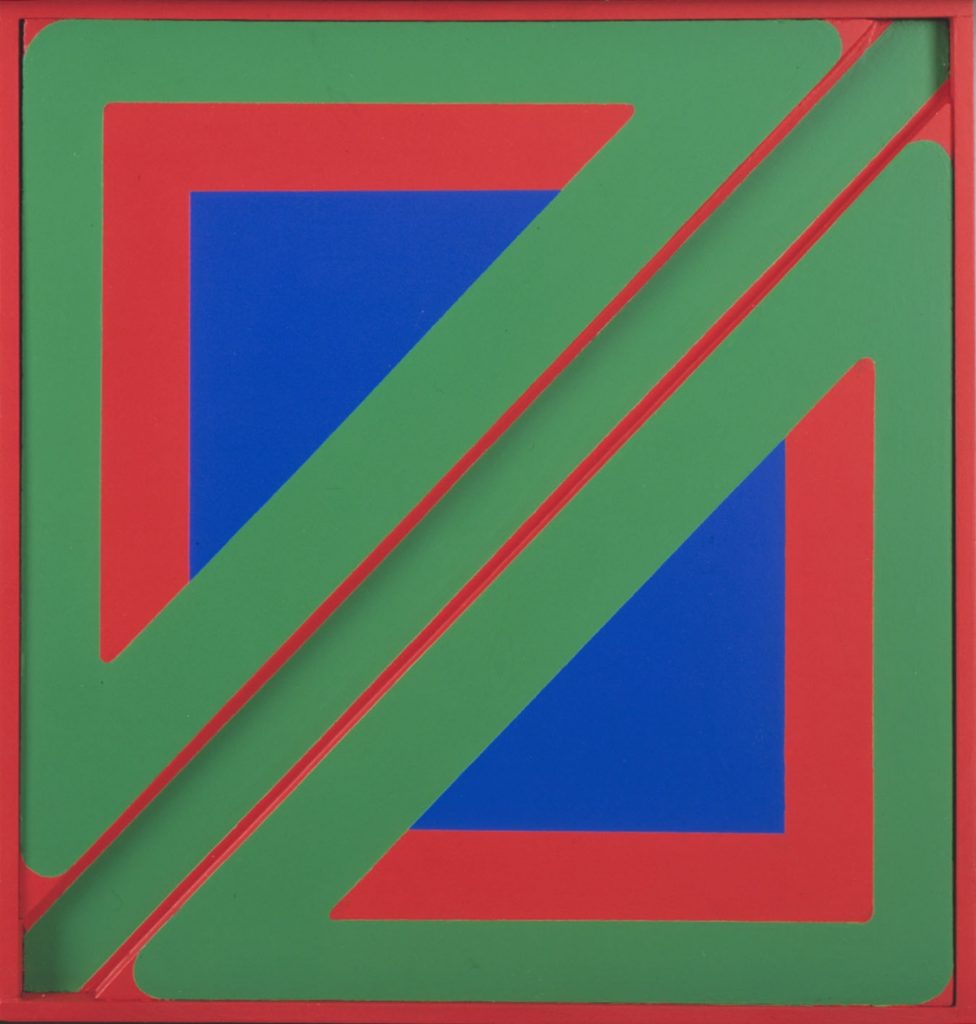
Guided tour to the exhibition “The birth of abstraction” with Josep Salvador, co-curator of the exhibition.
Free activity. Priority for Honorary Members and Friends of the IVAM.
Application must be made 15 minutes before the start of the tour at the counter in the IVAM entrance hall. Places limited (allocated by order of application).

30 jun. 2017
IVAM Centre Julio González
share
Guided tour of the exhibition with the curator J. Ramon Escrivà
Free activity. Priority for Honorary Members and Friends of the IVAM. It is necessary to register 15 minutes before the beginning of the tour at the counter in the entrance hall. Places limited (allocated in order of registration).

29 jun. 2017
IVAM Centre Julio González
share
Conversation about “ANZO. Isolation” exhibiton between the curator J. Ramon Escrivà and the Art Professor Ricard Silvestre.
The exhibition that the IVAM is devoting to the Valencian artist José Iranzo Almonazid, known artistically as Anzo (Utiel, 1931 – Valencia, 2006) is an acclamation of the work of one of the most original and still unknown figures on the Spanish art scene.
It is considered that he was one of the pioneers in introducing the language of Pop Art in this country in the 1960s, and his work soon aligned itself with the highly critical figurative movements that emerged in Valencia in connection with collectives such as the Valencia branch of the Estampa Popular group, of which he was a founding member.
In 1967 his work began to undergo a notable change, starting with the creation of a series of works titled Aislamientos (Isolations), a vast set of paintings and screenprints that he finished in 1985. In them he deals with the problems of the alienation and isolation of the individual trapped in the maze of the structures of domination, doing so in works made with materials that were unusual at the time, such as photolith film, polished steel, plastic, ball bearings and representations of computer circuits.
The exhibition takes the series Aislamientos as an object of study in order to recreate, by means of paintings, archive documents, books and documentary films, the intellectual debate about dystopic spaces, i.e., claustrophobic, alienating, anti-utopian environments that reveal the power that annihilates the individual through processes of mechanisation and computerised control.