Congreso Más allá del museo
19 oct. 2018 – 20 oct. 2018
IVAM Centre Julio González
share


19 oct. 2018 – 20 oct. 2018
IVAM Centre Julio González
share
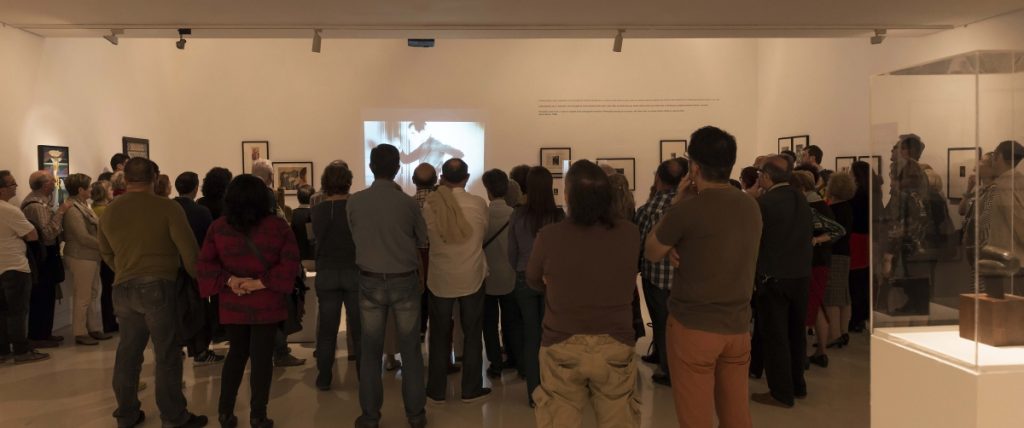
In the present context, museums must face a great many challenges. One of the most difficult ones is that of anticipating an increasingly accelerated future that generates new and very different ways of relating. Looking ahead to the 30th anniversary of the inauguration of the IVAM, the museum wishes to reflect on what should characterise these institutions in the 21st century and to ask what their boundaries are or whether there should be boundaries.
The conference Beyond the Museum will focus on present and future relationships of museums with the agents and spaces that form the artistic ecosystem, and on promoting their integration in contemporary society.
In the conference:
The contents of the conference will be organised in terms of talks and round table discussions with the participation of professionals connected with museums, and it will be completed with communications, selected by means of an international call for papers, which will show the plurality of active thinking that is generating ideas and practices concerning museums.
PROGRAM
Friday, October 19, 2018.
10:00 h.- Presentation by Albert Girona, Autonomous Secretary of Culture and Sports of the Generalitat Valenciana and José Miguel G. Cortés, Director of the IVAM.
10:30 h. – Lecture “Is the museum a bunker?” De Sjarel Ex, Director of the Boijmans Van Beuningen Museum
12:00 h.- Rest.
12:30 h.- Lecture “Do we need to expand the museum concept?” by Jean François Chougnet, Director of the MUCEM
16:00 h.- Communications.
18:00 h. – Round Table, with Gloria Picazo, Manuel Olveira y Sergio Rubira
19:00 h.- Lecture “ Cuando los subalternos entran en el museo: contra-públicos y rebelión institucional “, by Paul B. Preciado, philosopher and curator.
Saturday, October 20, 2018
10:30 h.- Lecture “ Gallery education, coloniality and white feminity ” by Carmen Mörsch
12:00 h.- Rest
12:30 h.- Lecture “ Per_forming a museum ” by Andrea Viliani, Director of the Donnaregina Foundation for Contemporary Arts, MADRE
16:00 h.- Communications.
18:00 h.- Round Table, with María Inés Rodríguez, Katya García-Antón and Sandra Moros
19:00 h.- Lecture “Just what is it that makes today’s institutions so different, so appealing? (after Richard Hamilton) ” by Iwona Blazwick, Director of the Whitechapel Gallery
INVITED SPEAKERS
ROUND TABLE
REGISTRATIONS
Registration must be formalized through the IVAM website
CERTIFICATES
The IVAM will issue certificates of attendance of 15 hours, and communication to the participants of the congress that have attended 80% of the sessions.
14 jun. 2018
IVAM Centre Julio González
share
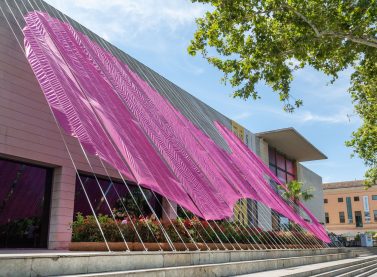
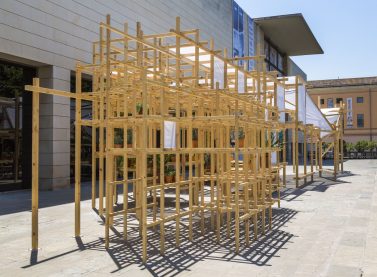
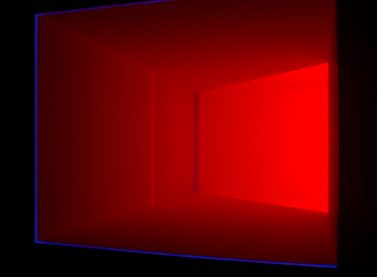
19 pm. Presentation to the public of the ephemeral intervention for the esplanade of the IVAM entitled “That pink thing”, by the architects Langarita & Navarro and the artist Jerónimo Hagerman. Then the space will be open to the public, enlivened with music by The basement.
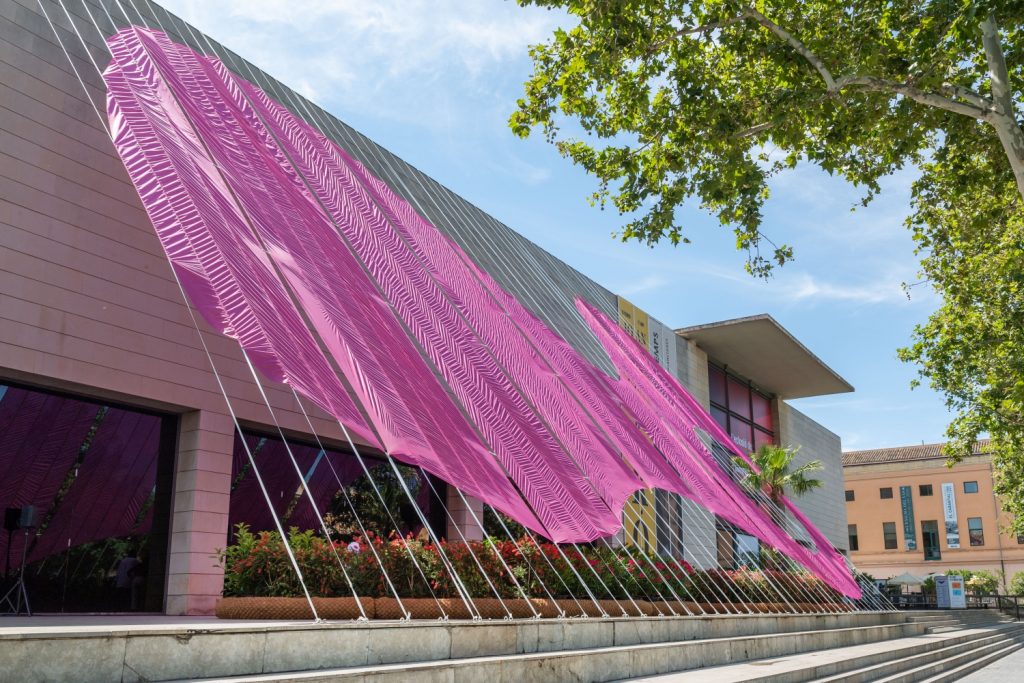
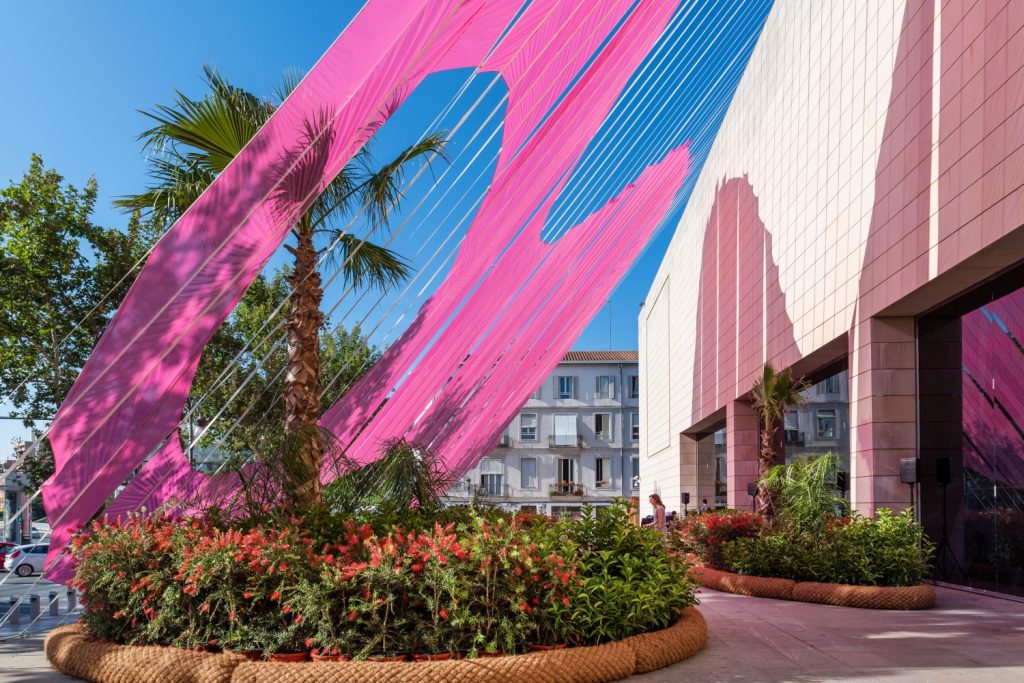
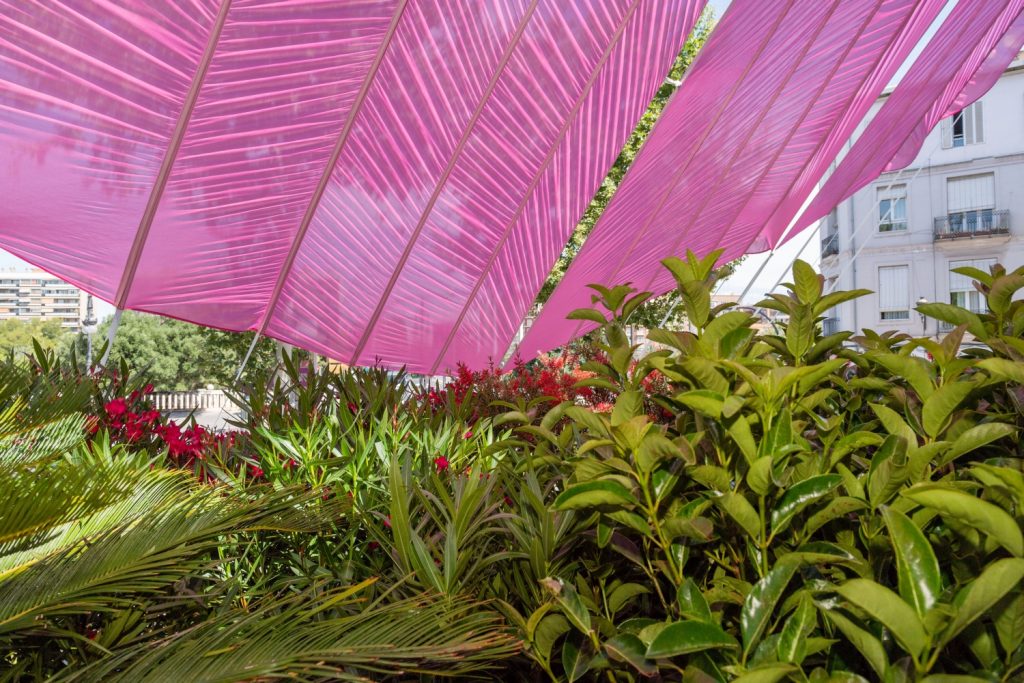
THAT PINK THING is a temporary intervention made on the IVAM’s façade by the artist Jerónimo Hagerman (Mexico City, 1967) and the architects María Langarita (Calatorao, 1979) and Víctor Navarro (Madrid, 1979). Their intention is to reveal an IVAM parallel to the one that was designed on the basis of the modern logic of what is hard and solid, and to materialise a space that provides a response to contemporary concerns about energy, the ecosystem, politics, the public sphere and sensibility.
05 jul. 2018
IVAM Centre Julio González
share
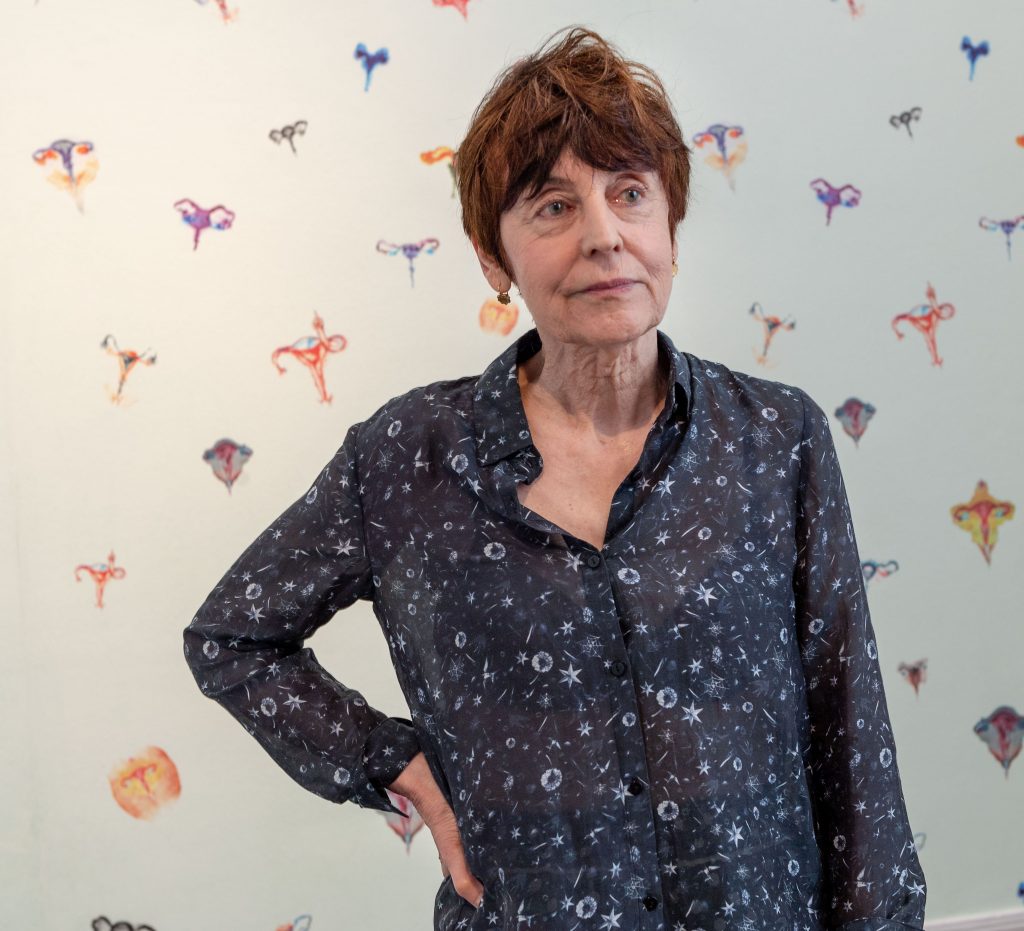
Conversation between the artist Annette Messager and the art critic, historian and journalist Elisabeth Lebovici on the occasion of the opening of the exhibition “Annette Messager. Pudique – Publique” in Gallery 1 of the IVAM.
Annette Messager (Berck-sur-Mer, France, 1943) belongs to a generation of artists that accepted the need to create different languages with which to identify, languages separate from the patriarchate. In her works, the use of everyday objects that have traditionally been considered as being of little value enables her to alter their uses and the feelings associated with them, creating assemblages, installations or photographs in which aspects traditionally associated with femaleness are combined with others, adding new layers of meaning.
Avoiding the “noble materials” indicated by tradition is one way of materialising this “other” kind of thinking, saying and doing. As a result, the selection of everyday objects, reused materials or items that form part of the domestic landscape shifts the great discourses towards real life, towards individual existence and its needs, desires, preoccupations and affections.
In the late 1960s Annette Messager began to create collections of objects: soft toys, pieces of cloth, nets, stuffed birds, press cuttings, photos, texts and phrases, which she reordered and classified. Gradually, these “little things” became the basis on which she constructed a personal language in which reality and fantasy converse.
Annette Messager champions craftwork, making things by hand, a territory historically associated with the world of women, but she turns it around and moves it into a territory of significance and eloquence.
The exhibition demonstrates the impossibility of a linear interpretation of her work, emphasising the need for the viewer to become an active participant and accept responsibility for generating an interpretation of it.
28 jun. 2018
IVAM Centre Julio González
share
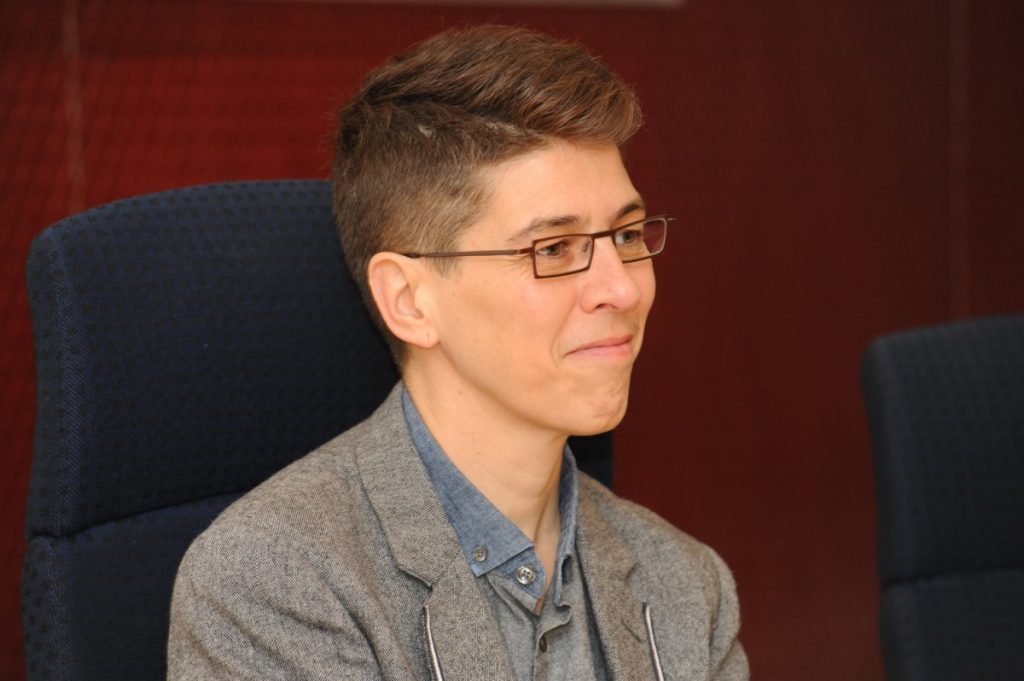
Lecture “Politicas y genealogías trans*” of Lucas Platero organized by the Càtedra d’Estudis Artístics. Segles XX / XXI
R. Lucas Platero Méndez is a Doctor in Sociology and CC. Policies by the UNED and currently teaching in socio-community intervention and the master’s program in Collective Mental Health of the UOC. Directs the collection of publications in trans * studies, of the Bellaterra Publishing House http://www.ed-bellaterra.com/admin2/uploads/docs/20170327160659-1.pdf.
He is a member of several research projects, which include: the European Project HERA “Cruising the 1970s-CRUSEV” (2016-2018), and project i + d “Multiple voices, plural knowledge and biomedical technologies” (2016-2018), Dep of Science, Technology and Society, Institute of Philosophy of the CSIC. He has worked on several European research projects, with emphasis on intersectionality, intimate citizenship and the construction of the LGBT political agenda. He has published numerous articles in international and state research journals; his published books are: “Herramientas para combatir el bullying homofóbico” (Talasa, 2007); “Lesbianas. Discursos y representaciones” (Melusina, 2008)
http://www.melusina.com/libro.php?idg=16997 ,
“Intersecciones. Cuerpos y sexualidades en la encrucijada” (Bellaterra, 2012)
http://www.ed-bellaterra.com/php/llibresInfo.php?idLlibre=726 ;”
Trans*exualidades. Acompañamientos, factores de salud y recursos educativos” (Bellaterra, 2014)
http://www.ed-bellaterra.com/php/llibresInfo.php?idLlibre=1033 ;
“Por un chato de vino. Historias de travestismo y masculinidad femenina” (Bellaterra, 2015)
http://www.ed-bellaterra.com/php/llibresInfo.php?idLlibre=1089
y “Barbarismos queer y otras esdrújulas” (Bellaterra, 2017)
http://www.ed-bellaterra.com/php/llibresInfo.php?idLlibre=1283
CHAIR OF ARTISTIC STUDIES. 20th/21st CENTURIES
IVAM-UV-UPV (Institut Valencià d’Art Modern-Universitat de València-Universitat Politècnica de València-Universidad Miguel Hernández)
Directors: Juan Vicente Aliaga / Vicente Sánchez-Biosca
The life in images of contemporary culture outruns the (material and immaterial) traditional spaces in which they were entrapped in the past, even the recent past. Their genres and registers, their ambits of circulation, their ceaseless migrations give the impression of offering a previously unknown experience of the real at the same time as, in an apparent paradox, they display a not in the least feigned technological pride.
Nevertheless, however much studies of the History of Art, Fine Arts, Journalism and Audiovisual Communication have attempted to adapt to the demands of this state of affairs, the lability of the borders between creation and reflection, technology and art, the media and the collective imaginary, among others, requires more ductile ambits of reflection and debate than those to be found in university studies and traditional research. On the other hand, unlike classical philology, palaeography, the exegesis of written texts and the image still presents an imbalance between its (emotional, conceptual, political, memory-based) impact and the instruments provided to analyse it.
The aim of Cátedra Estudios Artísticos, arising from the collaboration between the University of Valencia, the Polytechnic University of Valencia and the IVAM, will consist in encouraging this reflection about the life of images both in the world of art and in social life, including imaginary. It will do so broadmindedly, avoiding academic, artistic or technological restrictions, but, nevertheless, thriving on and taking advantage of all the academic, museum-based and institutional aids at its disposal. For that reason, the fact that it is held at the IVAM is propitious because it can enrich its activities with the reflection about exhibitions, installations or lectures, and also the series of projections.

30 jun. 2018
IVAM Centre Julio González
share
This conference, conceived by the artist Francesc Ruiz, aims to cover the various expressions and sensibilities that contribute to the richness of the spectrum of LGTBIQ comics organized in collaboration with the Chair of Art Studies. 20th/21st Centuries (IVAM-UV-UPV-UMH).
There will be four sessions which, while not seeking to be exhaustive, will offer experiences, new images and tools for self-representation. The conference is also prompted by a desire to bring together members of the public interested in LGTBIQ comics, to discover authors and to share knowledge.
Session 1 / 11:15 a.m. – 12:30 p.m.
Roberta Marrer and El Bebé Verde in conversation with Mery Cuesta
Session 2 / 12:30 p.m. – 2:00 p.m.
New desires / New bodies, with Francesc Ruiz
Session 3/ 5:00 p.m. – 6:30 p.m.
Sebas Martí and Claro que sí! in conversation with Francesc Ruiz
Session 4/6:30 p.m. – 9:30 p.m.
Workshop We are the others, the dissident bodies, led by Benzo Canelo
Workshop registration: actividades@ivam.es
Limited places
02, 03, 09, 10, 16, 17, 23, 24 and 30 jun. 2018
IVAM Centre Julio González
share
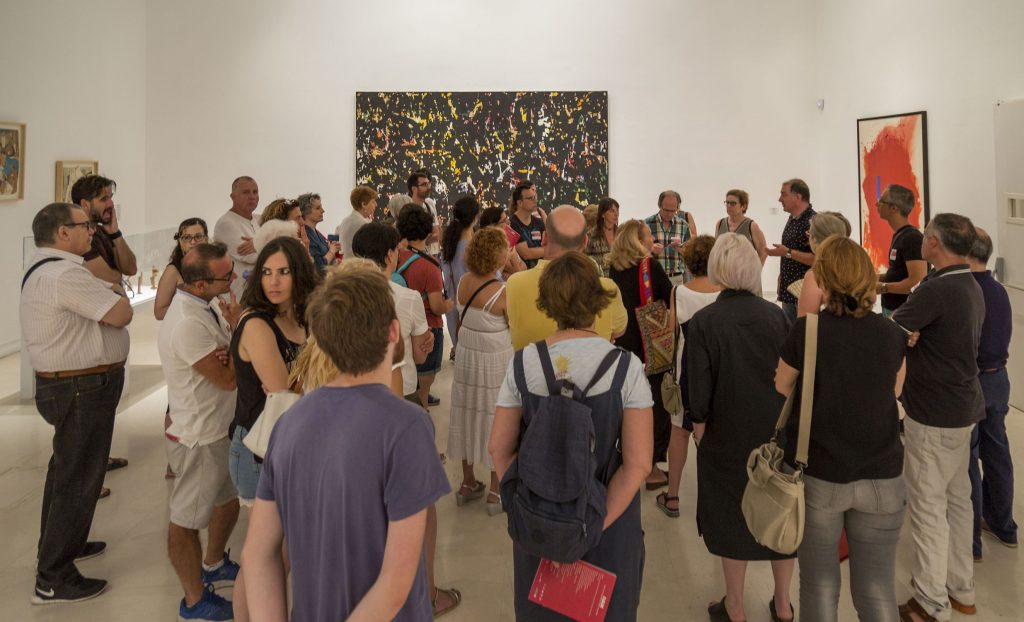
Guided tours to exhibitions by Pilar Martínez, BA Art History and Verónica Francés, artist and BA Fine Arts
Visits:
Verónica Francés
SATURDAY 2nd The spirit of an era: Ignacio Pinazo in the IVAM collection
Pilar Martínez
SUNDAY 3rd Against the tide. Half a Century of valencias female artists (1929-1980)
Verónica Francés
SATURDAY 9th Against the tide. Half a Century of valencias female artists (1929-1980)
SUNDAY 10th The spirit of an era: Ignacio Pinazo in the IVAM collection
Verónica Francés
SATURDAY 16th The spirit of an era: Ignacio Pinazo in the IVAM collection
Pilar Martínez
SUNDAY 17th Joan Miró, order and disorder
Verónica Francés
SATURDAY 23rd Against the tide. Half a Century of valencias female artists (1929-1980)
Pilar Martínez
SUNDAY 24th Against the tide. Half a Century of valencias female artists (1929-1980)
Verónica Francés
SATURDAY 30th The birth of the abstraction. Line and color in the IVAM collection

14 jun. 2018 – 09 sep. 2018
IVAM Centre Julio González
share
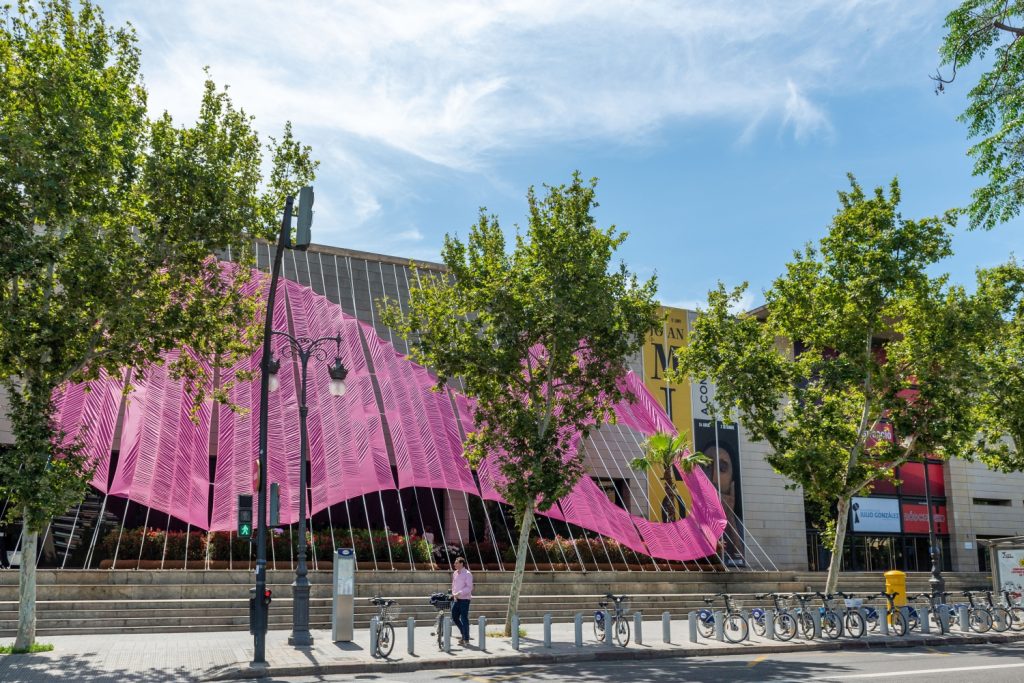
THAT PINK THING is a temporary intervention made on the IVAM’s façade by the artist Jerónimo Hagerman (Mexico City, 1967) and the architects María Langarita (Calatorao, 1979) and Víctor Navarro (Madrid, 1979). Their intention is to reveal an IVAM parallel to the one that was designed on the basis of the modern logic of what is hard and solid, and to materialise a space that provides a response to contemporary concerns about energy, the ecosystem, politics, the public sphere and sensibility.
Unlike the existing construction, the materiality of That Pink Thing will be organic, soft, flexible, moist, porous and living. Thus the torrid sensation felt when crossing the terrace that leads to the entrance to the museum will be replaced by a refreshing experience that invites us to linger a little longer in the area that will be created. The perception of the terrace as a place of transit will change and it will be transformed into an exterior room in which other museum activities can take place, sheltered from the severity of the summer.

17 may. 2018 – 31 jan. 2021
IVAM Centre Julio González
floor -1, G8
share
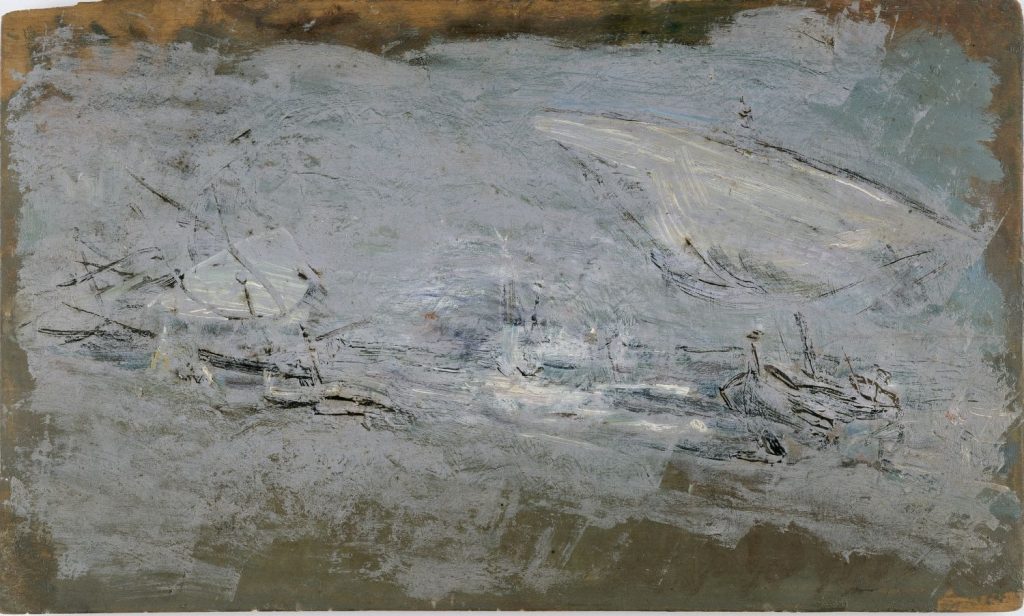
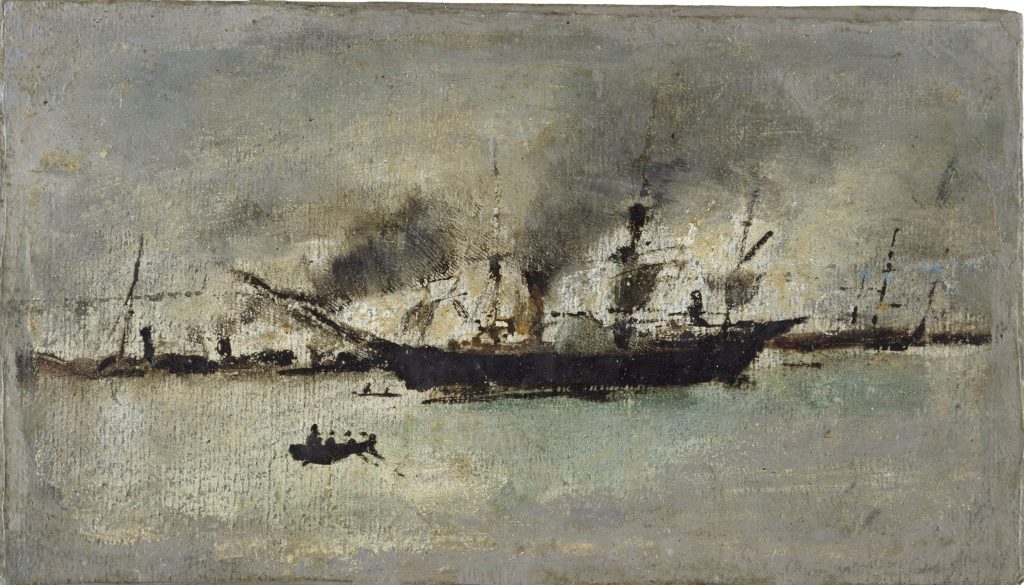
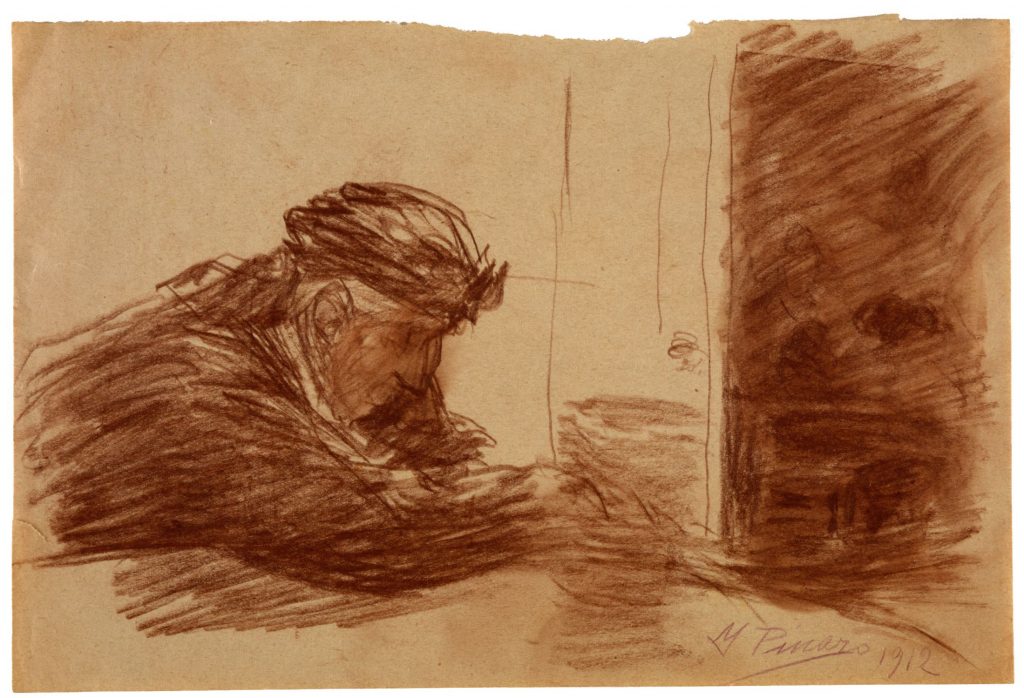
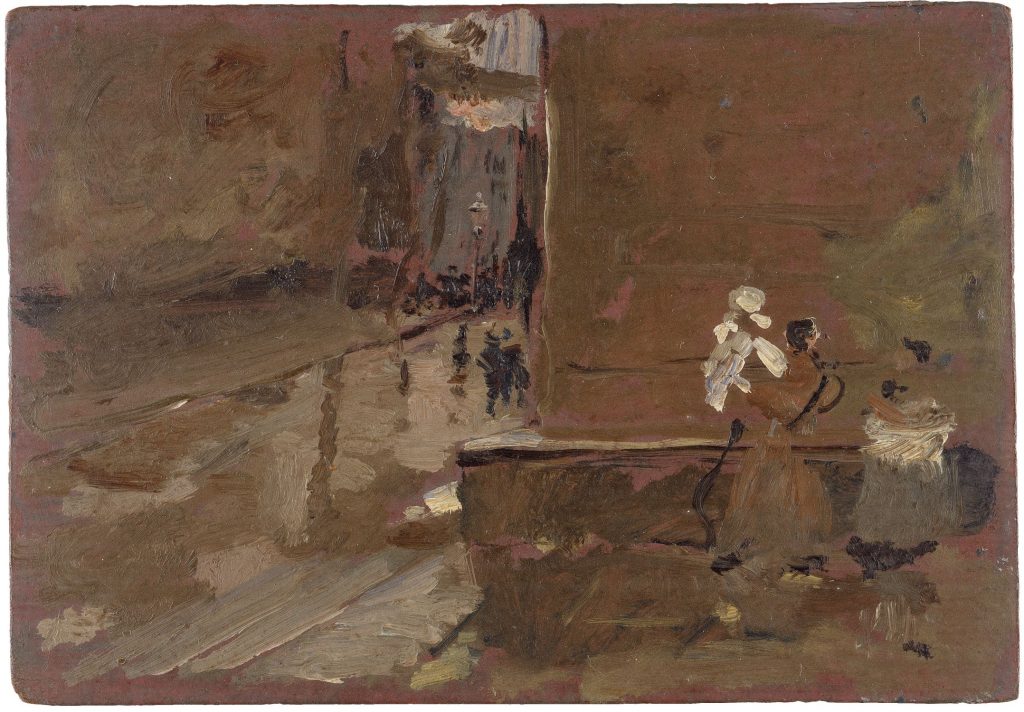
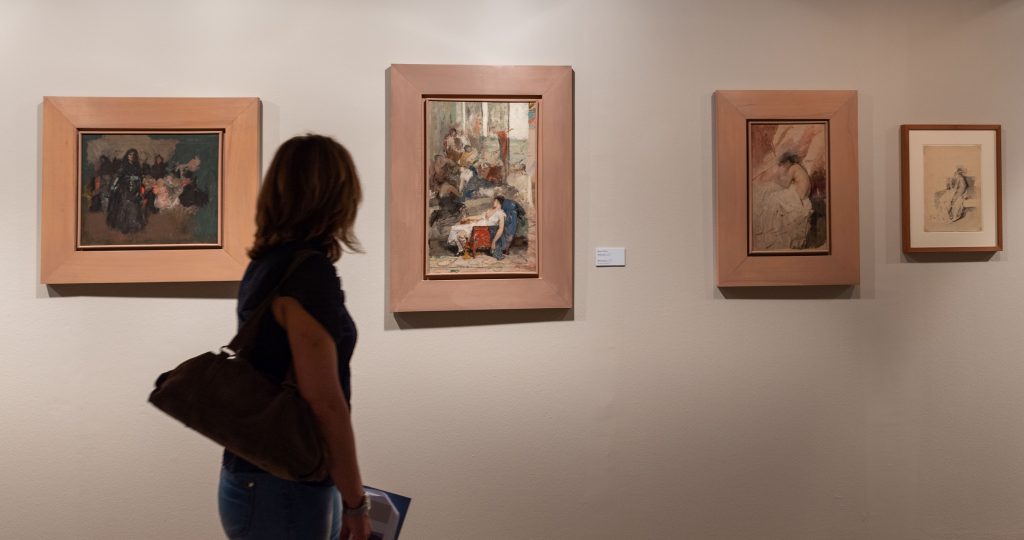
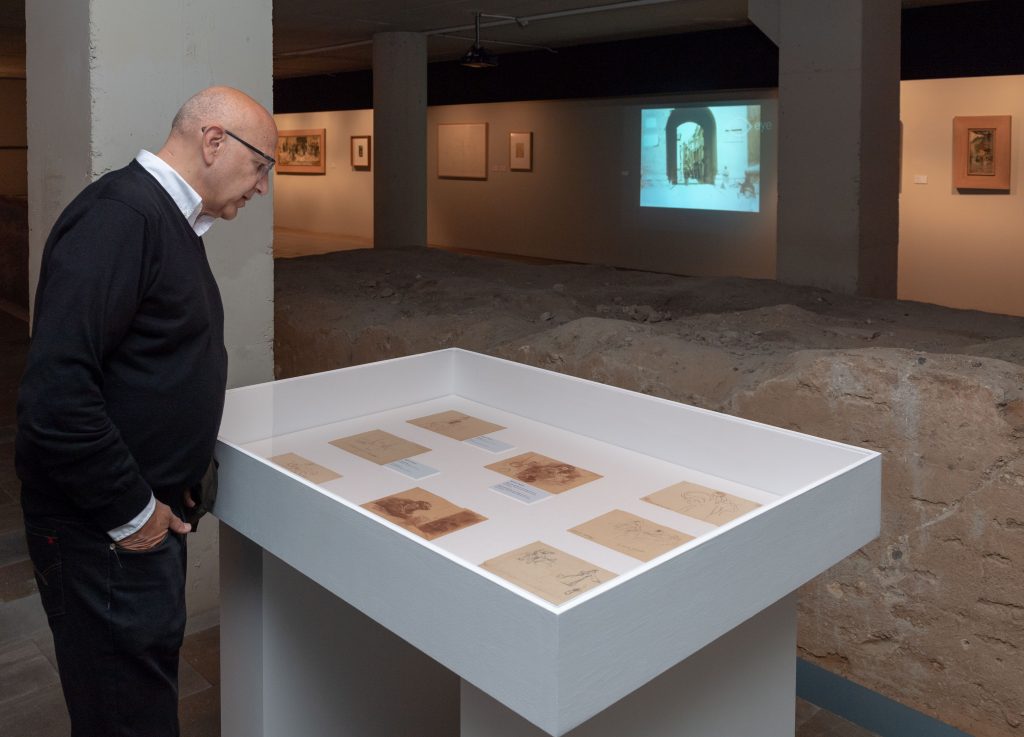
Ignacio Pinazo (Valencia, 1849 – Godella, 1916) opened up a new field for the treatment of naturalism, light and investigation. With his agile touches and brushstrokes that transmitted reality in motion he defined a personal style characterised by free forms and a defence of art that championed experience and interpretation based on an unfinished appearance.
On this path towards a particular realism that announced the independence of art and the overcoming of academic stereotypes, visual expression followed the direction indicated by the defenders of a modern sensibility, such as the poet Charles Baudelaire, who asserted the value of “the transient, the fleeting”, avoiding existing forms. The spirit of modernity demanded a leap towards the future that was expressed in a quest for innovation and an aspiration for independence from the institutions and accepted aesthetic values. The desire to represent the world required a search for new paths in artistic practice.
Ignacio Pinazo’s work interprets this new order in exemplary fashion, incorporating new techniques and themes and acquiring a progressive dynamism that gives him a privileged place in the development of realist painting and the study of light and movement. This new presentation of the works that the IVAM possesses emphasises this change in sensibility, focusing on the possibilities presented by Pinazo, who succeeded in going beyond academic tradition and finding a reconciliation with the thinking and discoveries of his time.
18 oct. 2018 – 03 feb. 2019
IVAM Centre Julio González
share
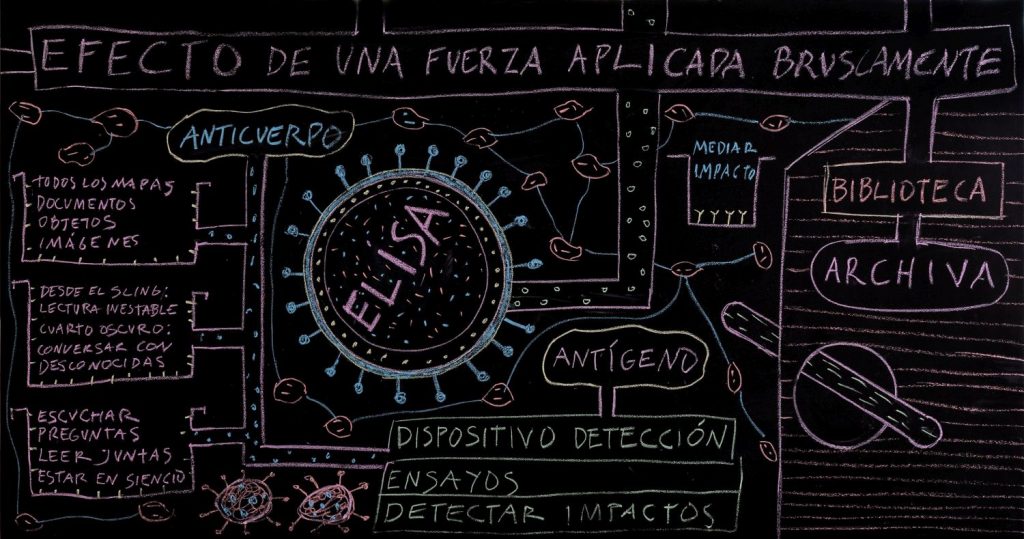
ELISA is presented as a detection device from the relationship between “antigen” and “antibody”. An exhibition time in which to carry out tests to detect, mediate and archive the impacts that HIV has caused on the bodies of men who have sex with men. This device, which is part of the investigation Effect of a force applied abruptly, allows to abandon the opaque research techniques showing the processes, visualizing phases and data of the investigation. In addition, ELISA generates a space in which to carry out actions through proposing agents, flow communities, co-payments, claims, circumstances, estrangements and links, in order to continue constituting the Archive, object and practice of this research.
Essays:
– Reading the book of questions: 25 / 10 / 18 (18:00 h) Library
– Conversing with the public randomly:
28 / 10 / 18 (10 – 14:00 h) Library
04 / 11 / 18 (10 – 14:00 h) Library
– Reading of the stigma book: 29 / 11 / 18 (18:00 h) Library
– Conversations in dark room mode: 30 / 11 / 18 (17:30 h) Library
– Loud voice:
13 / 12 / 18 (11:00 h) Library
14 / 12 /18 (11:00 h) Library
– Claims from the sling: 11 / 01 / 19 (19:00 h) Library
– Heat and coffee, as a reception center: 15 / 01 / 19 (17:00 h) Library
– Non-obstructive observations of works of art from the IVAM collection: 18 / 1 / 19 (17:30 h) Library
– Count the exhibition / listen to the exhibition: 02 / 02 / 19 (11:00 h) Library
05, 06, 12, 13, 19, 20, 26 and 27 may. 2018
IVAM Centre Julio González
share
Guided tours to exhibitions by Pilar Martínez, BA Art History and Verónica Francés, artist and BA Fine Arts
Visits:
Verónica Francés
SATURDAY 5th Against the tide. Half a Century of valencias female artists (1929-1980)
Pilar Martínez
SUNDAY 6th Joan Miró, order and disorder
Verónica Francés
SATURDAY 12th Joan Miró, order and disorder
Pilar Martínez
SUNDAY 13th The birth of the abstraction. Line and color in the IVAM collection
Verónica Francés
SATURDAY 19th The spirit of an era: Ignacio Pinazo in the IVAM collection
SUNDAY 20th The spirit of an era: Ignacio Pinazo in the IVAM collection
Verónica Francés
SATURDAY 26th The birth of the abstraction. Line and color in the IVAM collection
Pilar Martínez
SUNDAY 27th The birth of the abstraction. Line and color in the IVAM collection
26 apr. 2018 – 28 apr. 2018
IVAM Centre Julio González
share
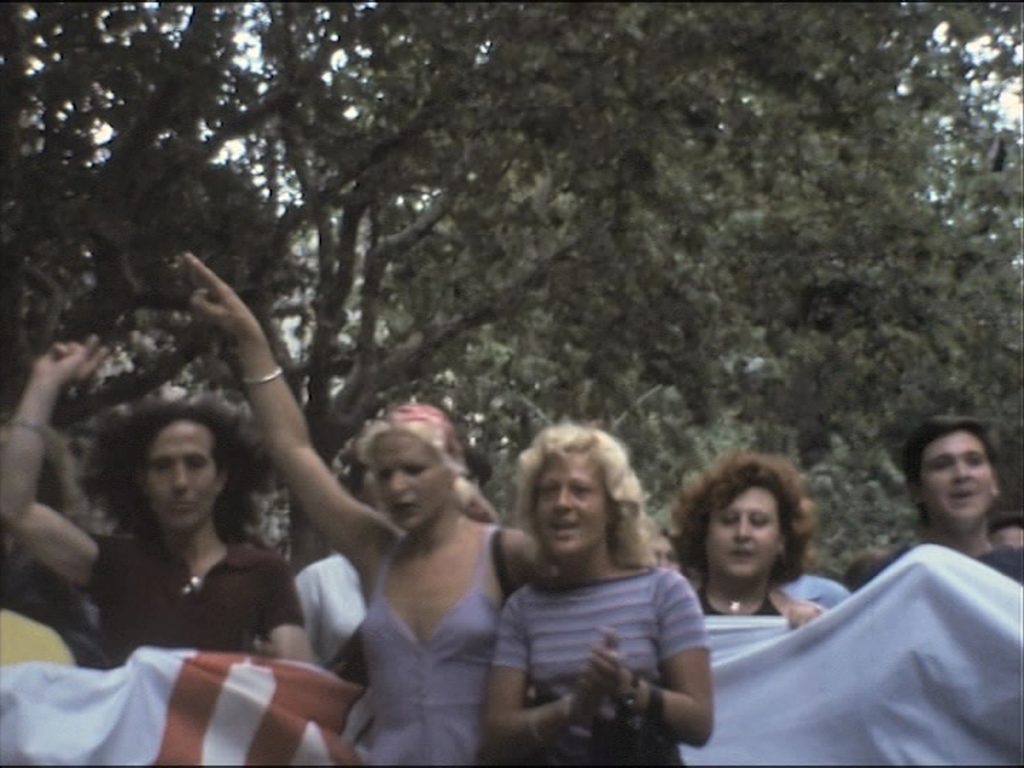
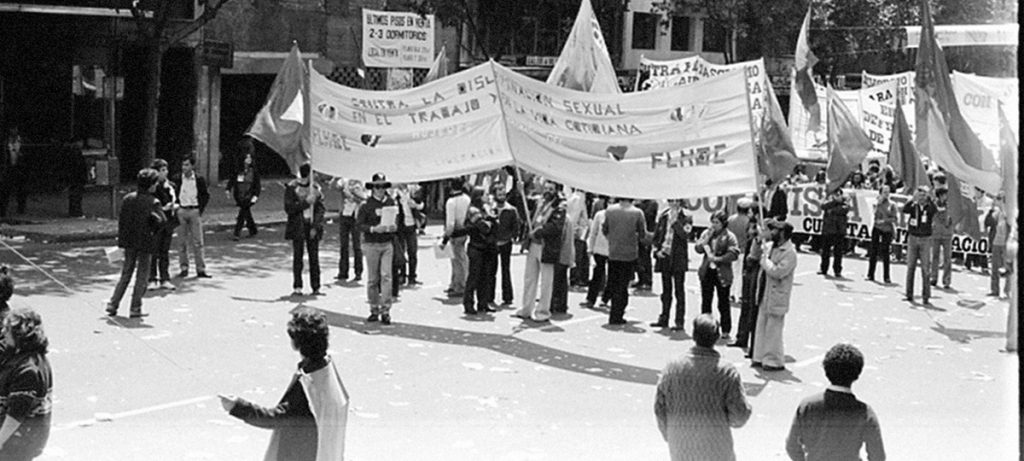
The conference “Resistance from the Queer South” wants to be both an occasion for historical reflection and research and a space for methodological experimentation. While we are focused on the production of “hard” knowledge about the queer 1970s in Spain, we welcome—encourage, in fact!—alternative research methodologies and styles of presentation.
The Conference is part of the activities of the Collaborative Research Project CRUSEV-“Cruising the 1970s: Unearthing Pre-HIV / AIDS Queer Sexual Cultures”, leadered by Glyn Davis (University of Edinburgh) and funded by the Research and Innovation Program Horizon 2020-Humanities in the European Research Area (HERA), Grant no. 649307. The Conference is coordinated by the University of Murcia in collaboration with the Intitut Valencià d’Art Modern (IVAM), de Valencia.
CRUSEV partner universities: University of Edinburgh (Project Leader), Humboldt Universität, Universidad de Varsovia, Universidad de Murcia, University of Newcastle, Universidad Politécnica de Valencia, Universidad de Valencia, Universidad Carlos III de Madrid, Universidad Autónoma de Madrid, Universidad de Castilla-La Mancha, Oxford-Brookes University.
PROGRAM
Thursday, April 26, 2018
16.30-18.30 h.- Film program: SUBVERSIVE SEXUALITIES IN SPANISH UNDERGROUND CINEMA, 1969-1982.
Curators: Alberto Berzosa, Juan Antonio Suárez and Virgina Villaplana
Friday, April 27, 2018
10.00-11.45 h.- GENEALOGÍAS DISIDENTES [DISSIDENT GENEALOGIES]
Moderator: Gracia Trujillo (Universidad de Castilla La Mancha)
11.45-12.15 h.- Break
12.15-14.00 h.- NARRATIVAS FÍLMICAS. ILUMINANDO EL CUARTO OSCURO [FILM NARRATIVES. LIGHTING UP THE CLOSET]
Moderator: Alberto Mira (Oxford Brookes University)
14.00-16.00 h.- Lunch break
16.00-17.30 h.- ARCHIVOS PRECARIOS/ARCHIVOS MILITANTES I. [PRECARIOUS ARCHIVES / MILITANT ARCHIVES I]
Moderator: Francisco Godoy (Matadero Madrid)
17.30-18.00 h.- Pause
18.00-19.30 h.- ARCHIVOS PRECARIOS/ARCHIVOS MILITANTES II. [PRECARIOUS ARCHIVES / MILITANT ARCHIVES II]
Moderator: Jesús Carrillo (Universidad Autónoma de Madrid)
19.40-20.40. CONVERSACIÓN: POÉTICAS LÉSBICAS EN LOS AÑOS 70 [CONVERSATION: LESBIAN POETICS IN THE 1970S]
Salón de Actos
Saturday, April 28, 2018
10.00-11.45 h.- CONTRARELATOS. [COUNTER-NARRATIVES]
Modera: Virginia Villaplana (Universidad de Murcia)
11.45-12.15 h.- Break
12.15-13.45 h.- SEXILIOS. [SEXILES]
Moderator: Noemi de Haro (Universidad Autónoma de Madrid)
13.45-16.00 h.- Lunch break
16.00-17.30 h.- FIESTAS Y OTRAS RESISTENCIAS. [PARTYING AND OTHER FORMS OF RESISTANCE]
Moderator: Juan Vicente Aliaga (Universitat Politècnica de Valencia)
17.30-18.00 h.- BREAK
18.00-18.40 h.- PERFORMANCE DE CIERRE: Antitrenimiento, de Graham Bell Tornado. [CLOSING PERFORMANCE: Antiteinment, by Graham Bell Tornado]
Museum Lobby
“Documents for the congress You can access the contents that will be covered in the round tables through this link.”




29, 30 and 31 mar. 2018; 01, 02 and 09 apr. 2018
IVAM Centre Julio González
share
The schedule during the Easter days will be:
Thursday 29/03: from 10 a.m. to 7 p.m.
Friday 30/03: from 10 a.m. to 9 p.m.
Saturday 31/03: from 10 a.m. to 7 p.m.
Sunday 01/04: from 10 a.m. to 7 p.m.
Monday 02/04: from 10 a.m. to 7 p.m.
Monday 09/04: closed