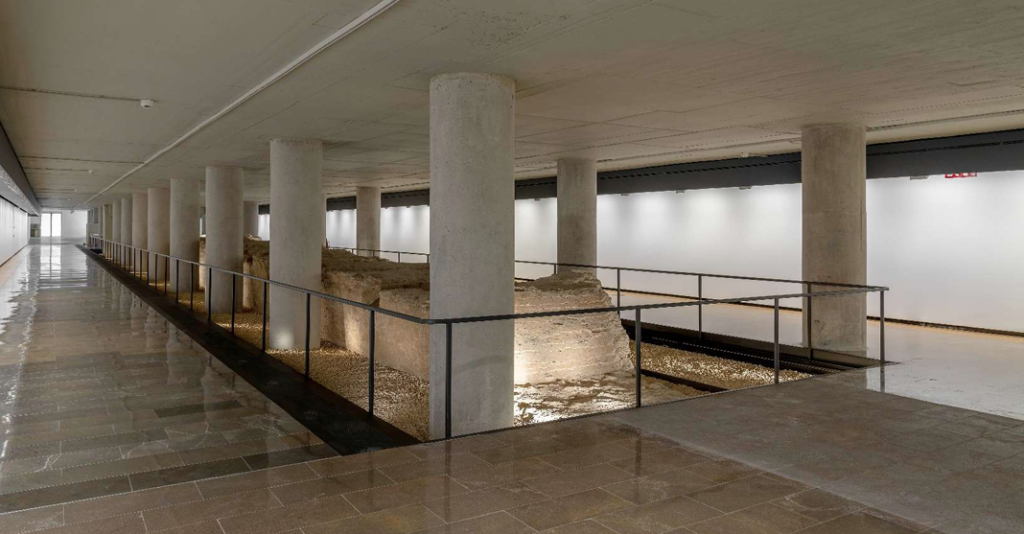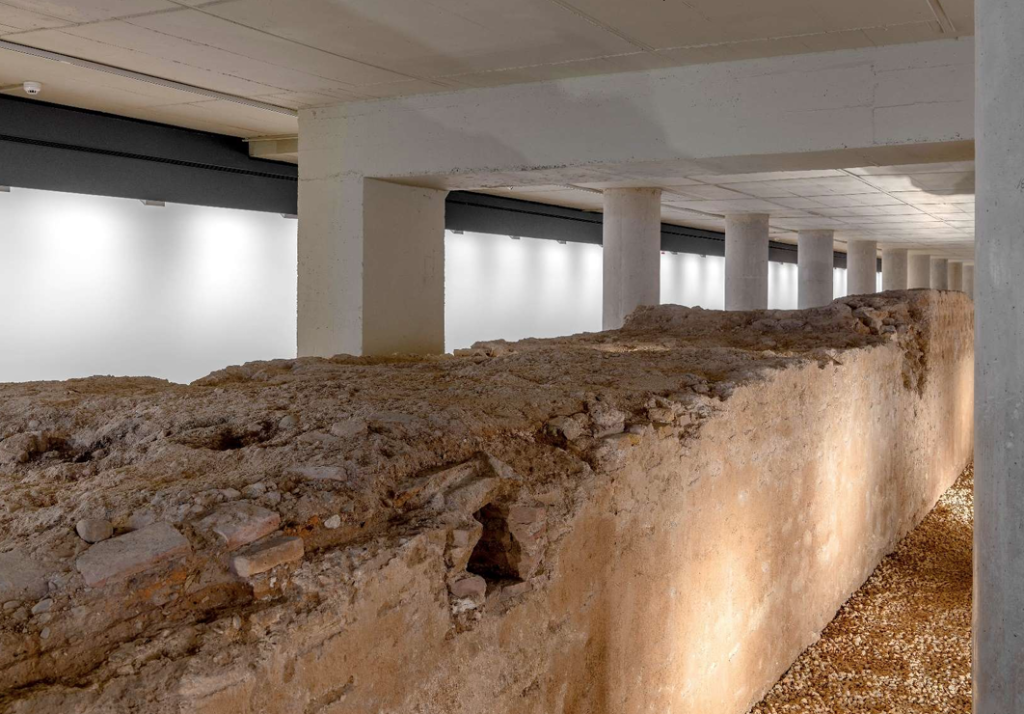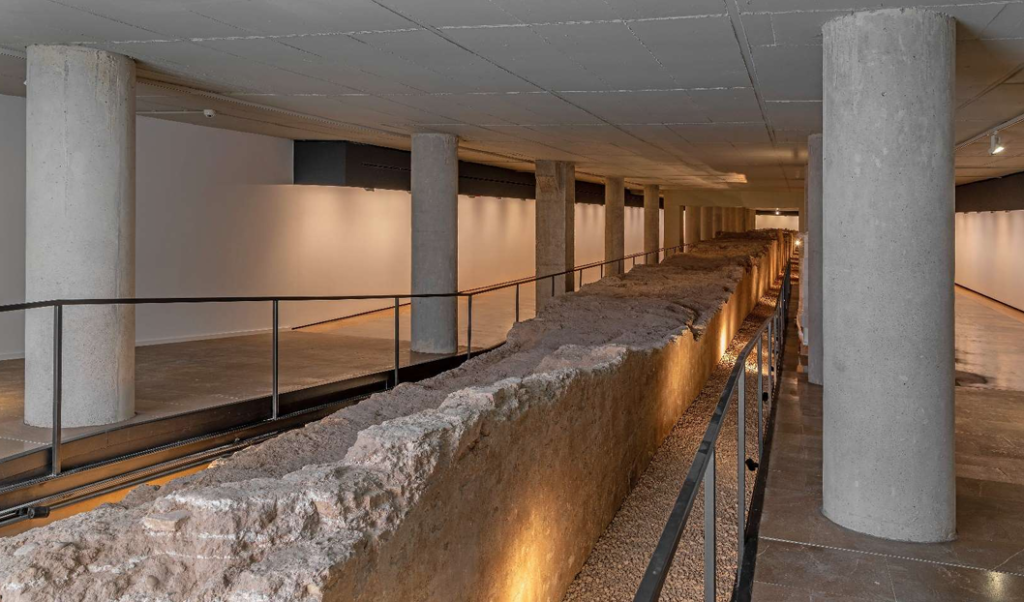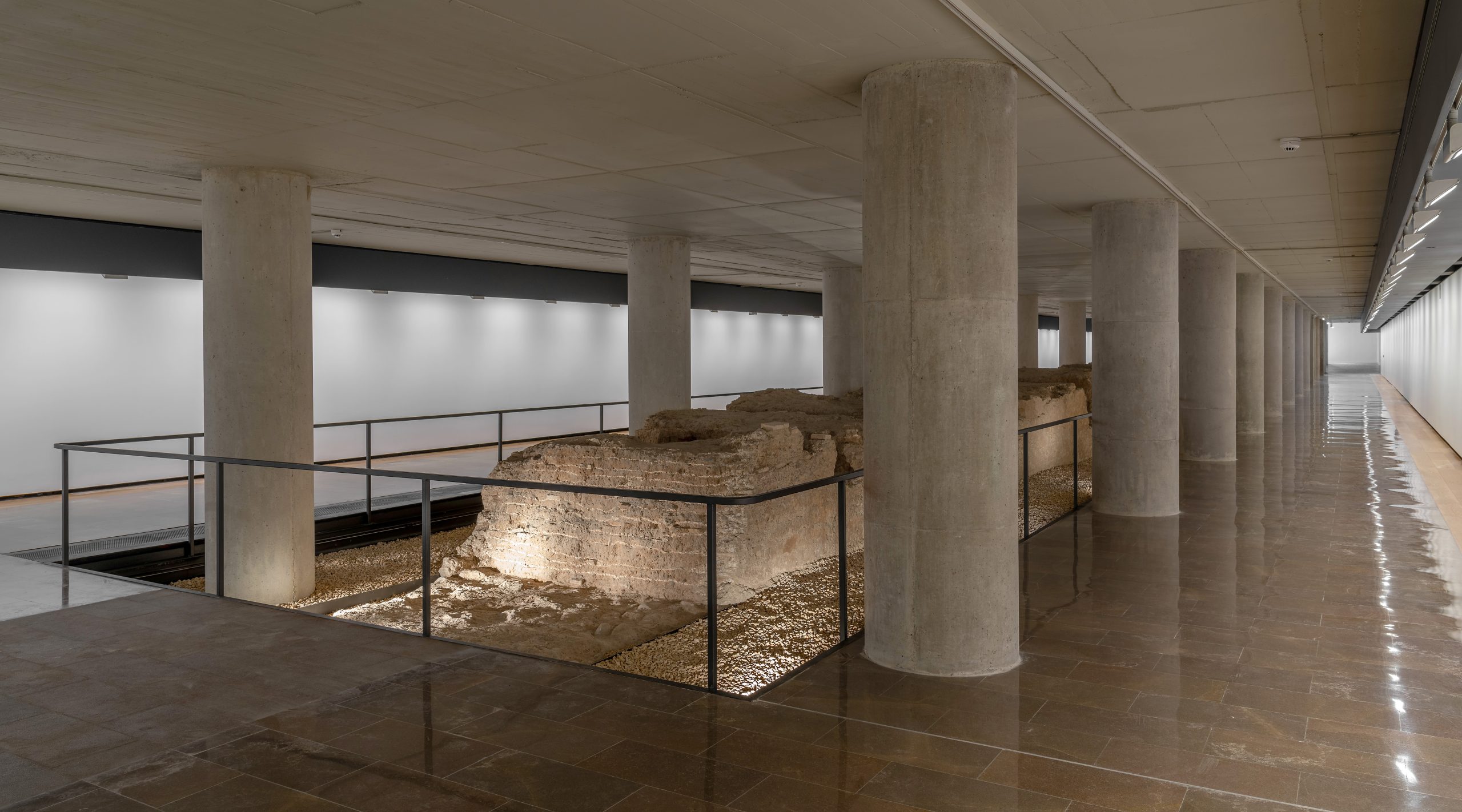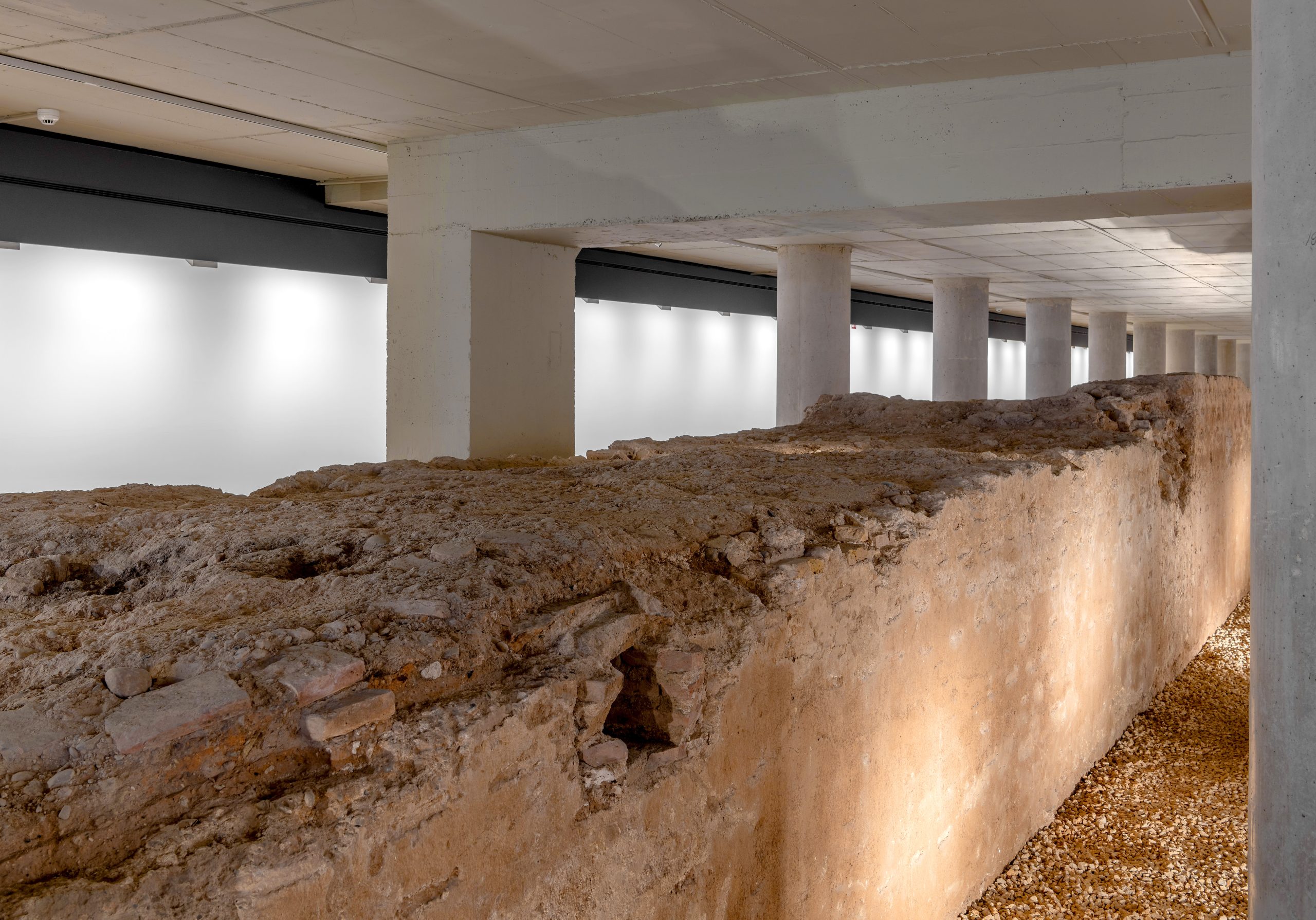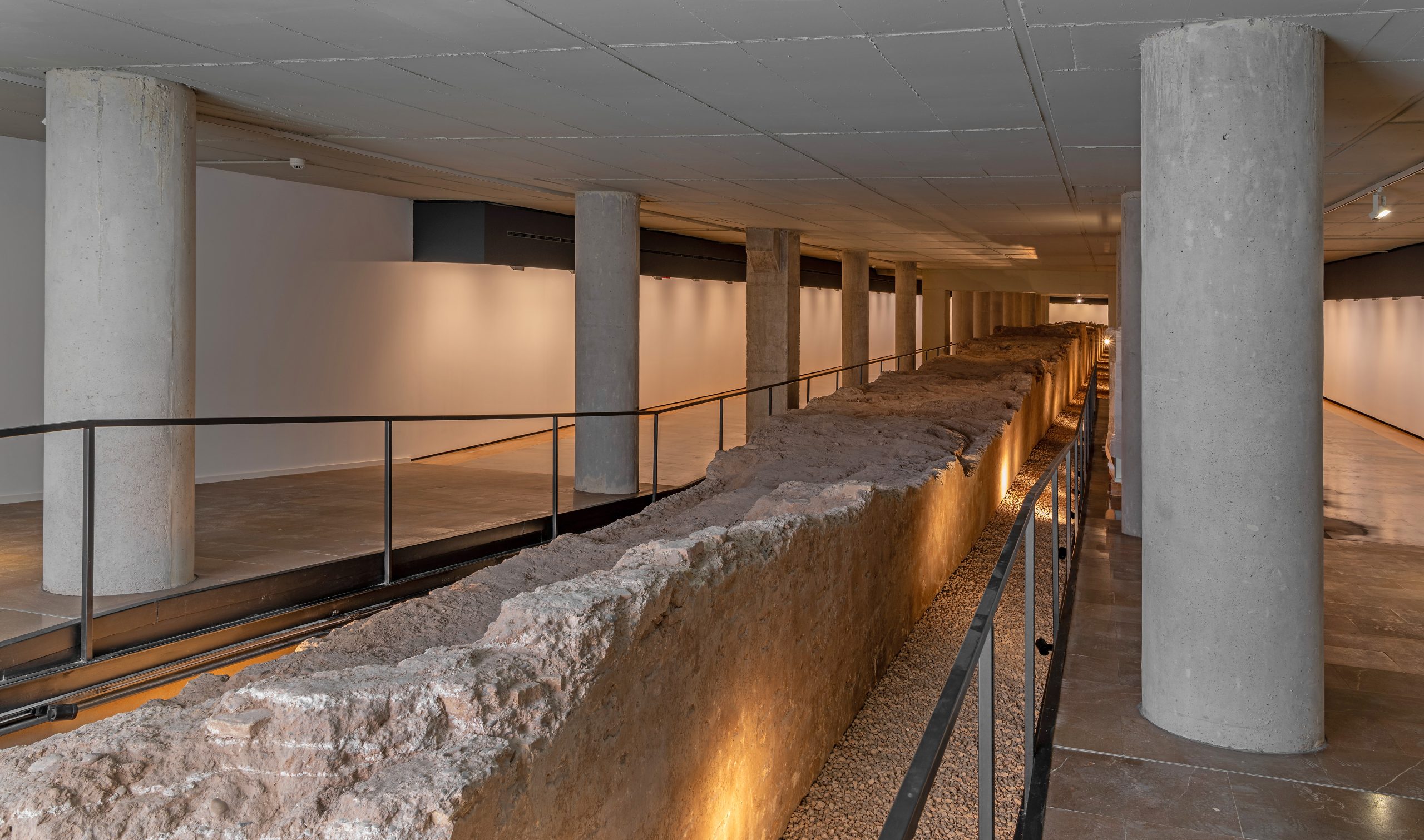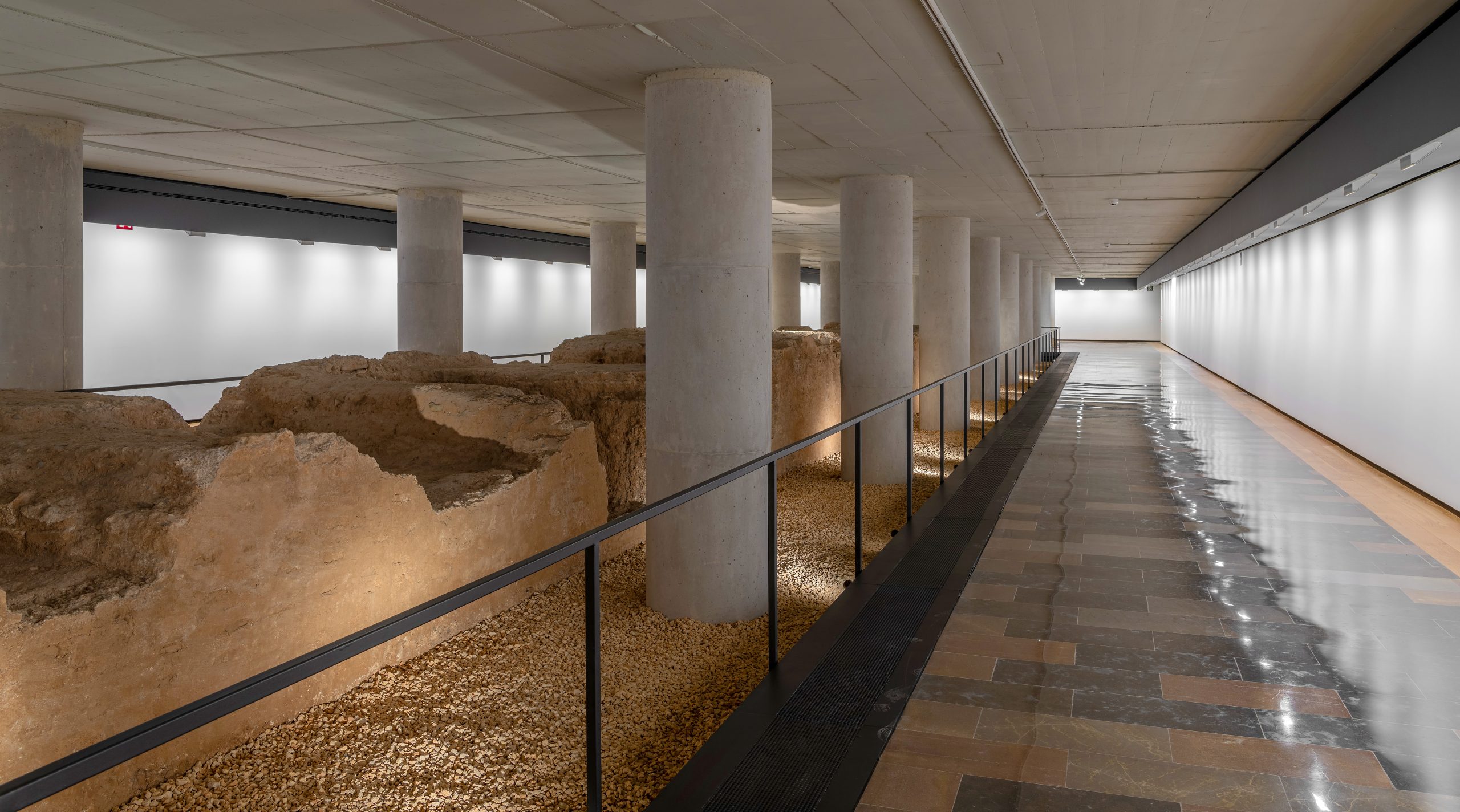
This gallery at IVAM houses a 68-metre-long section of Valencia’s old medieval wall. In the Middle Ages, the city walls were its defining feature, to the extent that one of Valencia’s earliest coats of arms depicted a fortified city surrounded by the waters of the Turia river. Even after the physical demolition of the walls, this symbolic image has endured to the present day in numerous popular religious prints.
The definitive city wall was constructed from 1356 onwards, when King Peter IV of Aragon, known as “the Ceremonious”, urged the Jurados (city councillors) to hasten the building of a new enclosure in response to the threat posed by King Peter I of Castile, called “the Cruel”. The new walls were intended to encompass the suburbs and the Islamic wall then still in use. The works were directed by the stonemason Guillem Nebot.
Two archaeological excavations carried out on the site of the Institut Valencià d’Art Modern, the first in 1987 and the second in 2023, have made it possible to document a significant portion of the late medieval structure, as well as to gain a better understanding of its physical characteristics. The wall consists of rammed earth layers, between 13 and 15.5 cm thick, alternating with thin layers of lime, in a technique known as tapia valenciana. The structure is reinforced with scattered bricks and encased externally in mortar, forming a resistant outer layer in which bricks were also used.
The foundations of the wall preserve a height of two rammed-earth courses, set on a footing measuring 2.5 metres in thickness. In its current state, up to 2.2 metres of the wall remained buried. The interior of the foundation was composed of a mortar made of stone and lime. Other sections, also studied through archaeological methods, were constructed using formwork in mortar, with compartments averaging 1.14 metres in height and a spacing of 2.30 metres between putlog holes.
The construction of the walls created a new urban area, at least doubling the size of the city. This process of expansion was so intense that, when the wall was demolished five centuries later, from 1865 onwards, the space within the walls had still not been fully occupied.
The city walls have long been regarded as one of Valencia’s most characteristic symbols and formed part of a broader system that included walls, towers, and gates. On the outskirts, marking the boundaries, stood the Cruces de Término (boundary crosses), always facing outwards. Closer to the centre were the walls themselves, complemented by a number of bridges over the Turia. At the heart of the city, surrounded by ever taller towers, rose the Campanar Nou de la Seu (new cathedral bell tower), which came to be known as El Miguelete. Begun at the same time as the walls, its bell marked the hours of the day, thus regulating time, while liturgical chimes served as signals for opening and closing the “small and large gates of the wall”.
Today, the remains of this wall run through the gallery dedicated to Ignacio Pinazo, a key figure in the IVAM collection. These medieval remains coexist with the museum’s exhibitions, offering new ways of interpreting the artist’s work.